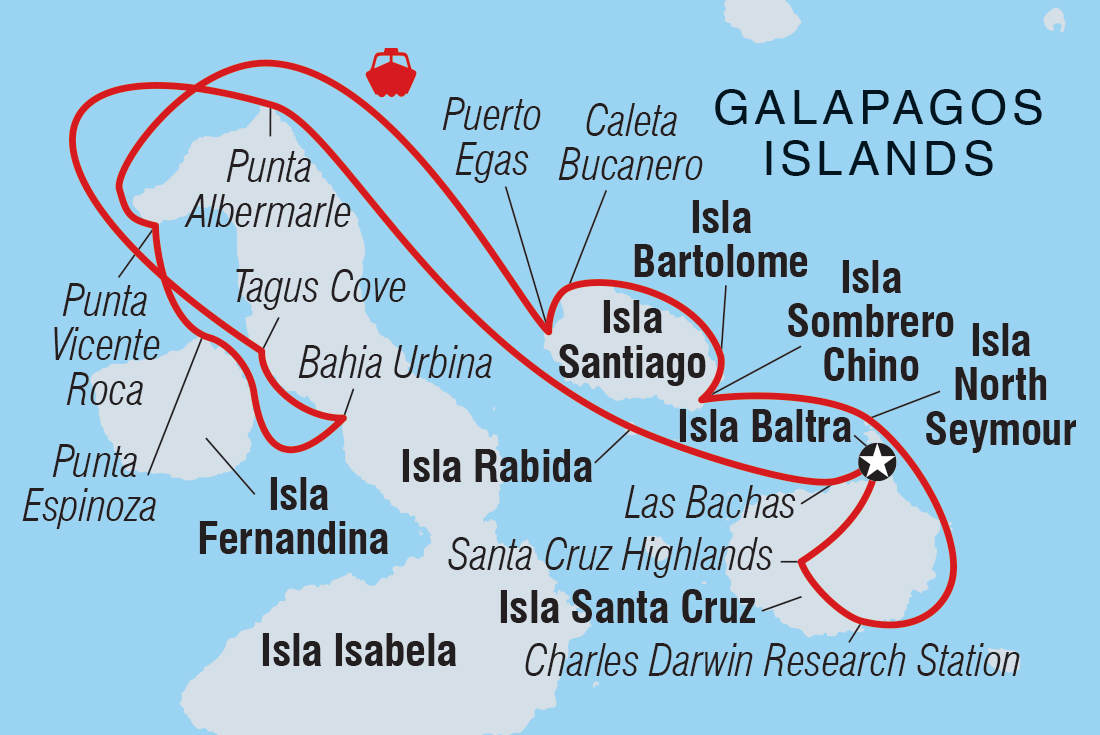
Few destinations rival the Galapagos for up-close encounters with wildlife and this eight-day adventure cruise focuses on all the stars of the show. This boat trip is free of detours, overnight stopovers and passengers joining or leaving throughout, so you can stay on the ship and focus on the wildlife, landscapes and experiences. Venture to remote parts of the archipelago – the west coast of Isla Isabela and Isla Fernandina – to see all the best these islands have to offer. Snorkel with sea lions and reef sharks off Isla Santa Cruz and Isla Bartolome, spy frigatebirds, boobies and pelicans soaring above North Seymour and stroll among land iguanas and flightless cormorants on volcanic Punta Espinosa.
◆Isla Santa Cruz - Bachas Beach Walk (1 hour) - Wet Landing
Day 1Baltra Airport - Las Bachas (Isla Santa Cruz)Bienvenidos! Welcome to the Galapagos. Your adventure begins in the Baltra Airport, where you’ll be meeting the other travellers arriving from Quito at 11 am. When you’ve met up with the rest of the group and your local naturalist guide, take a quick transfer to your home for the next week – Le Grande Daphne. Meet the crew, settle in and have some lunch with your fellow travellers. Try on the snorkelling gear before your first snorkelling session, then sail to Las Bachas, where the soft sand made of decomposed coral is a nesting site for the Pacific green turtle. Marine iguanas are also commonly spotted along the beach. The rocks make for excellent snorkelling and are populated by Sally Lightfoot crabs. A saltwater lagoon just near the beach is home to flamingo and whimbrel and you might also see a great blue heron. Remnants of a floating pier, a testimony to the US presence in the Galapagos during World War II, can also be seen.
Baltra Airport
Bienvenidos! Welcome to the Galapagos. Your adventure begins in the Baltra Airport, where you’ll be meeting the other travellers arriving from Quito at 11 am. When you’ve met up with the rest of the group and your local naturalist guide, take a quick transfer to your home for the next week – Le Grande Daphne. Meet the crew, settle in and have some lunch with your fellow travellers. Try on the snorkelling gear before your first snorkelling session, then sail to Las Bachas, where the soft sand made of decomposed coral is a nesting site for the Pacific green turtle. Marine iguanas are also commonly spotted along the beach. The rocks make for excellent snorkelling and are populated by Sally Lightfoot crabs. A saltwater lagoon just near the beach is home to flamingo and whimbrel and you might also see a great blue heron. Remnants of a floating pier, a testimony to the US presence in the Galapagos during World War II, can also be seen.
Day 2Isla Rabida - Punta Albermarle (Isla Isabela)Today, you’ll sail from Las Bachas to Isla Rabida, known for its spectacular red sand beaches, caused by the high content of iron in the sand which rusts to form the unusual shade. From the shore, follow today’s hiking trail to a lagoon that’s one of the best spots in the Galapagos to see flamingos. Keep an eye out for nesting pelicans, pintail ducks, marine iguanas and sea lions, too. Check out a vast opuntia cactus forest, hinting at the previous habitation of land iguanas, Galapagos hawks, mockingbirds, doves, finches and lava lizards. After, you can opt to go snorkelling to seek out the resident sea stars, damsels, gobbies and surgeon fish. In the afternoon, head to Albemarle on the northeast side of Isabela Island. Covered in mangroves, the bay is home to sea turtles, sea lions, penguins and flightless cormorants who feed on the algae and fish here. Another fantastic location for snorkelling, you may like to have a look beneath the water’s surface in search of sea turtles and flightless cormorants.
Isla Rabida
Today, you’ll sail from Las Bachas to Isla Rabida, known for its spectacular red sand beaches, caused by the high content of iron in the sand which rusts to form the unusual shade. From the shore, follow today’s hiking trail to a lagoon that’s one of the best spots in the Galapagos to see flamingos. Keep an eye out for nesting pelicans, pintail ducks, marine iguanas and sea lions, too. Check out a vast opuntia cactus forest, hinting at the previous habitation of land iguanas, Galapagos hawks, mockingbirds, doves, finches and lava lizards. After, you can opt to go snorkelling to seek out the resident sea stars, damsels, gobbies and surgeon fish. In the afternoon, head to Albemarle on the northeast side of Isabela Island. Covered in mangroves, the bay is home to sea turtles, sea lions, penguins and flightless cormorants who feed on the algae and fish here. Another fantastic location for snorkelling, you may like to have a look beneath the water’s surface in search of sea turtles and flightless cormorants.
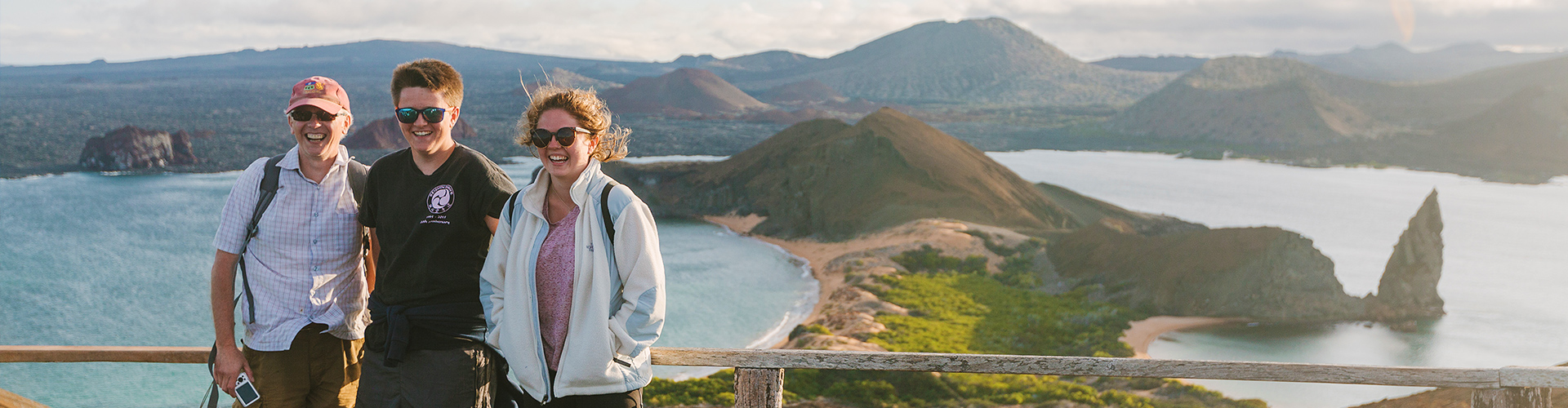
Day 3Tagus Cove (Isla Isabela) - Bahia Urbina (Isla Isabela)Sail overnight from Punta Albermarle around to the western shores of Isla Isabela. Wake up near Tagus Cove, where pirates and whalers used to collect tortoises for their travels. Maybe go snorkelling here or check out the graffiti on the walls (the oldest of which is from 1836!). Look out for flightless cormorants, blue-footed boobies, a variety of waterfowl and the most northerly penguins in the world. You’ll then walk to a lookout point for a stunning view of the north of Isabela Island and Volcan Wolf (Wolf Volcano). Later, visit Bahia Urbina on the west of Isabela Island to see the bay’s diverse and colourful plant life, which attracts many different insects. The site also features a short hike inland, where giant tortoises can be spotted among the bushes. You may also see land iguanas, which often nest in the middle of the trail. Flycatchers, Darwin’s finches and mockingbirds are common on the ground and in the trees.
Tagus Cove (Isla Isabela)
Sail overnight from Punta Albermarle around to the western shores of Isla Isabela. Wake up near Tagus Cove, where pirates and whalers used to collect tortoises for their travels. Maybe go snorkelling here or check out the graffiti on the walls (the oldest of which is from 1836!). Look out for flightless cormorants, blue-footed boobies, a variety of waterfowl and the most northerly penguins in the world. You’ll then walk to a lookout point for a stunning view of the north of Isabela Island and Volcan Wolf (Wolf Volcano). Later, visit Bahia Urbina on the west of Isabela Island to see the bay’s diverse and colourful plant life, which attracts many different insects. The site also features a short hike inland, where giant tortoises can be spotted among the bushes. You may also see land iguanas, which often nest in the middle of the trail. Flycatchers, Darwin’s finches and mockingbirds are common on the ground and in the trees.
Day 4Punta Espinosa (Isla Fernandina) - Punta Vicente Roca (Isla Isabela)GalapagosToday, visit Punta Espinosa – a narrow ledge of lava and sand extending from the base of La Cumbre volcano. Walk around the peninsula to see the lava cacti, marine iguanas, barking sea lions, tiny penguins and Sally Lightfoot crabs. Keep an eye out for the Galapagos hawk, too, hunting in the treetops. Then, dive into the clear waters for snorkelling, looking out for the resident turtles and sea lions. In the afternoon, head to Punta Vicente Roca and take a Zodiac ride to see the abundant wildlife here. This spot is also one of the best snorkelling spots in the archipelago! The route takes you along the cliffs and allows you to explore two shallow underwater caves. The primitive and unaggressive bullhead shark, known locally as the Port Jackson shark, is often seen here sharing its space with red-lipped batfish, frogfish, Pacific seahorses, the endemic Camotillo, schools of barracuda and brown-stripped snappers.
Galapagos
Today, visit Punta Espinosa – a narrow ledge of lava and sand extending from the base of La Cumbre volcano. Walk around the peninsula to see the lava cacti, marine iguanas, barking sea lions, tiny penguins and Sally Lightfoot crabs. Keep an eye out for the Galapagos hawk, too, hunting in the treetops. Then, dive into the clear waters for snorkelling, looking out for the resident turtles and sea lions. In the afternoon, head to Punta Vicente Roca and take a Zodiac ride to see the abundant wildlife here. This spot is also one of the best snorkelling spots in the archipelago! The route takes you along the cliffs and allows you to explore two shallow underwater caves. The primitive and unaggressive bullhead shark, known locally as the Port Jackson shark, is often seen here sharing its space with red-lipped batfish, frogfish, Pacific seahorses, the endemic Camotillo, schools of barracuda and brown-stripped snappers.
Day 5Puerto Egas (Isla Santiago) - Caleta Bucanero (Isla Santiago)GalapagosSail to Puerto Egas – a black-sand beach on the west side of James Bay, northwest of Isla Santiago. Home to incredible volcanic tuff formations, you’ll stroll along the beach with the native marine iguanas, pelicans, finches, mockingbirds, oystercatchers, Galapagos sea lions and Galapagos fur seals. You can see the tidal pools, formed from ancient lava flow, providing a home for sponges, snails, hermit crabs, barnacles and fish. You might also end up snorkelling with a Galapagos fur seal – they’re always looking for a friend! In the afternoon, travel to the northwest side of Santiago Island where you’ll find Caleta Bucanero – named after the pirates and buccaneers who once found shelter in the bay. Here, you can go snorkelling and take a dinghy ride to look for blue-footed boobies, pelicans and nocturnal seagulls nesting in the cliffs.
Galapagos
Sail to Puerto Egas – a black-sand beach on the west side of James Bay, northwest of Isla Santiago. Home to incredible volcanic tuff formations, you’ll stroll along the beach with the native marine iguanas, pelicans, finches, mockingbirds, oystercatchers, Galapagos sea lions and Galapagos fur seals. You can see the tidal pools, formed from ancient lava flow, providing a home for sponges, snails, hermit crabs, barnacles and fish. You might also end up snorkelling with a Galapagos fur seal – they’re always looking for a friend! In the afternoon, travel to the northwest side of Santiago Island where you’ll find Caleta Bucanero – named after the pirates and buccaneers who once found shelter in the bay. Here, you can go snorkelling and take a dinghy ride to look for blue-footed boobies, pelicans and nocturnal seagulls nesting in the cliffs.
Day 6Isla Bartolome - Isla Sombrero ChinoWake up in Bartolome Island – a volcanic landscape full of spatter cones and lava flows, home to Galapagos penguins and lava lizards. Put on your walking shoes and climb up 360 wooden steps to the summit, where an amazing view of Pinnacle Rock awaits. This is one of the most photographed sights in the Galapagos! Hike to the top of a once-active volcano and enjoy the views across to Bahia Sullivan on nearby Isla Santiago. If you’re in luck, you might see the Galapagos hawk. There’s also the chance to go snorkelling among the colourful marine life. In the afternoon, travel to the small island of Sombrero Chino, found on the southeast side of Santiago Island. With sandy beaches and a volcanic landscape, this is a great spot to hike and look out for the sea lions and penguins that rest here. Or, you can snorkel in search of reef sharks and sea turtles.
Isla Bartolome
Wake up in Bartolome Island – a volcanic landscape full of spatter cones and lava flows, home to Galapagos penguins and lava lizards. Put on your walking shoes and climb up 360 wooden steps to the summit, where an amazing view of Pinnacle Rock awaits. This is one of the most photographed sights in the Galapagos! Hike to the top of a once-active volcano and enjoy the views across to Bahia Sullivan on nearby Isla Santiago. If you’re in luck, you might see the Galapagos hawk. There’s also the chance to go snorkelling among the colourful marine life. In the afternoon, travel to the small island of Sombrero Chino, found on the southeast side of Santiago Island. With sandy beaches and a volcanic landscape, this is a great spot to hike and look out for the sea lions and penguins that rest here. Or, you can snorkel in search of reef sharks and sea turtles.
Day 7Isla North Seymour - Charles Darwin Research Station (Isla Santa Cruz)GalapagosWake up in North Seymour – one of the most visited islands of the Galapagos. Take a morning walk around the island to see blue-footed boobies and swallow-tailed gulls. Boobies and frigates have an interesting relationship, sharing the same nesting area on North Seymour. Blue-footed boobies nest on the ground while the frigate birds nest just above them in the saltbushes. As you walk, look out for land iguanas, marine iguanas, Galapagos sea lions and the endemic incense tree. After, cool off and go snorkelling to see the variety of fish and white-tipped reef sharks, rays and sea lions here. Later, travel to Isla Santa Cruz – the second largest island in the Galapagos. Visit the Charles Darwin Research Station – undertaking vital conservation work, the station also makes for interesting exploration and offers the best opportunities for close encounters with giant tortoises. You may also see baby tortoises!
Galapagos
Wake up in North Seymour – one of the most visited islands of the Galapagos. Take a morning walk around the island to see blue-footed boobies and swallow-tailed gulls. Boobies and frigates have an interesting relationship, sharing the same nesting area on North Seymour. Blue-footed boobies nest on the ground while the frigate birds nest just above them in the saltbushes. As you walk, look out for land iguanas, marine iguanas, Galapagos sea lions and the endemic incense tree. After, cool off and go snorkelling to see the variety of fish and white-tipped reef sharks, rays and sea lions here. Later, travel to Isla Santa Cruz – the second largest island in the Galapagos. Visit the Charles Darwin Research Station – undertaking vital conservation work, the station also makes for interesting exploration and offers the best opportunities for close encounters with giant tortoises. You may also see baby tortoises!
1 / 2
What's included
Included
✓Hop aboard your vessel, Le Grande Daphne, and sail through the naturally beautiful landscapes of the Galapagos, all with a handy naturalist guide by your side.
✓Hike, snorkel, sleep, repeat – this isn’t your average adventure cruise! You’ll have daily walks and hikes followed by snorkelling excursions to spot marine life and corals – the best way to cool off.
✓Explore the remote west coast of Isabela on a small panga boat and venture to the far-west Fernandina – home of the highest density of marine iguanas.
✓Encounter the unique Galapagos wildlife in their natural habitat, from giant blue-footed and masked boobies, pelicans and frigate birds to iguanas, sea lions and turtles.
✓Walk varied landscapes among towering cacti, rocky cliffs, red-sand beaches, volcanic grounds and immersive sea coves.
TripFinder compares the available catalog facts and Brandi Leanna can handle the booking — and you pay the same as booking Intrepid Travel direct, never more, because the operator pays our commission. You travel under the operator's terms; final price and availability are confirmed before purchase.

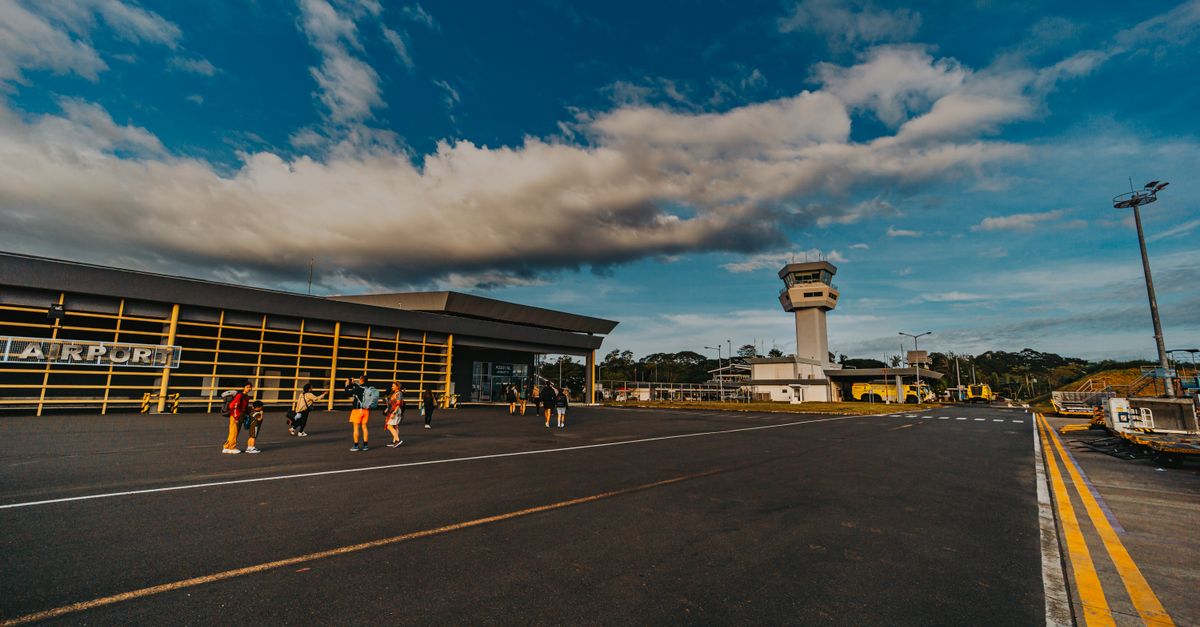 Baltra Airport
 Isla Rabida
 Tagus Cove (Isla Isabela)
 Galapagos
 Galapagos
 Isla Bartolome