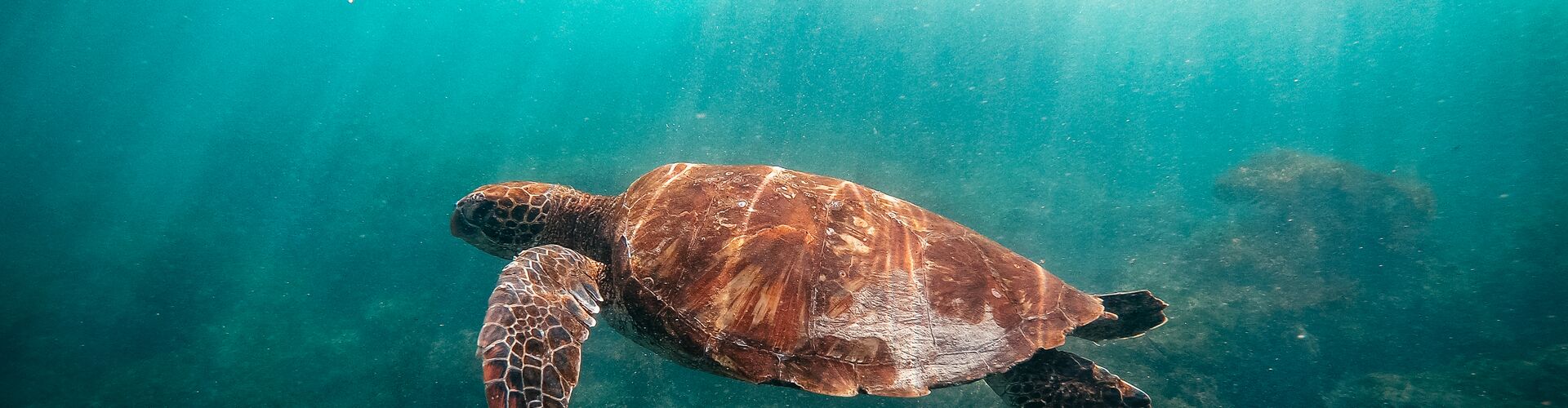
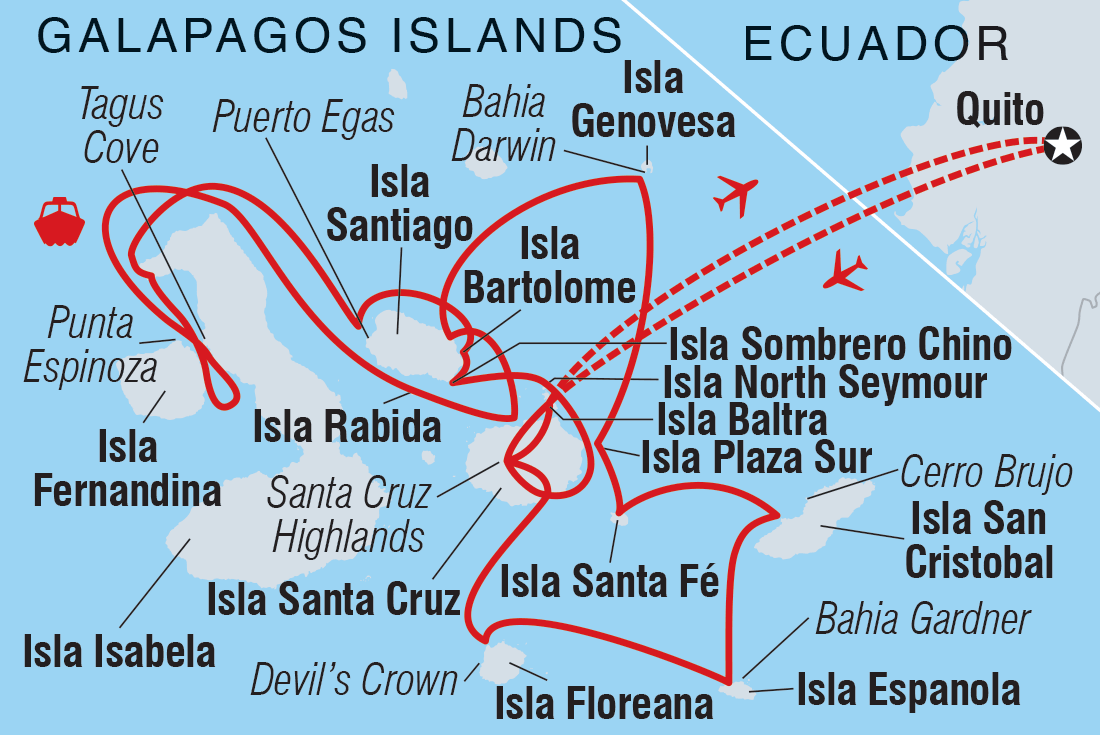
Calling all wildlife lovers! On this immersive 17-day adventure cruise, you’ll be introduced to the endemic wildlife, beautiful landscapes and underwater treasures of the Galapagos Islands. Explore both the traveller’s favourites and the quieter parts of the archipelago, all with a passionate local naturalist on hand to guide you over pahoehoe lava and through marine iguana colonies. Snorkel in clear waters off the coast of Isla Espanola, paddle through a green turtle breeding grove on Isla Floreana, look out for mottled Galapagos hawks on Isla Fernandina and wander between sea lions lounging on beaches with red, black and white sand.
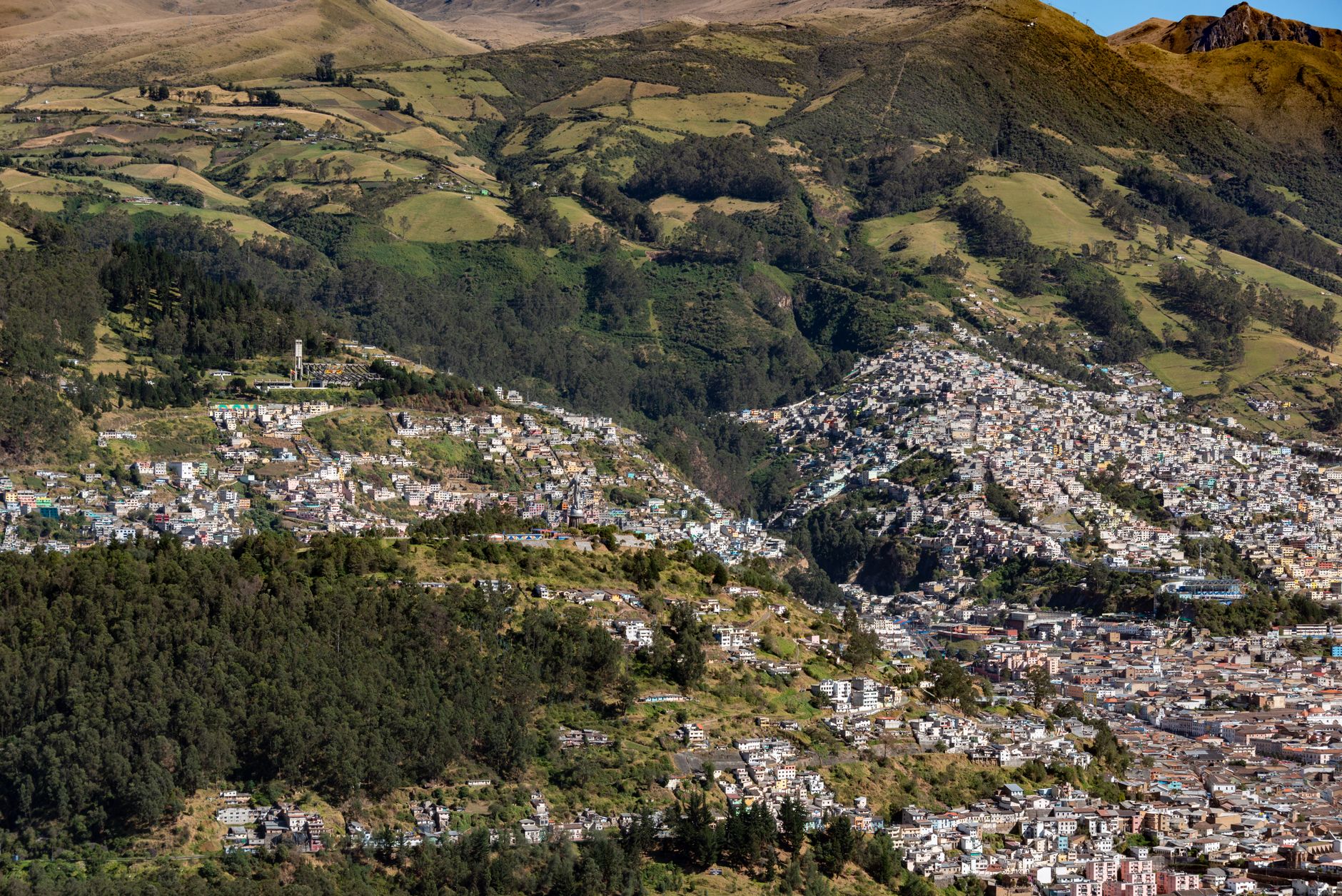
Day 1QuitoBienvenidos! Welcome to Ecuador. Your adventure begins in Quito – Ecuador’s sprawling capital city. You’ll have a welcome meeting at 5 or 6 pm tonight to meet your local leader and small group of fellow travellers. If you arrive early, maybe check out the city at your own pace – head to the Old Town and pick one (or more) of the 30 churches to explore. After your meeting, you’ll head to a small, local restaurant for dinner with your group. Take in the aromas and fresh flavours of the traditional Ecuadorian cuisine – think locroc (traditional potato soup) or quinoa, pork and vegetable dishes cooked with herbs, lemongrass and rich sauces, all sourced from local farms.
Quito
Bienvenidos! Welcome to Ecuador. Your adventure begins in Quito – Ecuador’s sprawling capital city. You’ll have a welcome meeting at 5 or 6 pm tonight to meet your local leader and small group of fellow travellers. If you arrive early, maybe check out the city at your own pace – head to the Old Town and pick one (or more) of the 30 churches to explore. After your meeting, you’ll head to a small, local restaurant for dinner with your group. Take in the aromas and fresh flavours of the traditional Ecuadorian cuisine – think locroc (traditional potato soup) or quinoa, pork and vegetable dishes cooked with herbs, lemongrass and rich sauces, all sourced from local farms.
Your journey through
Bolivia
Day 2Isla Baltra - Santa Cruz HighlandsYou have a very early start this morning (maybe as early as 4 am, depending on flight times) as you head into the Galapagos. Transfer to Mariscal Sucre International Airport (Quito Airport), with a boxed breakfast on the way. When you arrive, you’ll meet your naturalist guide in the arrival hall. Take the short bus ride to the ferry, then board and head across the Itabaca Channel to Isla Santa Cruz. You’ll then board a private bus to Los Gemelos, in the highlands. Surrounded by the unique scalesia cloud forest, look out for the abundant birdlife when you arrive, including different species of Darwin finches, woodpeckers, warbler finches and vermillion flycatchers. Continue further into the highlands to explore a rancho farm, where you’ll take a walk and have lunch – you might even see the giant tortoises in their natural habitat! After lunch, travel to Puerto Ayora, where the Grande Daphne and her crew will be waiting for you.
Isla Baltra
You have a very early start this morning (maybe as early as 4 am, depending on flight times) as you head into the Galapagos. Transfer to Mariscal Sucre International Airport (Quito Airport), with a boxed breakfast on the way. When you arrive, you’ll meet your naturalist guide in the arrival hall. Take the short bus ride to the ferry, then board and head across the Itabaca Channel to Isla Santa Cruz. You’ll then board a private bus to Los Gemelos, in the highlands. Surrounded by the unique scalesia cloud forest, look out for the abundant birdlife when you arrive, including different species of Darwin finches, woodpeckers, warbler finches and vermillion flycatchers. Continue further into the highlands to explore a rancho farm, where you’ll take a walk and have lunch – you might even see the giant tortoises in their natural habitat! After lunch, travel to Puerto Ayora, where the Grande Daphne and her crew will be waiting for you.
Day 3Post Office Bay - Punta Cormorant - Devils Crown, Isla FloreanaLearn about the maritime history of Post Office Bay – home of the oldest postal system in the Americas. The post box here was first built by 18th-century whalers and is still in use today. Maybe leave a postcard, then head out for your first spot of snorkelling. After, head ashore at Punta Cormorant where the sand is made up of olivine crystal – a glassy, volcanic mineral that gives the beach an olive-green colour. Take a walk in search of sea lions, flamingos, pintails and stilts, finishing at a sandy beach where Eastern Pacific green turtles nest. Just offshore, the famous Devil’s Crown waits for those who want a special snorkelling experience – the partially-submerged remains of a volcanic cone are now a unique swimming hole, home to rays, sharks, sea lions and turtles.
Learn about the maritime history of Post Office Bay – home of the oldest postal system in the Americas. The post box here was first built by 18th-century whalers and is still in use today. Maybe leave a postcard, then head out for your first spot of snorkelling. After, head ashore at Punta Cormorant where the sand is made up of olivine crystal – a glassy, volcanic mineral that gives the beach an olive-green colour. Take a walk in search of sea lions, flamingos, pintails and stilts, finishing at a sandy beach where Eastern Pacific green turtles nest. Just offshore, the famous Devil’s Crown waits for those who want a special snorkelling experience – the partially-submerged remains of a volcanic cone are now a unique swimming hole, home to rays, sharks, sea lions and turtles.
Day 4Punta Suarez - Bahia Gardner, Isla EspanolaToday will begin with a hike on Isla Espanola – the southernmost island of the Galapagos and the breeding site for almost all the estimated 24,000 waved albatross on earth. If you’re lucky (and the timing is right), you might spot the elaborate courtship rituals performed by albatross before the female chooses her lifelong mate. Hike through booby colonies to the rocky trails of beautiful Punta Suarez, ending at a clifftop viewpoint. Look out over views of rugged cliffs framed by swooping frigate birds, watching while albatross use the cliffs as their ‘runway’, getting airborne on the southeast winds. Next, head to Bahia Gardner for a walk along the beach. Dodge lounging sea lions, then cool off with a spot of snorkelling. The rocks off the coast are rich with reef sharks, turtles and many species of tropical fish (such as surgeon and angelfish). Small, white-tipped reef sharks can also be spotted resting under the rocks.
Punta Suarez
Today will begin with a hike on Isla Espanola – the southernmost island of the Galapagos and the breeding site for almost all the estimated 24,000 waved albatross on earth. If you’re lucky (and the timing is right), you might spot the elaborate courtship rituals performed by albatross before the female chooses her lifelong mate. Hike through booby colonies to the rocky trails of beautiful Punta Suarez, ending at a clifftop viewpoint. Look out over views of rugged cliffs framed by swooping frigate birds, watching while albatross use the cliffs as their ‘runway’, getting airborne on the southeast winds. Next, head to Bahia Gardner for a walk along the beach. Dodge lounging sea lions, then cool off with a spot of snorkelling. The rocks off the coast are rich with reef sharks, turtles and many species of tropical fish (such as surgeon and angelfish). Small, white-tipped reef sharks can also be spotted resting under the rocks.
Your journey through
Ecuador
Showing Days 5-11
13-day itinerary
Day 5Kicker Rock - Cerro Brujo - Puerto Baquerizo MorenoGalapagosTake a trip to Leon Dormido (Kicker Rock) – this basalt crater rises 150 m above the water and is divided into two parts by a narrow channel. Cruise around Kicker Rock as nesting seabirds flank the boat, tropicbirds soar overhead and sea lions lounge by the water. Next, spend some time snorkelling at Cerro Brujo, looking out for Galapagos sharks and sea turtles or walk on the beach to see the sea lions. Later, sail to Puerto Baquerizo Moreno on the island of San Cristobal. Some passengers will be leaving today, and others may join you. You’ll have free time in the town, then in the afternoon you’ll visit the San Cristobal Interpretation Centre, which brings the history and geography of the archipelago to life. If there’s time, your guide may be able to organise a visit to the highlands, for a chance to see giant tortoises in the wild. The price of this optional activity depends on the number of passengers attending. Relaxing on the beach is a great option for those who don’t wish to go.
Galapagos
Take a trip to Leon Dormido (Kicker Rock) – this basalt crater rises 150 m above the water and is divided into two parts by a narrow channel. Cruise around Kicker Rock as nesting seabirds flank the boat, tropicbirds soar overhead and sea lions lounge by the water. Next, spend some time snorkelling at Cerro Brujo, looking out for Galapagos sharks and sea turtles or walk on the beach to see the sea lions. Later, sail to Puerto Baquerizo Moreno on the island of San Cristobal. Some passengers will be leaving today, and others may join you. You’ll have free time in the town, then in the afternoon you’ll visit the San Cristobal Interpretation Centre, which brings the history and geography of the archipelago to life. If there’s time, your guide may be able to organise a visit to the highlands, for a chance to see giant tortoises in the wild. The price of this optional activity depends on the number of passengers attending. Relaxing on the beach is a great option for those who don’t wish to go.
Day 6Isla Santa Fe - Isla Plaza SurSea lions, iguanas and hawks – oh my! Isla Santa Fe is home to all three, plus Galapagos mockingbirds, marine turtles, frigate birds, Galapagos doves and lava lizards. This island boasts one of the most attractive coves in the whole archipelago. Take a hike along the coast into the Opuntia forest, then cool off with a snorkel, looking out for schools of fish, rays and sea turtles. After, continue to Isla Plaza Sur. When you arrive on this small, gorgeous island, you’ll head out for another walk to get close to sea lions, passing one of the Galapagos’ largest land iguana populations. The southern cliffs are great for spotting tropicbirds and swallow-tailed gulls, as well as ‘the Gentlemen’s Club’ – a gathering of male sea lions. Today, there may be an extra stop on the way to Plaza Sur to restock the boat’s provisions.
Isla Santa Fe
Sea lions, iguanas and hawks – oh my! Isla Santa Fe is home to all three, plus Galapagos mockingbirds, marine turtles, frigate birds, Galapagos doves and lava lizards. This island boasts one of the most attractive coves in the whole archipelago. Take a hike along the coast into the Opuntia forest, then cool off with a snorkel, looking out for schools of fish, rays and sea turtles. After, continue to Isla Plaza Sur. When you arrive on this small, gorgeous island, you’ll head out for another walk to get close to sea lions, passing one of the Galapagos’ largest land iguana populations. The southern cliffs are great for spotting tropicbirds and swallow-tailed gulls, as well as ‘the Gentlemen’s Club’ – a gathering of male sea lions. Today, there may be an extra stop on the way to Plaza Sur to restock the boat’s provisions.
Day 7Bahia Darwin - Prince Philip's Steps, Isla GenovesaExplore Isla Genovesa – the archipelago's north-eastern outpost. The island’s varied landscapes are a twitcher's paradise, with all three kinds of boobies (including the rare red-footed booby) nesting here. Next, see Bahia Darwin (Darwin Beach) for another birding site with large breeding colonies of seabirds, frigates, lava herons, swallow-tailed gulls, mockingbirds and vampire finches. Head out for a hike to see tide pools, sea lions and diamond stingrays. The steep Prince Philip's Steps lead you to the heart of the seabird rookeries, with birds swirling overhead and nesting among the cliffs. Look out for storm petrels on the island’s rocky plains – Genovesa is the only place in the world where these birds can be seen flying during the day! After, maybe cool off with a snorkel, looking out for manta rays, sharks, turtles and moray eels, plus many species of fish.
Bahia Darwin
Explore Isla Genovesa – the archipelago's north-eastern outpost. The island’s varied landscapes are a twitcher's paradise, with all three kinds of boobies (including the rare red-footed booby) nesting here. Next, see Bahia Darwin (Darwin Beach) for another birding site with large breeding colonies of seabirds, frigates, lava herons, swallow-tailed gulls, mockingbirds and vampire finches. Head out for a hike to see tide pools, sea lions and diamond stingrays. The steep Prince Philip's Steps lead you to the heart of the seabird rookeries, with birds swirling overhead and nesting among the cliffs. Look out for storm petrels on the island’s rocky plains – Genovesa is the only place in the world where these birds can be seen flying during the day! After, maybe cool off with a snorkel, looking out for manta rays, sharks, turtles and moray eels, plus many species of fish.
Day 8Bahia Sullivan, Isla Santiago - Cerro Dragon, Isla Santa CruzGalapagosOn Santiago Island's eastern coast sits Bahia Sullivan. Take a walk along Pahoehoe lava, which was created by an eruption that occurred here in 1897. With some luck, you might see some marine iguanas, Sally Lightfoot crabs, sea lions, finches, turtles, sharks and penguins. During your walk, as always, your naturalist guide will take you through the geological history of the island. Then, travel to Cerro Dragon (Dragon Hill) – one of the best places to see land iguanas. Walk to a brackish lagoon to see lagoon birds such as stilts, pintail ducks, sandpipers, sanderlings and flamingos. Further inland, the trail offers a beautiful view of the bay and the western area of the archipelago. This area is a nesting site for land iguanas, which is constantly monitored and assisted by the Charles Darwin Research Station. The arid-zone vegetation makes for an ideal place to see Darwin's finches, Galapagos mockingbirds, the endemic Galapagos flycatcher and yellow warblers.
Galapagos
On Santiago Island's eastern coast sits Bahia Sullivan. Take a walk along Pahoehoe lava, which was created by an eruption that occurred here in 1897. With some luck, you might see some marine iguanas, Sally Lightfoot crabs, sea lions, finches, turtles, sharks and penguins. During your walk, as always, your naturalist guide will take you through the geological history of the island. Then, travel to Cerro Dragon (Dragon Hill) – one of the best places to see land iguanas. Walk to a brackish lagoon to see lagoon birds such as stilts, pintail ducks, sandpipers, sanderlings and flamingos. Further inland, the trail offers a beautiful view of the bay and the western area of the archipelago. This area is a nesting site for land iguanas, which is constantly monitored and assisted by the Charles Darwin Research Station. The arid-zone vegetation makes for an ideal place to see Darwin's finches, Galapagos mockingbirds, the endemic Galapagos flycatcher and yellow warblers.
Day 9Black Turtle Cove - Las Bachas, Isla Santa CruzExplore the red mangrove wetland of Caleta Tortuga Negra (Black Turtle Cove) today on your Zodiac. Cruise through this peaceful cove and look out for mating green turtles, golden cow-nose rays, eagle rays and Galapagos sharks. After, head to Las Bachas, where the soft sand made of decomposed coral is a nesting site for the Pacific green turtle. Marine iguanas are also commonly spotted along the beach. The rocks make for excellent snorkelling and are populated by Sally Lightfoot crabs. A saltwater lagoon just near the beach is home to flamingo and whimbrel and you might also see a great blue heron. Remnants of a floating pier, a testimony to the US presence in the Galapagos during World War II, can also be seen.
Black Turtle Cove
Explore the red mangrove wetland of Caleta Tortuga Negra (Black Turtle Cove) today on your Zodiac. Cruise through this peaceful cove and look out for mating green turtles, golden cow-nose rays, eagle rays and Galapagos sharks. After, head to Las Bachas, where the soft sand made of decomposed coral is a nesting site for the Pacific green turtle. Marine iguanas are also commonly spotted along the beach. The rocks make for excellent snorkelling and are populated by Sally Lightfoot crabs. A saltwater lagoon just near the beach is home to flamingo and whimbrel and you might also see a great blue heron. Remnants of a floating pier, a testimony to the US presence in the Galapagos during World War II, can also be seen.
Day 10Isla Rabida - Punta Albemarle, Isla IsabelaToday, you’ll sail from Las Bachas to Isla Rabida, known for its spectacular red sand beaches, caused by the high iron content in the sand which rusts to form the unusual shade. From the shore, follow today’s hiking trail to a lagoon that’s one of the best spots in the Galapagos to see flamingos. Keep an eye out for nesting pelicans, pintail ducks, marine iguanas and sea lions, too. Check out a vast opuntia cactus forest, hinting at the previous habitation of land iguanas, Galapagos hawks, mockingbirds, doves, finches and lava lizards. After, you can opt to go snorkelling to seek out the resident sea stars, damsels, gobbies and surgeon fish. In the afternoon, head to Albemarle on the northeast side of Isabela Island. Covered in mangroves, the bay is home to sea turtles, sea lions, penguins and flightless cormorants who feed on the algae and fish here. Another fantastic location for snorkelling, you may like to have a look beneath the water’s surface in search of sea turtles and flightless cormorants.
Isla Rabida
Today, you’ll sail from Las Bachas to Isla Rabida, known for its spectacular red sand beaches, caused by the high iron content in the sand which rusts to form the unusual shade. From the shore, follow today’s hiking trail to a lagoon that’s one of the best spots in the Galapagos to see flamingos. Keep an eye out for nesting pelicans, pintail ducks, marine iguanas and sea lions, too. Check out a vast opuntia cactus forest, hinting at the previous habitation of land iguanas, Galapagos hawks, mockingbirds, doves, finches and lava lizards. After, you can opt to go snorkelling to seek out the resident sea stars, damsels, gobbies and surgeon fish. In the afternoon, head to Albemarle on the northeast side of Isabela Island. Covered in mangroves, the bay is home to sea turtles, sea lions, penguins and flightless cormorants who feed on the algae and fish here. Another fantastic location for snorkelling, you may like to have a look beneath the water’s surface in search of sea turtles and flightless cormorants.
Day 11Tagus Cove - Bahia Urbina, Isla IsabelaSail overnight from Punta Albermarle around to the western shores of Isla Isabela. Wake up near Tagus Cove, where pirates and whalers used to collect tortoises for their travels. Maybe go snorkelling here or check out the graffiti on the walls (the oldest of which is from 1836!). Look out for flightless cormorants, blue-footed boobies, a variety of waterfowl and the most northerly penguins in the world. You’ll then walk to a lookout point for a stunning view of the north of Isabela Island and Volcan Wolf (Wolf Volcano). Later, visit Bahia Urbina on the west of Isabela Island to see the bay’s diverse and colourful plant life, which attracts many different insects. The site also features a short hike inland, where giant tortoises can be spotted among the bushes. You may also see land iguanas, which often nest in the middle of the trail. Flycatchers, Darwin’s finches and mockingbirds are common on the ground and in the trees.
Tagus Cove
Sail overnight from Punta Albermarle around to the western shores of Isla Isabela. Wake up near Tagus Cove, where pirates and whalers used to collect tortoises for their travels. Maybe go snorkelling here or check out the graffiti on the walls (the oldest of which is from 1836!). Look out for flightless cormorants, blue-footed boobies, a variety of waterfowl and the most northerly penguins in the world. You’ll then walk to a lookout point for a stunning view of the north of Isabela Island and Volcan Wolf (Wolf Volcano). Later, visit Bahia Urbina on the west of Isabela Island to see the bay’s diverse and colourful plant life, which attracts many different insects. The site also features a short hike inland, where giant tortoises can be spotted among the bushes. You may also see land iguanas, which often nest in the middle of the trail. Flycatchers, Darwin’s finches and mockingbirds are common on the ground and in the trees.
1 / 2
What's included
Included
✓Spend over two weeks on the archipelago of the Galapagos Islands, moving at a leisurely pace and spending more time on each island, soaking up the sun and the sea (the lions and the water).
✓Hike, snorkel, sleep, repeat – this isn’t your average adventure cruise! You’ll have daily walks and hikes followed by snorkelling excursions to spot marine life and corals – the best way to cool off.
✓Spot sea lions – the dogs of the ocean, these amazing creatures are playful, goofy and curious. While you can’t pat them, you’re bound to fall in love with these furry frolickers as you swim alongside them each day.
✓See gorgeous pink flamingos, red-throated frigates and blue-footed boobies, craning your neck, snapping photos and contemplating a career in ornithology.
✓Walk varied landscapes among towering cacti, rocky cliffs, red-sand beaches, volcanic grounds and immersive sea coves.
TripFinder compares the available catalog facts and Brandi Leanna can handle the booking — and you pay the same as booking Intrepid Travel direct, never more, because the operator pays our commission. You travel under the operator's terms; final price and availability are confirmed before purchase.

 Quito
Quito
 Isla Baltra
 Punta Suarez
 Galapagos
 Isla Santa Fe
 Bahia Darwin
 Black Turtle Cove
 Tagus Cove