Walk the remote Nubra Valley, where rare camels roam a virtually uninhabited landscape Concealed by the Ladakh and Karakorum mountains, the Nubra Valley in northern India remains unseen and untouched by mass tourism. Here, rare double-humped Bactrian camels share a near-unspoiled terrain with traditional shepherd camps and elusive snow leopards. To reach it, we must take a spectacular flight over the Himalaya to Leh, the
At a glance
Duration
15 days
Route
→
Countries
India
Activity level
easy
Style
Trekking & Hiking
Group size
Ask
Flights
Not included
Solo travellers
Ask an agent
Day by day
Your journey through
India
Showing Days 1-7
15-day itinerary
Day 1Adventure starts in DelhiOur adventure begins in Delhi, a captivating city full of life and cultural intrigue. If you have time to explore this electric city, a short taxi or tuk-tuk drive from our hotel is Karol Bagh Market, where colourful stalls are packed with clothing and jewellery, and the Gurudwara Bangla Sahib, a magnificent Sikh temple topped with an onion-shaped gold dome. Around 6pm, say namaste to your tour leader and fellow travellers, when we gather as a group for the first time to get to know each other and learn more about the adventures ahead. Your tour leader then ensures a big welcome by arranging a group dinner at a nearby restaurant. Want more time in Delhi? Secure pre-tour hotel nights through your sales representative.
Delhi
Our adventure begins in Delhi, a captivating city full of life and cultural intrigue. If you have time to explore this electric city, a short taxi or tuk-tuk drive from our hotel is Karol Bagh Market, where colourful stalls are packed with clothing and jewellery, and the Gurudwara Bangla Sahib, a magnificent Sikh temple topped with an onion-shaped gold dome. Around 6pm, say namaste to your tour leader and fellow travellers, when we gather as a group for the first time to get to know each other and learn more about the adventures ahead. Your tour leader then ensures a big welcome by arranging a group dinner at a nearby restaurant. Want more time in Delhi? Secure pre-tour hotel nights through your sales representative.
Day 2Sensational flight over the Himalaya to LehWe wake early this morning for a spectacular flight over the Himalaya mountains to Leh, the largest city in the Ladakh region. Reserve a moment or two on your journey to peer out the window and over some of the tallest mountains in the world. After touching down and arriving at our hotel, we settle into our rooms and freshen up. This afternoon, we take a gentle orientation walk around the city and bazaars. The rest of the day is free to relax and acclimatise to the altitude (11,480ft/3,500m).
We wake early this morning for a spectacular flight over the Himalaya mountains to Leh, the largest city in the Ladakh region. Reserve a moment or two on your journey to peer out the window and over some of the tallest mountains in the world. After touching down and arriving at our hotel, we settle into our rooms and freshen up. This afternoon, we take a gentle orientation walk around the city and bazaars. The rest of the day is free to relax and acclimatise to the altitude (11,480ft/3,500m).
Day 3Leh tour; visiting Thikse and Shey monasteriesToday we continue our sightseeing in and around Leh, visiting Tikse and Shey monasteries, two of the major gompas (Buddhist temples) in the area. We first drive to Shey, once a palace of the Ladakh kings. Inside is a small temple containing a 350-year-old copper-and-gold statue of the Buddha. From Shey, we walk across the fields to Tikse, where we visit the monastery. This hilltop complex with red-and-white buildings can be seen for miles and within is a recently built temple with a magnificent image of the Future Buddha. We return to Leh and the rest of the afternoon is free to explore and try more local dishes, such as thukpa (a noodle soup), momos (steamed dumplings) or skiu (a traditional stew). Early evening there will be a full trek briefing.
Today we continue our sightseeing in and around Leh, visiting Tikse and Shey monasteries, two of the major gompas (Buddhist temples) in the area. We first drive to Shey, once a palace of the Ladakh kings. Inside is a small temple containing a 350-year-old copper-and-gold statue of the Buddha. From Shey, we walk across the fields to Tikse, where we visit the monastery. This hilltop complex with red-and-white buildings can be seen for miles and within is a recently built temple with a magnificent image of the Future Buddha. We return to Leh and the rest of the afternoon is free to explore and try more local dishes, such as thukpa (a noodle soup), momos (steamed dumplings) or skiu (a traditional stew). Early evening there will be a full trek briefing.
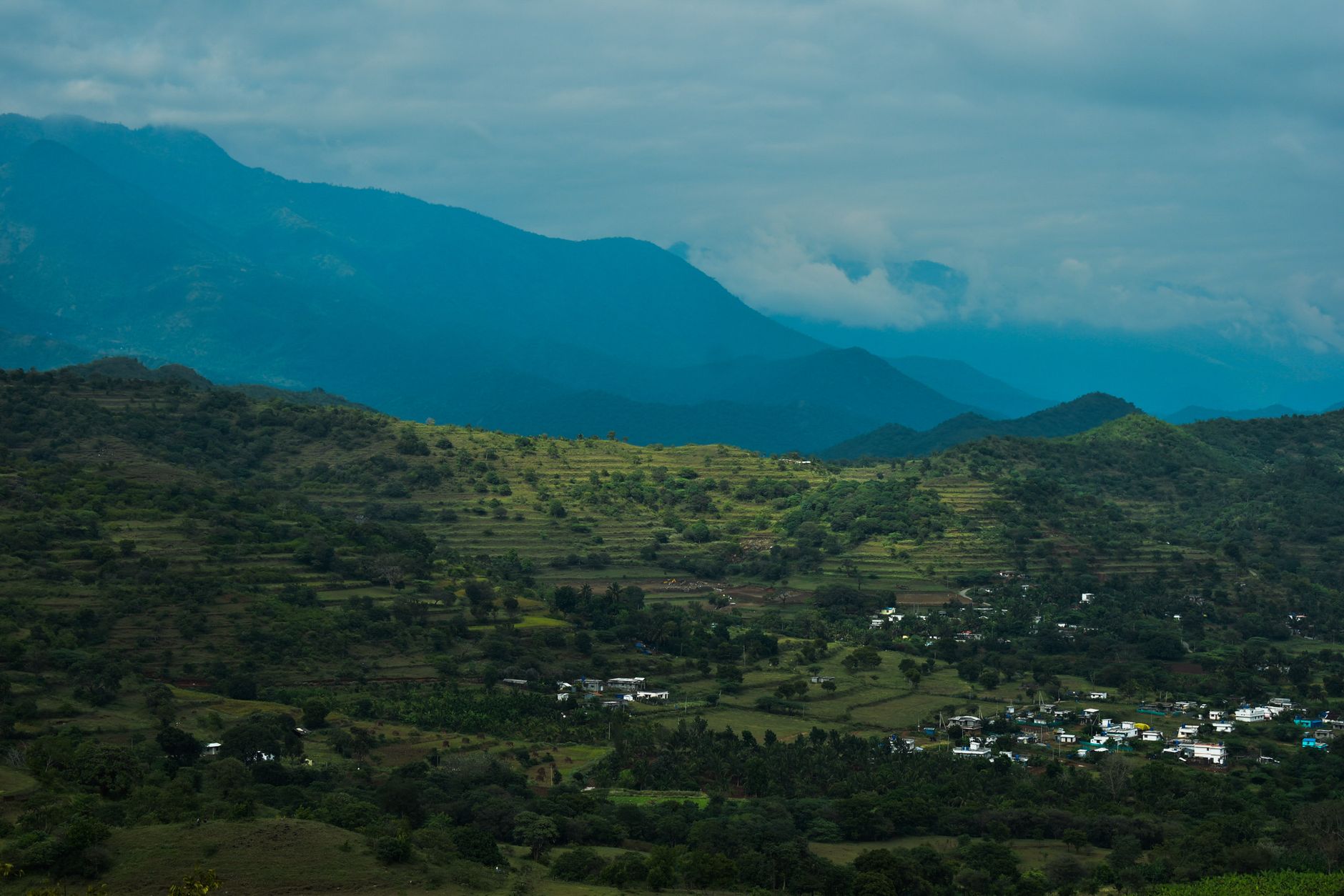
Day 4Drive over the Khardung La to HundarWe leave Leh today and set off in jeeps over the Khardung La, once part of the Silk Road and now one of the highest motorable roads in the world at 17,635ft (5,375m). The journey to the top of the pass takes us on a winding road high above Leh. From the top, we get great views back to the Leh Valley and the Ladakh mountains and ahead we can see the Karakorum mountain range. The road winds down and down through the North Pollu checkpost and to Khardung village, then on to Khalsar village (10,710ft/3,264m) and the Shyok River. We stop en route to visit Diskit monastery. Overlooked by a 105ft (32m) high Buddha statue, it is the oldest and largest in the Nubra Valley, dating from 1420, and belongs to the Gelugpa (Yellow Hat) sect of Tibetan Buddhism. Hundar is only about 6mi (10km) from Diskit and it is filled with dunes, an unusual sight between magnificent mountains. Stopping at the dunes in the late afternoon/early evening we see the rare Bactrian camels. These magnificent two-humped dromedaries were once vital to the traders passing through this region, but when trade decreased in the late 1950s, the animals were left in the Nubra Valley. Thankfully, a government programme has ensured these camels continue to survive and we get a chance to meet some of those still living in the area. From the dunes it is a short drive to our hotel in Hundar (approximately six hours’ drive).
We leave Leh today and set off in jeeps over the Khardung La, once part of the Silk Road and now one of the highest motorable roads in the world at 17,635ft (5,375m). The journey to the top of the pass takes us on a winding road high above Leh. From the top, we get great views back to the Leh Valley and the Ladakh mountains and ahead we can see the Karakorum mountain range. The road winds down and down through the North Pollu checkpost and to Khardung village, then on to Khalsar village (10,710ft/3,264m) and the Shyok River. We stop en route to visit Diskit monastery. Overlooked by a 105ft (32m) high Buddha statue, it is the oldest and largest in the Nubra Valley, dating from 1420, and belongs to the Gelugpa (Yellow Hat) sect of Tibetan Buddhism. Hundar is only about 6mi (10km) from Diskit and it is filled with dunes, an unusual sight between magnificent mountains. Stopping at the dunes in the late afternoon/early evening we see the rare Bactrian camels. These magnificent two-humped dromedaries were once vital to the traders passing through this region, but when trade decreased in the late 1950s, the animals were left in the Nubra Valley. Thankfully, a government programme has ensured these camels continue to survive and we get a chance to meet some of those still living in the area. From the dunes it is a short drive to our hotel in Hundar (approximately six hours’ drive).
Day 5Drive to Hundar Gompa; trek through a spectacular gorge to WachanWe head into the valleys this morning, driving for about 1.8mi (3km) to Hundar Gompa, where we start our trek. Leaving the main valley, we turn up into a narrow side valley. The walking today is fairly easy as we follow a wide 4x4 track into the gorge. Rocks tower above us as we gain height gradually. After approximately 4.5mi (7km), we come to a small droksa (shepherd camp) with a few trees providing welcome shade from the sun. The valley now widens a little and we camp where the valley splits on the edge of a small village called Wachan.
We head into the valleys this morning, driving for about 1.8mi (3km) to Hundar Gompa, where we start our trek. Leaving the main valley, we turn up into a narrow side valley. The walking today is fairly easy as we follow a wide 4x4 track into the gorge. Rocks tower above us as we gain height gradually. After approximately 4.5mi (7km), we come to a small droksa (shepherd camp) with a few trees providing welcome shade from the sun. The valley now widens a little and we camp where the valley splits on the edge of a small village called Wachan.
Day 6Leaving villages behindToday is a half day as we begin to gain height. We start by taking the left-hand valley and climbing steadily to Dok Yokma, a small collection of houses and fields. This is the last village we see until Phyang. We can visit the small monastery and maybe stop in a local house for a cup of tea. The trail ascends down the valley all morning until we reach our campsite opposite the Snia Valley. In the afternoon, there is time to explore the hills and take in the spectacular scenery.
Today is a half day as we begin to gain height. We start by taking the left-hand valley and climbing steadily to Dok Yokma, a small collection of houses and fields. This is the last village we see until Phyang. We can visit the small monastery and maybe stop in a local house for a cup of tea. The trail ascends down the valley all morning until we reach our campsite opposite the Snia Valley. In the afternoon, there is time to explore the hills and take in the spectacular scenery.
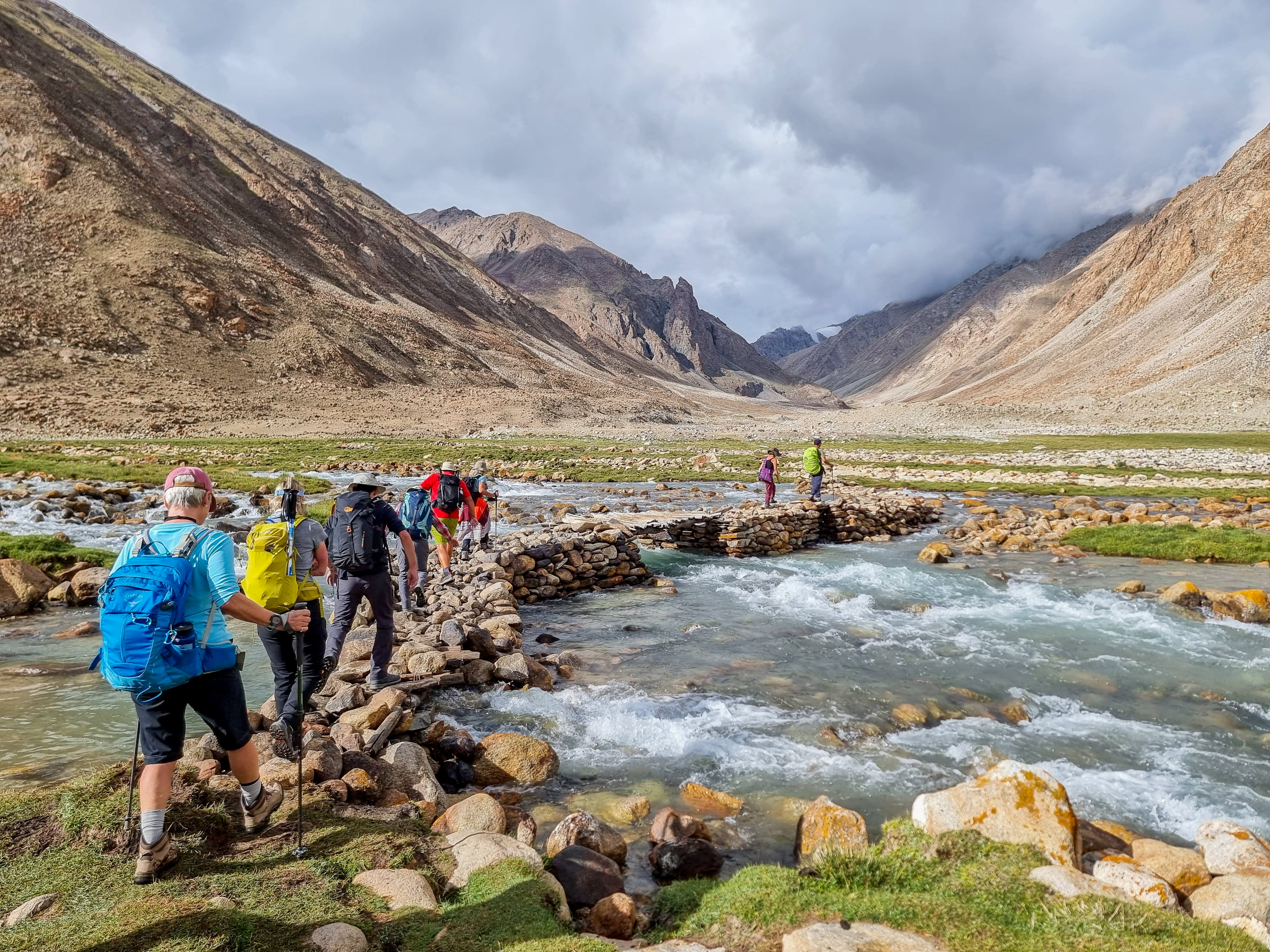
Day 7Surrounded by unnamed peaksWe cross a small stone bridge and turn into the Snia Valley and follow it upstream. The trail climbs steadily on the left hand side of the valley. We are surrounded by unnamed peaks and passes and only shepherds inhabit this valley in the summer. Before there were roads in Ladakh, people used the passes regularly. Now, apart from the summer shepherds with their herds of yaks, the valley is inhabited by wildlife only. Keep your eyes peeled for marmots, foxes, wolves and, for the very lucky, the elusive snow leopards that hunt here. We camp close to the river just before the next valley junction. In the afternoon there is an optional walk further up the valley towards a glacial lake.
We cross a small stone bridge and turn into the Snia Valley and follow it upstream. The trail climbs steadily on the left hand side of the valley. We are surrounded by unnamed peaks and passes and only shepherds inhabit this valley in the summer. Before there were roads in Ladakh, people used the passes regularly. Now, apart from the summer shepherds with their herds of yaks, the valley is inhabited by wildlife only. Keep your eyes peeled for marmots, foxes, wolves and, for the very lucky, the elusive snow leopards that hunt here. We camp close to the river just before the next valley junction. In the afternoon there is an optional walk further up the valley towards a glacial lake.
✓Immersive itinerary with all transport and listed activities
✓Expert tour leader to enhance your adventure
✓Arrival and departure transfers
✓Kitbag to keep
Where you'll stay & how you'll travel
Accommodation
It’s common for hotels in India to have limited times in the day for hot water use to save energy. If you find your shower is cold, please let your leader or reception know so they can make sure the water heater is on.
Toilet tents used while camping comprise of a dug hole (prepared by your camping staff) inside a tent, with dirt/sand beside the hole to cover waste after each use.
Single rooms and tents can be requested for a supplement (subject to availability). Please enquire at the time of booking.
TripFinder compares the available catalog facts and Brandi Leanna can handle the booking — and you pay the same as booking Exodus Adventure Travels direct, never more, because the operator pays our commission. You travel under the operator's terms; final price and availability are confirmed before purchase.