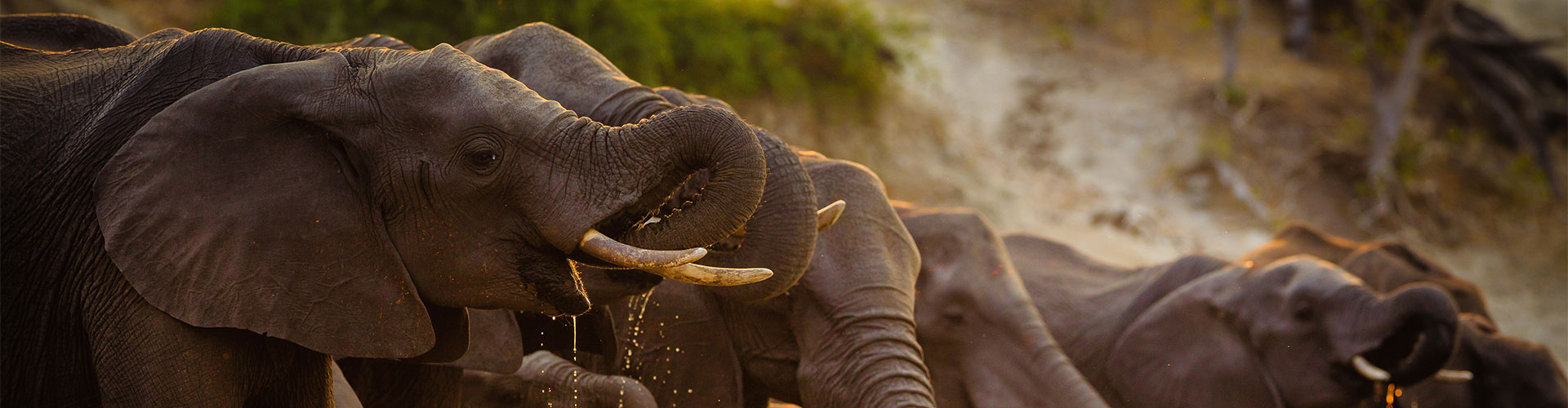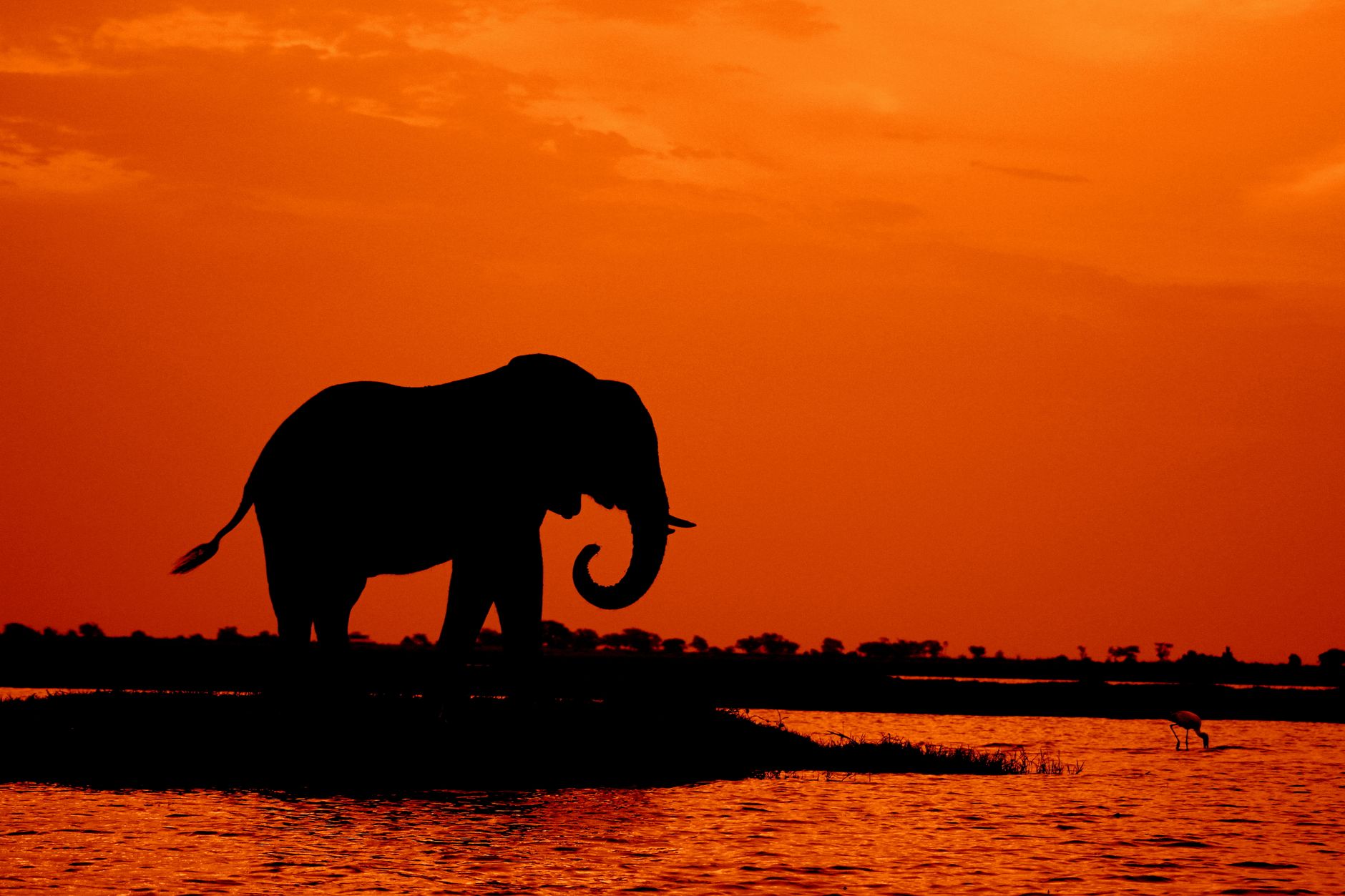
Elephants getting a drink in Chobe National Park, Botswana.
Save Deal visible
Operated by Intrepid Travel

Zanzibar to Cape Town

From
CAD 6,486
Duration
40 days
Countries
Botswana, Malawi, Namibia, South Africa, Tanzania, Zambia, Zimbabwe
Activity
easy
Group size
Max 22
Rating
4.9 · 29 reviewsvia Intrepid Travel

The adventure

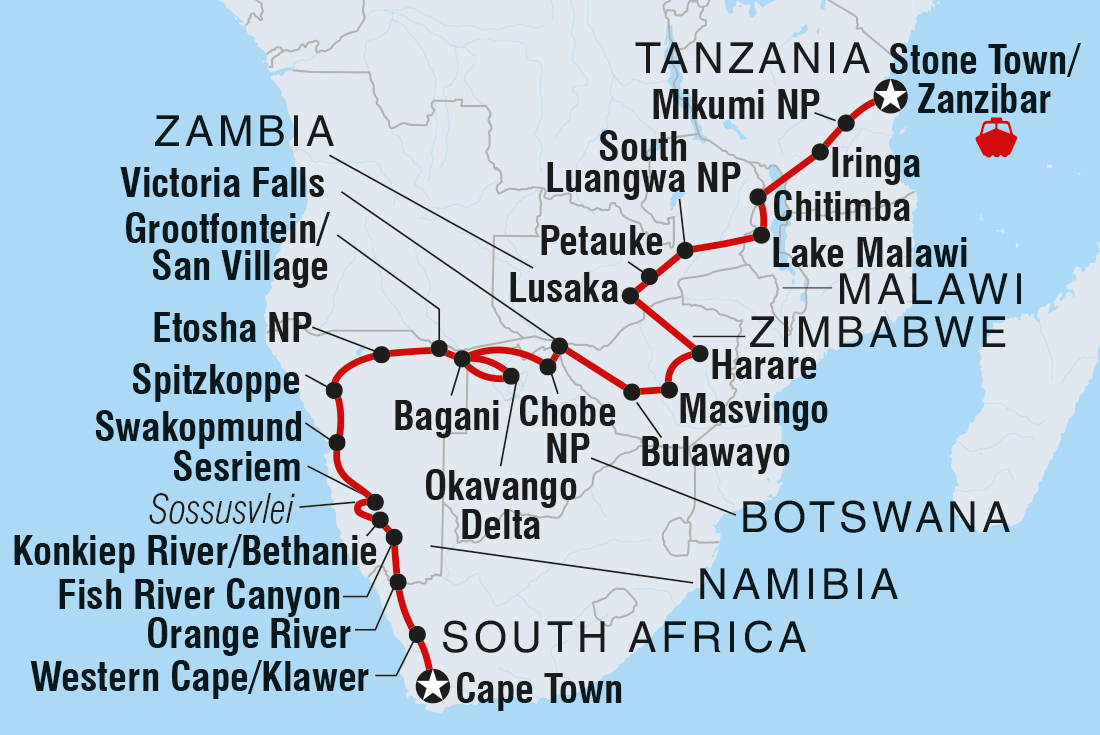
Travel from Zanzibar's pristine coastline to the southern hub of Cape Town to see an array of amazing African vistas. Sample the exotic flavours of Africa's 'Spice Island', relax on Kande Beach at Lake Malawi, scale the sand dunes in Sossusvlei, glide through the Okavango Delta by local mokoro and keep your eyes peeled for elephants, hippos, crocodiles and lions on your multiple included game drives. With an expert local leader and a small group of eager travellers joining you each step of the way, this incredible adventure will open your eyes to the natural beauty of southern Africa.
At a glance

Duration
40 days
Route
Zanzibar → Cape Town
Countries
Botswana, Malawi, Namibia, South Africa, Tanzania, Zambia, Zimbabwe
Activity level
easy
Style
Beach & Islands, Culture & History, Multi-Country / Grand Tour, National Parks & Wilderness
Group size
Max 22
Ages
15+
Flights
Not included
Solo travellers
Welcome

Day by day

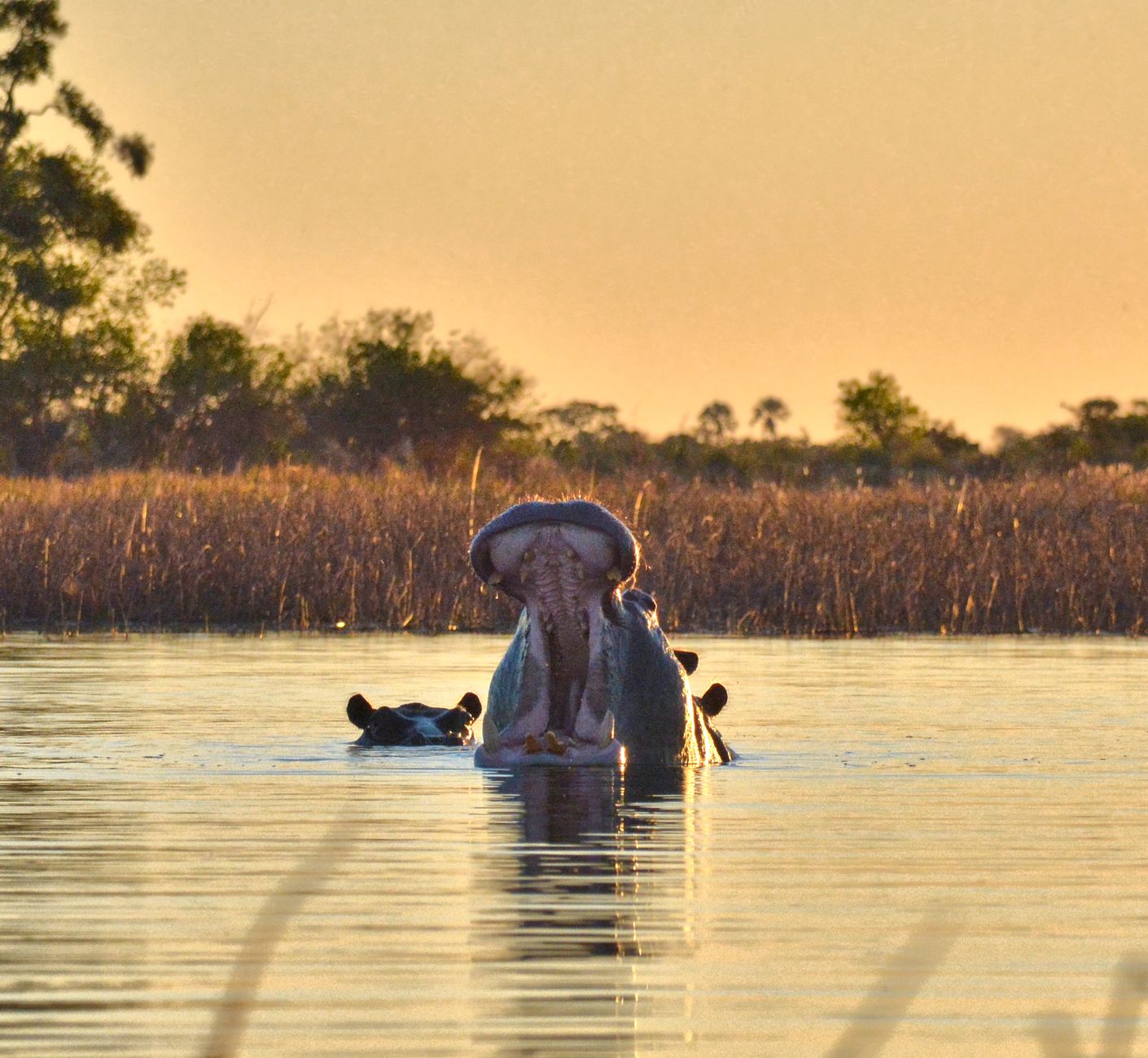
A group of hippos in a tranquil wetland setting, with one yawning widely.
Your journey through

Botswana

Day 1Stone TownWelcome to Zanzibar! Your adventure begins with a welcome meeting at 2 pm where you'll meet your group leader and fellow travellers. Aside from this important meeting, there are no planned activities for the day, and you are free to explore on your own. Filled with pristine white-sand beaches, winding cobblestone alleyways and fragrant bazaars, Zanzibar has had a colourful history – everything from slave traders to Arabian sultans and fruit exporters. The sight of traditional dhows sailing along the coast evokes what the island must have been like centuries ago. The old part of Zanzibar's main city is known as Stone Town, and the best way to see this is on foot, exploring the markets, shops, mosques, palaces and courtyards. When the sun is setting, why not grab a drink from a bar overlooking the seafront? A seafood curry at a local restaurant is also a great choice. You'll spend the night in Stone Town at a basic inn.
Paved narrow street between aged stone residential houses with shabby facade in cityStone Town
Welcome to Zanzibar! Your adventure begins with a welcome meeting at 2 pm where you'll meet your group leader and fellow travellers. Aside from this important meeting, there are no planned activities for the day, and you are free to explore on your own. Filled with pristine white-sand beaches, winding cobblestone alleyways and fragrant bazaars, Zanzibar has had a colourful history – everything from slave traders to Arabian sultans and fruit exporters. The sight of traditional dhows sailing along the coast evokes what the island must have been like centuries ago. The old part of Zanzibar's main city is known as Stone Town, and the best way to see this is on foot, exploring the markets, shops, mosques, palaces and courtyards. When the sun is setting, why not grab a drink from a bar overlooking the seafront? A seafood curry at a local restaurant is also a great choice. You'll spend the night in Stone Town at a basic inn.
Map showing Stone Town
Day 2Zanzibar Northern BeachesOnce checked out of your Stone Town accommodation, consider booking in to an optional guided tour of the island's spice plantations, learning all about the history of this town's spice trade. You will have the opportunity to smell and taste various spices, such as cinnamon, vanilla and ginger, plus sample some teas made with these spices too. After lunch, head to the Northern Beaches, where white sands and sparkling blue seas await. This is the Indian Ocean at its best.
Idyllic white sand beach and azure ocean under clear skies in Zanzibar, Tanzania.Zanzibar Northern Beaches
Once checked out of your Stone Town accommodation, consider booking in to an optional guided tour of the island's spice plantations, learning all about the history of this town's spice trade. You will have the opportunity to smell and taste various spices, such as cinnamon, vanilla and ginger, plus sample some teas made with these spices too. After lunch, head to the Northern Beaches, where white sands and sparkling blue seas await. This is the Indian Ocean at its best.
Map showing Zanzibar Northern Beaches
Day 3Zanzibar Northern BeachesEase into the day with the sound of gentle waves and soft ocean breezes. With a full day free to enjoy Zanzibar’s coastline, you might choose to take a refreshing swim, stretch out on the beach beneath the palms, or savour the flavours of the island with a seafood dinner by the water. However you spend it, today is all about slowing down and letting the rhythm of island life take over.
Traditional wooden canoe on a sandy beach in Zanzibar with lush greenery and clear blue sky.Zanzibar Northern Beaches
Ease into the day with the sound of gentle waves and soft ocean breezes. With a full day free to enjoy Zanzibar’s coastline, you might choose to take a refreshing swim, stretch out on the beach beneath the palms, or savour the flavours of the island with a seafood dinner by the water. However you spend it, today is all about slowing down and letting the rhythm of island life take over.
Map showing Zanzibar Northern Beaches
Day 4Stone TownSpend a final morning relaxing on the sandy northern beaches before returning to Stone Town for an afternoon and evening at leisure. Maybe ask you leader where to grab a urojo, a unique and delicious street treat made from potatoes and noodles stewed in a stock of tumeric, mango, flour and more. Or maybe grab a sugarcane juice and have a wander. You've got a long day of driving ahead tomorrow so make the most of your free time while you can!
Paved narrow street between aged stone residential houses with shabby facade in cityStone Town
Spend a final morning relaxing on the sandy northern beaches before returning to Stone Town for an afternoon and evening at leisure. Maybe ask you leader where to grab a urojo, a unique and delicious street treat made from potatoes and noodles stewed in a stock of tumeric, mango, flour and more. Or maybe grab a sugarcane juice and have a wander. You've got a long day of driving ahead tomorrow so make the most of your free time while you can!
Map showing Stone Town
Day 5Mikumi National ParkEmbrace an early start this morning with a 7.30 am ferry to the mainland, then make tracks for Mikumi. Watch the Tanzanian landscape pass you by along the way, as this long drive is a great chance to soak up the scenery. Gaze out at vast plains dotted with baobab and tamarind trees and maybe catch a glimpse of some of the elephants, buffaloes, giraffes, lions and leopards that call the park home. When you arrive at your camp, your leader will show you the ropes (literally) and help you set up and get comfortable for your night in the tent.
Baboon climbing a tree in the grasslands of Mikumi National Park, Tanzania.Mikumi National Park
Embrace an early start this morning with a 7.30 am ferry to the mainland, then make tracks for Mikumi. Watch the Tanzanian landscape pass you by along the way, as this long drive is a great chance to soak up the scenery. Gaze out at vast plains dotted with baobab and tamarind trees and maybe catch a glimpse of some of the elephants, buffaloes, giraffes, lions and leopards that call the park home. When you arrive at your camp, your leader will show you the ropes (literally) and help you set up and get comfortable for your night in the tent.
Map showing Mikumi National Park
Day 6IringaWake up early this morning to head off on a 4WD game drive into Mikumi National Park with local expert guides. This less touristed park is home to impressive numbers of elephants, hippos, giraffes, zebras, buffalo, warthogs, wildebeest and impalas – you may even spot a predator! After, you'll drive to Iringa and set up camp on the grounds of a farmhouse on the outskirts of the settlement. The area is filled with natural bush land and native birds. Make the most of this rural setting with some stargazing before you retire for the night.
Beautiful landscape with lush green hills and a tranquil river under a clear blue sky in Iringa Region, Tanzania.Iringa
Wake up early this morning to head off on a 4WD game drive into Mikumi National Park with local expert guides. This less touristed park is home to impressive numbers of elephants, hippos, giraffes, zebras, buffalo, warthogs, wildebeest and impalas – you may even spot a predator! After, you'll drive to Iringa and set up camp on the grounds of a farmhouse on the outskirts of the settlement. The area is filled with natural bush land and native birds. Make the most of this rural setting with some stargazing before you retire for the night.
Map showing Iringa
Day 7ChitimbaEnter Malawi this morning and travel to your campsite at Chitimba. Malawi, the ‘warm heart of Africa,’ is dominated by its lake, which covers almost a fifth of the country and provides a livelihood for many Malawian people. Fishermen, fish traders and canoe and net makers all ply their trade on Lake Malawi. A common sight is a fisherman in a bwato (a dugout canoe made from a hollowed tree trunk) fishing on the still lake at the break of day.
A man prepares food in cauldrons over a fire in Gaborone, Botswana.Chitimba
Enter Malawi this morning and travel to your campsite at Chitimba. Malawi, the ‘warm heart of Africa,’ is dominated by its lake, which covers almost a fifth of the country and provides a livelihood for many Malawian people. Fishermen, fish traders and canoe and net makers all ply their trade on Lake Malawi. A common sight is a fisherman in a bwato (a dugout canoe made from a hollowed tree trunk) fishing on the still lake at the break of day.
Map showing Chitimba
Day 8Lake MalawiTravel from Chitimba to Kande Beach today, on the shore of Lake Malawi. There will be a chance to stop at a shop or market for any supplies you might need along the way. Enjoy a relaxing getaway from the commercialism and crowds with a few days on the lake’s more peaceful beaches. Your campsite at Kande Beach is right on the shore of Lake Malawi.
Vibrant sailboats rest on a sunny Lake Malawi beach with mountains in the background.Lake Malawi
Travel from Chitimba to Kande Beach today, on the shore of Lake Malawi. There will be a chance to stop at a shop or market for any supplies you might need along the way. Enjoy a relaxing getaway from the commercialism and crowds with a few days on the lake’s more peaceful beaches. Your campsite at Kande Beach is right on the shore of Lake Malawi.
Map showing Lake Malawi
Day 9Lake MalawiEnjoy free time today to soak up your idyllic surroundings. As well as chilling out on the lake’s sandy shores, make sure you take the opportunity to meet some local Malawians – easily some of the friendliest people in Africa! You can also hire canoes, bikes or pedalos (paddle boats) to enhance your time here.
Two fishermen gathering nets on the serene shores of Lake Malawi in a monochrome setting.Lake Malawi
Enjoy free time today to soak up your idyllic surroundings. As well as chilling out on the lake’s sandy shores, make sure you take the opportunity to meet some local Malawians – easily some of the friendliest people in Africa! You can also hire canoes, bikes or pedalos (paddle boats) to enhance your time here.
Map showing Lake Malawi
Day 10South Luangwa National ParkJourney through southern Malawi and enter Zambia today, continuing to South Luangwa National Park. There will be border crossing formalities on the way, and a chance to stock up on goods or visit an ATM at a local shop or market. The concentration of animals around the Luangwa River and its lagoons is some of the highest in Africa, so when you arrive, take in the beautiful scenery and the abundance of wildlife, watching out for colourful birds and herds of elephants.
A herd of African elephants walking through Kruger National Park, South Africa.South Luangwa National Park
Journey through southern Malawi and enter Zambia today, continuing to South Luangwa National Park. There will be border crossing formalities on the way, and a chance to stock up on goods or visit an ATM at a local shop or market. The concentration of animals around the Luangwa River and its lagoons is some of the highest in Africa, so when you arrive, take in the beautiful scenery and the abundance of wildlife, watching out for colourful birds and herds of elephants.
Map showing South Luangwa National Park
Day 11South Luangwa National ParkRise early this morning, grab a light breakfast and get ready for a morning game drive in a 4WD with a local guide. Then, you'll head back to the camp for an early lunch (as this is the hottest part of the day). Rest in the shade or take an optional village walk if you'd like a snapshot of daily life in the local community. Return to the park for another game drive in the evening, looking out for the local wildlife as the sun sets.
A kudu feeding on tree leaves in Kruger National Park, South Africa.South Luangwa National Park
Rise early this morning, grab a light breakfast and get ready for a morning game drive in a 4WD with a local guide. Then, you'll head back to the camp for an early lunch (as this is the hottest part of the day). Rest in the shade or take an optional village walk if you'd like a snapshot of daily life in the local community. Return to the park for another game drive in the evening, looking out for the local wildlife as the sun sets.
Map showing South Luangwa National Park
Day 12PetaukeAfter breakfast, you'll visit a workshop where local craftswomen take snare wire recovered from poaching traps and transform it into jewellery inspired by the African bush. The women will show you around their purpose-built workshop and give you a chance to try coiling or hammering the wire yourself. For each sale made, a donation is given to anti snare patrols dedicated to the conservation of the region. After your visit, you'll jump back in the vehicle and head further south to Petauke.
Breathtaking aerial shot of vivid green fields and coastline seen from a plane wing.Petauke
After breakfast, you'll visit a workshop where local craftswomen take snare wire recovered from poaching traps and transform it into jewellery inspired by the African bush. The women will show you around their purpose-built workshop and give you a chance to try coiling or hammering the wire yourself. For each sale made, a donation is given to anti snare patrols dedicated to the conservation of the region. After your visit, you'll jump back in the vehicle and head further south to Petauke.
Map showing Petauke
Day 13LusakaThis morning you'll be back on the road, heading for your next camp just south of Lusaka City. When you arrive, stretch your legs and take a stroll to discover the town on foot. Though it's fast developing, Lusaka retains a strong African feel, and the locals are usually up for a chat. Your local leader will also give you some insight into the area. Tonight, you're free to chill out under the stars at camp.
Road sign indicating directions to Nyimba and Lusaka, with a rural landscape.Lusaka
This morning you'll be back on the road, heading for your next camp just south of Lusaka City. When you arrive, stretch your legs and take a stroll to discover the town on foot. Though it's fast developing, Lusaka retains a strong African feel, and the locals are usually up for a chat. Your local leader will also give you some insight into the area. Tonight, you're free to chill out under the stars at camp.
Map showing Lusaka
Day 14HarareTravel to Harare today. The first part of your journey takes you to the border with Zimbabwe. After crossing and going through border formalities, you'll continue to Harare. There will be a chance to explore the town when you arrive, as well as stock up on whatever you need at a market or local shop.
Avenues Clinic with blue sky and urban setting in Harare, Zimbabwe.Harare
Travel to Harare today. The first part of your journey takes you to the border with Zimbabwe. After crossing and going through border formalities, you'll continue to Harare. There will be a chance to explore the town when you arrive, as well as stock up on whatever you need at a market or local shop.
Map showing Harare
Day 15Great Zimbabwe Ruins / MasvingoThis morning, it's onto Masvingo. This colonial settlement – the oldest in Zimbabwe – makes the perfect base for exploring the ruins of Great Zimbabwe. The ancient city, now a UNESCO World Heritage site, was first constructed in the 11th century and is believed to have been the seat of power for a monarch. Spend a few hours exploring this intriguing site before heading off to camp where your night is free to relax.
A solitary impala wanders through the savanna near traditional huts in Murehwa, Zimbabwe.Great Zimbabwe Ruins
This morning, it's onto Masvingo. This colonial settlement – the oldest in Zimbabwe – makes the perfect base for exploring the ruins of Great Zimbabwe. The ancient city, now a UNESCO World Heritage site, was first constructed in the 11th century and is believed to have been the seat of power for a monarch. Spend a few hours exploring this intriguing site before heading off to camp where your night is free to relax.
Day 16BulawayoTravel to Bulawayo today. Known locally as the 'City of Kings', Bulawayo is Zimbabwe's second largest city. There is some impeccable historical architecture to take in here, so feel free to walk around at your own pace when you arrive. Enjoy free time this afternoon to explore town or ask your local leader for some optional activities. You might like to browse some local markets or chat with the locals. The Natural History Museum and National Art Gallery are also worth checking out.
A roadside sign on R71 highway indicating directions to Polokwane, set against a cloudy sky.Bulawayo
Travel to Bulawayo today. Known locally as the 'City of Kings', Bulawayo is Zimbabwe's second largest city. There is some impeccable historical architecture to take in here, so feel free to walk around at your own pace when you arrive. Enjoy free time this afternoon to explore town or ask your local leader for some optional activities. You might like to browse some local markets or chat with the locals. The Natural History Museum and National Art Gallery are also worth checking out.
Map showing Bulawayo
Day 17BulawayoGet ready for the experience of a lifetime today – tracking rhinos on foot with an expert guide! Matobo National Park, known for its black and white rhinos, is also home to other wildlife like klipspringers, leopards, warthogs and springhares. You'll learn all about these unique animals from your guide and gain insights into the local plants and trees, including wild pear and paperbark. Discover San paintings and the fascinating rock formations of the area, too. Matobo National Park is an important site of spiritual and cultural significance for the local people, and there are many places in the park where important ceremonies still take place.
Aerial panorama of Phola township showcasing sunlit houses, roads, and hills in South Africa.Bulawayo
Get ready for the experience of a lifetime today – tracking rhinos on foot with an expert guide! Matobo National Park, known for its black and white rhinos, is also home to other wildlife like klipspringers, leopards, warthogs and springhares. You'll learn all about these unique animals from your guide and gain insights into the local plants and trees, including wild pear and paperbark. Discover San paintings and the fascinating rock formations of the area, too. Matobo National Park is an important site of spiritual and cultural significance for the local people, and there are many places in the park where important ceremonies still take place.
Map showing Bulawayo
Aerial view of lush, rocky hills in Zimbabwe under a cloudy sky, showcasing natural beauty.
Your journey through

Zimbabwe

Day 18Victoria FallsDepart Bulawayo this morning and make the drive towards Victoria Falls. Stretching 1.6 km wide and falling 108 m into a narrow gorge below, the falls are a sight to behold. Although a visit to the falls themselves is optional, it's highly recommended. In the wet season, the spray created from this feat of nature can rise 400 m and can often be seen from far in the distance. It’s no wonder that the local name for Victoria Falls is Mosi oa Tunya, or the 'Smoke that Thunders'. If you’re travelling in the dry season, you’ll get an unobstructed view of the falls and the chance to see the islets in the river below. Your leader will take you to a local activity centre today, where a range of activities will be on offer.
A stunning view of a waterfall cascading surrounded by dense forest.Victoria Falls
Depart Bulawayo this morning and make the drive towards Victoria Falls. Stretching 1.6 km wide and falling 108 m into a narrow gorge below, the falls are a sight to behold. Although a visit to the falls themselves is optional, it's highly recommended. In the wet season, the spray created from this feat of nature can rise 400 m and can often be seen from far in the distance. It’s no wonder that the local name for Victoria Falls is Mosi oa Tunya, or the 'Smoke that Thunders'. If you’re travelling in the dry season, you’ll get an unobstructed view of the falls and the chance to see the islets in the river below. Your leader will take you to a local activity centre today, where a range of activities will be on offer.
Map showing Victoria Falls
Day 19Victoria FallsToday is a free day to enjoy the many activities on offer. If you are interested in the optional helicopter flight (12 minutes or 25 minutes) we endorse the following operator only: Zambezi Helicopter co CAA Zimbabwe. Your local leader can help you arrange this, so feel free to ask them or find out more information at the activity centre.
Stunning view of Victoria Falls cascading with vibrant energy, surrounded by lush greenery.Victoria Falls
Today is a free day to enjoy the many activities on offer. If you are interested in the optional helicopter flight (12 minutes or 25 minutes) we endorse the following operator only: Zambezi Helicopter co CAA Zimbabwe. Your local leader can help you arrange this, so feel free to ask them or find out more information at the activity centre.
Map showing Victoria Falls
Day 20Victoria FallsToday you have the option of visiting the magnificent Victoria Falls. Spanning about a mile wide across and falling 108 m into a narrow gorge below, the spray from the falls can sometimes be seen from kilometres away. In the dry season, the view of the falls is unobstructed by mist, and it's possible to see little islets in the river below. To fully understand the sheer force of this staggering curtain of water, it needs to be experienced in person. It's no wonder that the local name Mosi oa Tunya means the 'smoke that thunders'. Alternatively, your leader will be able to recommend a range of other activities that are available.
Stunning view of Victoria Falls cascading powerfully over rugged cliffs.Victoria Falls
Today you have the option of visiting the magnificent Victoria Falls. Spanning about a mile wide across and falling 108 m into a narrow gorge below, the spray from the falls can sometimes be seen from kilometres away. In the dry season, the view of the falls is unobstructed by mist, and it's possible to see little islets in the river below. To fully understand the sheer force of this staggering curtain of water, it needs to be experienced in person. It's no wonder that the local name Mosi oa Tunya means the 'smoke that thunders'. Alternatively, your leader will be able to recommend a range of other activities that are available.
Map showing Victoria Falls
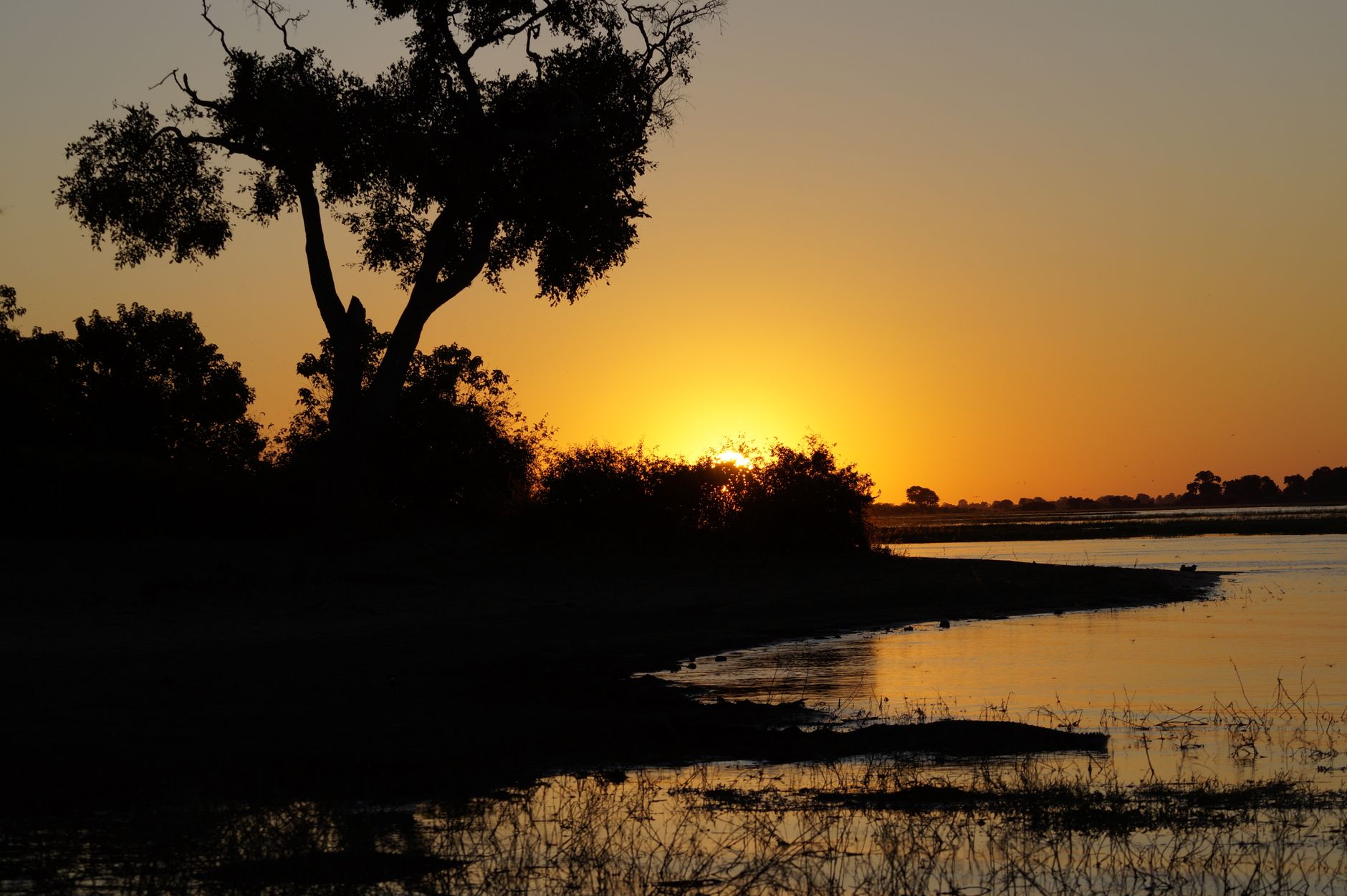
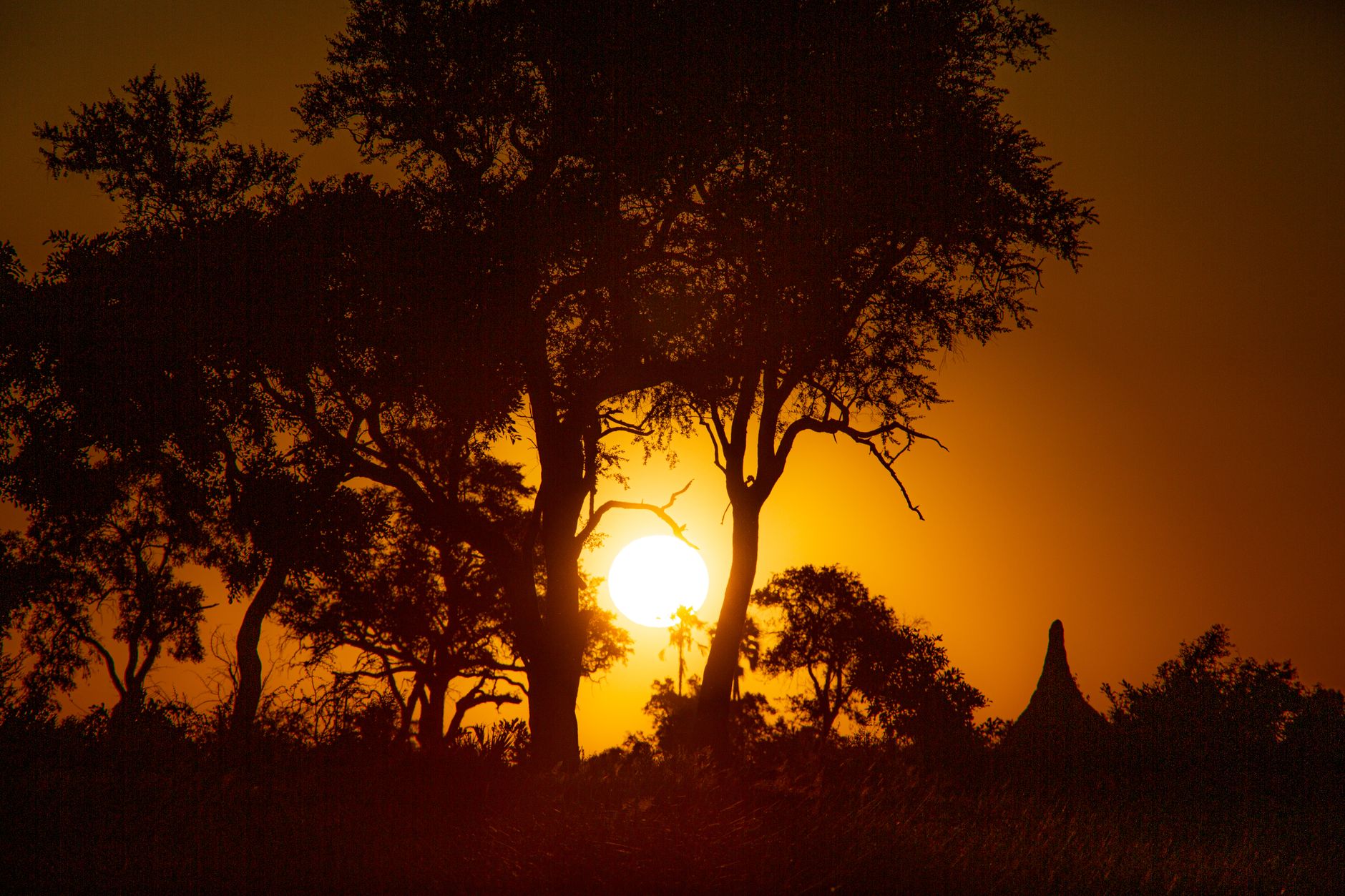
Captivating sunset over a tranquil waterside in Nunga, Botswana, with silhouetted trees.
Your journey through

Botswana

Day 21Chobe National ParkThis morning is free for you to continue enjoying all that Victoria Falls has to offer. Afterwards, travel to Chobe National Park in Botswana via the Victoria Falls Wildlife Trust, one of The Intrepid Foundation’s projects. Here you can learn about the rescue and rehabilitation of wildlife, human-wildlife conflict and the Trust’s role in anti-poaching. There may also be a chance to meet any rescued or orphaned wildlife currently in their care. Continue your journey to Botswana's first national park, which is famous for its high concentration of elephants, so keep an eye out! They can often be seen swimming in the Chobe River.
An African elephant partially submerged in a water body in Botswana's lush wildlife habitat.Chobe National Park
This morning is free for you to continue enjoying all that Victoria Falls has to offer. Afterwards, travel to Chobe National Park in Botswana via the Victoria Falls Wildlife Trust, one of The Intrepid Foundation’s projects. Here you can learn about the rescue and rehabilitation of wildlife, human-wildlife conflict and the Trust’s role in anti-poaching. There may also be a chance to meet any rescued or orphaned wildlife currently in their care. Continue your journey to Botswana's first national park, which is famous for its high concentration of elephants, so keep an eye out! They can often be seen swimming in the Chobe River.
Map showing Chobe National Park
Day 22Chobe National ParkRise and shine for an early-morning game drive. Adventuring through the park, you will get the opportunity to get up close to the wildlife – with luck you will spot a variety of animals and any number of exotic birds. As well as the Chobe icon, the elephant, the river also attracts hippos and crocodiles – the latter like to sun themselves by the water's edge. Cheetahs also come down for a drink. The birdwatching is excellent here too – look out for eagles, kingfishers and marabou storks, among hundreds of other species. In the afternoon perhaps take an optional cruise down the Chobe River – one of the best ways to enjoy the park's animals.
Silhouette of an elephant by a riverbank during a vibrant orange sunset in the African wilderness.Chobe National Park
Rise and shine for an early-morning game drive. Adventuring through the park, you will get the opportunity to get up close to the wildlife – with luck you will spot a variety of animals and any number of exotic birds. As well as the Chobe icon, the elephant, the river also attracts hippos and crocodiles – the latter like to sun themselves by the water's edge. Cheetahs also come down for a drink. The birdwatching is excellent here too – look out for eagles, kingfishers and marabou storks, among hundreds of other species. In the afternoon perhaps take an optional cruise down the Chobe River – one of the best ways to enjoy the park's animals.
Map showing Chobe National Park
Day 23BaganiToday you will enter Namibia, driving from Kasane to Ngoma Bridge, and on to your camp at Bagani. Enjoy the journey, watching the scenery change with towns, trees and skies rolling past you. Bagani is the homestead of the local Mbukushu kings. You will have the opportunity to stop at an ATM and a market or shop today.
Colorful outdoor festival scene in South Africa with joyful crowd celebrating.Bagani
Today you will enter Namibia, driving from Kasane to Ngoma Bridge, and on to your camp at Bagani. Enjoy the journey, watching the scenery change with towns, trees and skies rolling past you. Bagani is the homestead of the local Mbukushu kings. You will have the opportunity to stop at an ATM and a market or shop today.
Map showing Bagani
Day 24Okavango DeltaCross the border into Botswana and travel south along the Okavango Panhandle to Sepopa. Leave the truck behind as you head deeper into the delta. A boat ride will take you to your mokoro team, where you’ll begin your exploration of the Okavango Delta. Each mokoro (a traditional dugout canoe) is expertly poled through the waterways by a local guide. As you glide past reeds and lily pads, the peaceful atmosphere may be interrupted by the grunt of a hippo. On your first night, camp on a secluded island, far from the reach of civilization.
A yawning hippopotamus in a serene water scene at sunset in Botswana.Okavango Delta
Cross the border into Botswana and travel south along the Okavango Panhandle to Sepopa. Leave the truck behind as you head deeper into the delta. A boat ride will take you to your mokoro team, where you’ll begin your exploration of the Okavango Delta. Each mokoro (a traditional dugout canoe) is expertly poled through the waterways by a local guide. As you glide past reeds and lily pads, the peaceful atmosphere may be interrupted by the grunt of a hippo. On your first night, camp on a secluded island, far from the reach of civilization.
Map showing Okavango Delta
Day 25Okavango DeltaContinue exploring the delta today by mokoro and enjoy a short guided nature walk. Later, return to Sepopa Camp, where you can relax with hot showers, a swimming pool, and a small bar. For a different perspective, you have the option to take a scenic flight over the delta for an unforgettable aerial view.
Two giraffes walking in the vibrant African savannah landscape.Okavango Delta
Continue exploring the delta today by mokoro and enjoy a short guided nature walk. Later, return to Sepopa Camp, where you can relax with hot showers, a swimming pool, and a small bar. For a different perspective, you have the option to take a scenic flight over the delta for an unforgettable aerial view.
Map showing Okavango Delta
Day 26BaganiCross the border back into Namibia and return to Bagani to camp for the night. Various boat trips and guided hikes are possible from Bagani, so if you're feeling active, get out and make the most of it. Those who are feeling bold might even be able to challenge the local kids to a soccer match – don't expect to win though! Retire to your camp in the evening and enjoy this welcome break from the road.
Colorful outdoor festival scene in South Africa with joyful crowd celebrating.Bagani
Cross the border back into Namibia and return to Bagani to camp for the night. Various boat trips and guided hikes are possible from Bagani, so if you're feeling active, get out and make the most of it. Those who are feeling bold might even be able to challenge the local kids to a soccer match – don't expect to win though! Retire to your camp in the evening and enjoy this welcome break from the road.
Map showing Bagani
Day 27GrootfonteinDrive to your camp situated 50 km outside of Grootfontein. The town of Grootfontein, part of the Otavi Triangle, tends to get very green in the warmer months but dries out markedly in the winter. If it's springtime, you'll likely see jacarandas in bloom.
A lush aerial view of a suburban neighborhood surrounded by greenery in South Africa.Grootfontein
Drive to your camp situated 50 km outside of Grootfontein. The town of Grootfontein, part of the Otavi Triangle, tends to get very green in the warmer months but dries out markedly in the winter. If it's springtime, you'll likely see jacarandas in bloom.
Map showing Grootfontein
Day 28Grootfontein/San peopleEmbark on a 180-km (112-mile) round-trip to visit the San people. The oldest inhabitants of southern Africa, the San, have lived in this region for at least 20,000 years. Listen to their stories and songs and learn how those who still adhere to a traditional way of life emphasise the importance of living in harmony with the environment.
Wet urban street in Pretoria with trees and buildings, showcasing city life.Grootfontein
Embark on a 180-km (112-mile) round-trip to visit the San people. The oldest inhabitants of southern Africa, the San, have lived in this region for at least 20,000 years. Listen to their stories and songs and learn how those who still adhere to a traditional way of life emphasise the importance of living in harmony with the environment.
Map showing Grootfontein
Day 29Etosha National ParkTravel to Etosha National Park this morning. While Etosha National Park is home to a wide range of southern Africa's wildlife, including the big carnivores and five rare or endangered species: black rhino, Hartmann's mountain zebra, black-faced impala, roan antelope and the tiny Damara dik-dik. Game viewing in Etosha is relatively easy due to the man-made waterholes and the large, sparsely vegetated pans. The bushland surrounding the pans is difficult to see through, but there are enough clearings, pans and waterholes to usually allow for some sightings. Embark on an optional evening game drive here in the evening, then spend the night at Namutoni. Accommodation upgrades are on offer here.
Two zebras nuzzling amidst a herd at Etosha National Park, Namibia.Etosha National Park
Travel to Etosha National Park this morning. While Etosha National Park is home to a wide range of southern Africa's wildlife, including the big carnivores and five rare or endangered species: black rhino, Hartmann's mountain zebra, black-faced impala, roan antelope and the tiny Damara dik-dik. Game viewing in Etosha is relatively easy due to the man-made waterholes and the large, sparsely vegetated pans. The bushland surrounding the pans is difficult to see through, but there are enough clearings, pans and waterholes to usually allow for some sightings. Embark on an optional evening game drive here in the evening, then spend the night at Namutoni. Accommodation upgrades are on offer here.
Map showing Etosha National Park
Day 30Etosha National ParkEnjoy a full-day game drive in Etosha National Park. Namibia has protected its game reserves against poaching, which means significant numbers of elephants, antelope and other herbivores reside here. The park is also home to some 340 species of birds – keep an eye to the sky where you might spot a soaring eagle. Tonight, you will stay at the particularly spectacular Okaukuejo Camp. The camp overlooks a floodlit waterhole visited by many different species throughout the day and night. Upgrades are not available at this location tonight.
A serene landscape with a giraffe walking in Etosha National Park, Namibia.Etosha National Park
Enjoy a full-day game drive in Etosha National Park. Namibia has protected its game reserves against poaching, which means significant numbers of elephants, antelope and other herbivores reside here. The park is also home to some 340 species of birds – keep an eye to the sky where you might spot a soaring eagle. Tonight, you will stay at the particularly spectacular Okaukuejo Camp. The camp overlooks a floodlit waterhole visited by many different species throughout the day and night. Upgrades are not available at this location tonight.
Map showing Etosha National Park
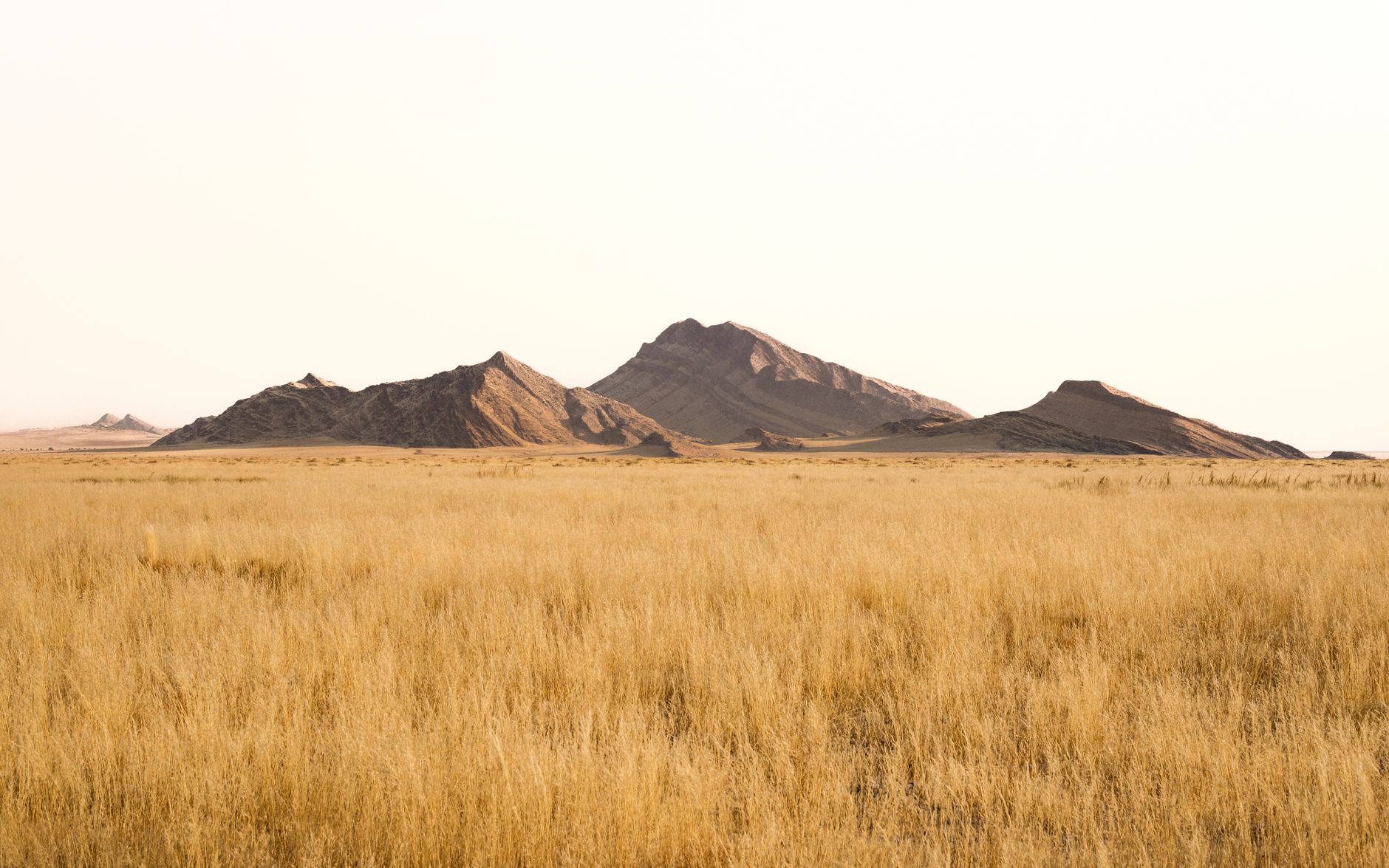
Day 31SpitzkoppeTravel to the mountain of Spitzkoppe today. The wild lands around this superb granite peak are some of Namibia's most stunning. The mountain itself is 700 million years old and 1987 m (6519 ft) high. Although you shouldn't try to climb to the top, the area is rich in plant life and with some bush paintings to be found. Be sure to look out for the sunset from your bush camp this evening – the landscape is known to take on dazzling hues of orange and red.
Explore the majestic rock formations of Spitzkoppe under clear blue skies in Namibia's Erongo region.Spitzkoppe
Travel to the mountain of Spitzkoppe today. The wild lands around this superb granite peak are some of Namibia's most stunning. The mountain itself is 700 million years old and 1987 m (6519 ft) high. Although you shouldn't try to climb to the top, the area is rich in plant life and with some bush paintings to be found. Be sure to look out for the sunset from your bush camp this evening – the landscape is known to take on dazzling hues of orange and red.
Map showing Spitzkoppe
Day 32SwakopmundContinue to the town of Swakopmund. Be dazzled by the sight, sound and smell of thousands of olive-coloured seals on the shores of Cape Cross while you're travelling up the Atlantic Coast. You'll be able to stop along the way to access an ATM and market if you need some supplies.
Peaceful view of Swakopmund beach and pier in Namibia, with waves crashing against the shore.Swakopmund
Continue to the town of Swakopmund. Be dazzled by the sight, sound and smell of thousands of olive-coloured seals on the shores of Cape Cross while you're travelling up the Atlantic Coast. You'll be able to stop along the way to access an ATM and market if you need some supplies.
Map showing Swakopmund
Day 33SwakopmundSurrounded by the massive dune fields of the Namib Desert on three sides and the Atlantic Ocean on the other, Swakopmund is an example of the German culture found in all major settlements in Namibia. With your free time, maybe wander the streets and explore at your own pace or ask your leader for recommendations on activities and dining options.
Explore the serene coastline of Swakopmund, Namibia with its iconic pier and rugged shoreline.Swakopmund
Surrounded by the massive dune fields of the Namib Desert on three sides and the Atlantic Ocean on the other, Swakopmund is an example of the German culture found in all major settlements in Namibia. With your free time, maybe wander the streets and explore at your own pace or ask your leader for recommendations on activities and dining options.
Map showing Swakopmund
Day 34SwakopmundToday is another free day to enjoy this fun beachside town. If you're after a dose of history and culture, you can stop in at the lighthouse and visit the Swakopmund Museum. Active types and thrillseekers might like to take advantage of the many outdoor activities on offer – this town is the adventure sports mecca of Namibia.
A stunning coastal scene capturing Swakopmund Beach, Namibia, with a pier extending into the ocean under a bright blue sky.Swakopmund
Today is another free day to enjoy this fun beachside town. If you're after a dose of history and culture, you can stop in at the lighthouse and visit the Swakopmund Museum. Active types and thrillseekers might like to take advantage of the many outdoor activities on offer – this town is the adventure sports mecca of Namibia.
Map showing Swakopmund
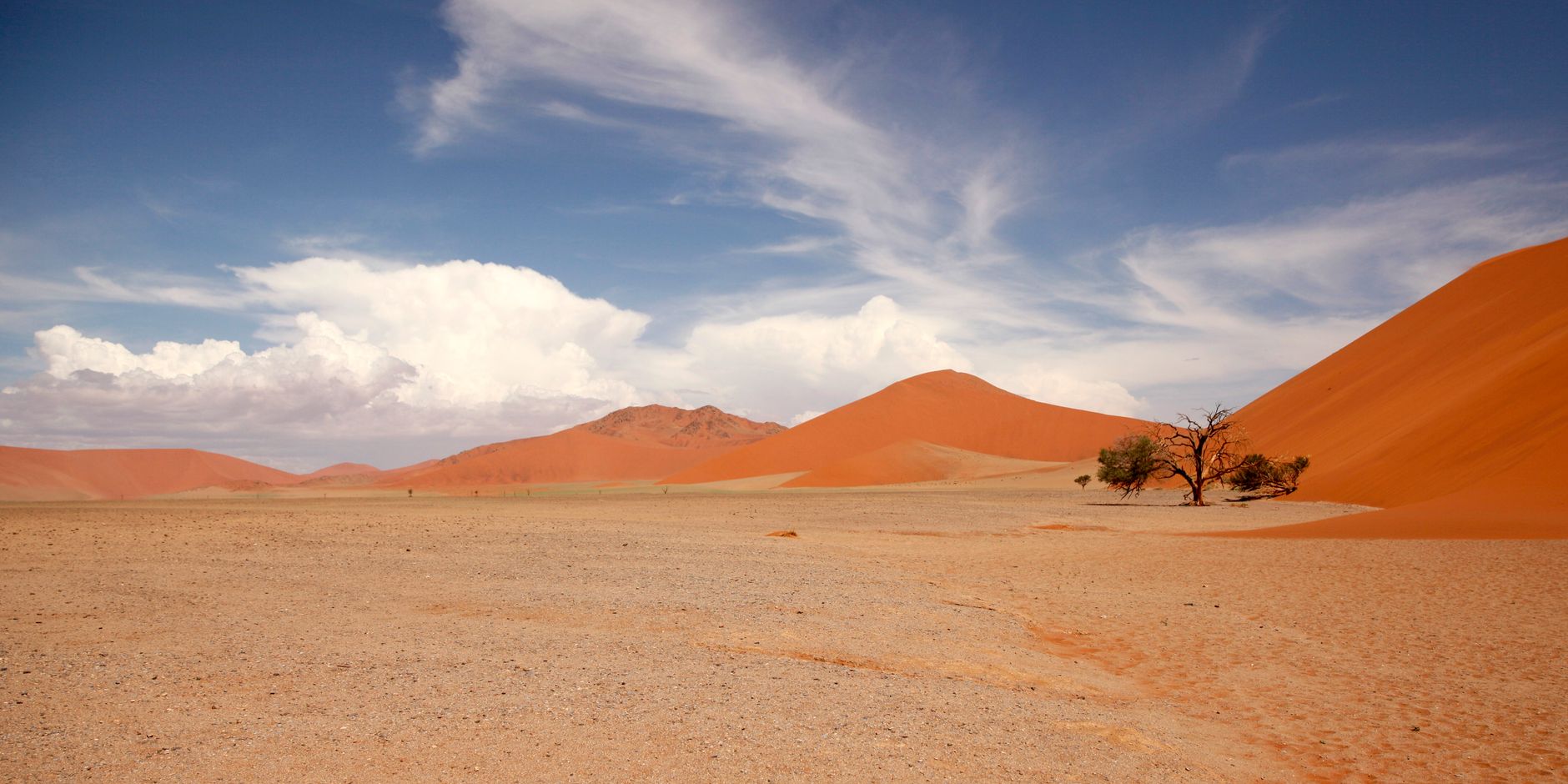
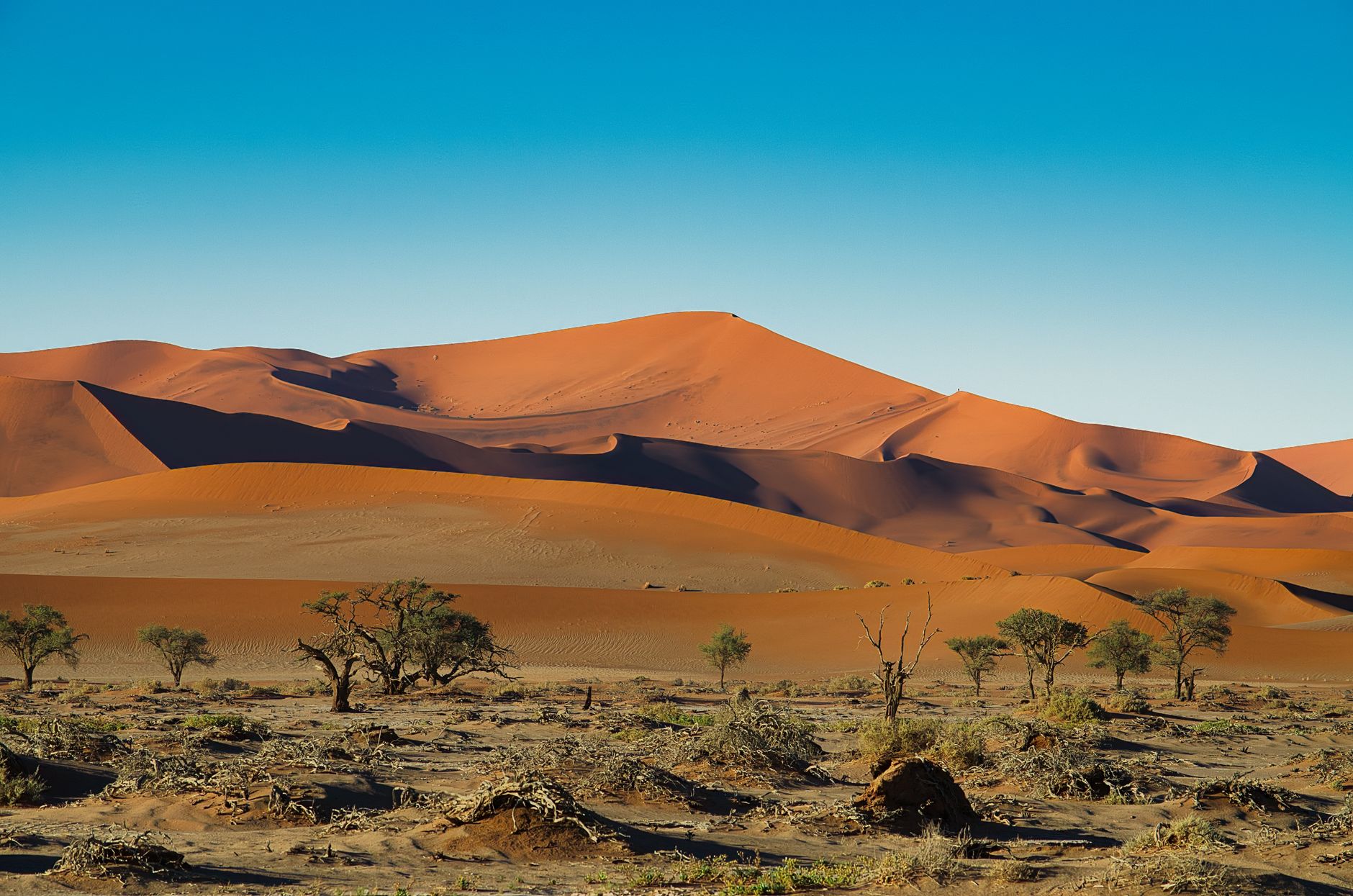
Day 35SesriemDrive to Sesriem, your base for exploring the incredible Namib Desert region. The most famous part of the Namib Desert is its vast dune fields, the most spectacular of which are found near the Sesriem Canyon. This canyon was formed when the Tsauchab River carved a gorge 30 metres into the gravel deposits about 15 million years ago. Now, the river flows out to the dune fields that stretch for hundreds of miles up the coast and dries up in a clay pan at Sossusvlei. The dunes – the highest in the world – are stunning, with magnificent flaming tones created by the brightly coloured sands.
Explore the breathtaking barren landscape of Sesriem in Namibia, featuring striking dunes and arid terrain.Sesriem
Drive to Sesriem, your base for exploring the incredible Namib Desert region. The most famous part of the Namib Desert is its vast dune fields, the most spectacular of which are found near the Sesriem Canyon. This canyon was formed when the Tsauchab River carved a gorge 30 metres into the gravel deposits about 15 million years ago. Now, the river flows out to the dune fields that stretch for hundreds of miles up the coast and dries up in a clay pan at Sossusvlei. The dunes – the highest in the world – are stunning, with magnificent flaming tones created by the brightly coloured sands.
Map showing Sesriem
Day 36Sossusvlei/Konkiep RiverWake up before dawn and scramble to the top of the dunes for a dramatic sunrise view across a vast sea of sand. The colour changes are simply incredible and provide a spectacular setting for your brunch. Afterwards you will jump in the back of a pickup truck for a trip to Sossusvlei, the incredible salt and clay pan just nearby. Enjoy some time to explore this incredible and mysterious desert oddity. Later, continue to your camp past the small town of Bethanie. Your camp has basic facilities, with showers, flush toilets, wi-fi and optional upgrades.
Breathtaking view of Namib Desert with towering red sand dunes and blue sky.Sossusvlei
Wake up before dawn and scramble to the top of the dunes for a dramatic sunrise view across a vast sea of sand. The colour changes are simply incredible and provide a spectacular setting for your brunch. Afterwards you will jump in the back of a pickup truck for a trip to Sossusvlei, the incredible salt and clay pan just nearby. Enjoy some time to explore this incredible and mysterious desert oddity. Later, continue to your camp past the small town of Bethanie. Your camp has basic facilities, with showers, flush toilets, wi-fi and optional upgrades.
Map showing Sossusvlei
Day 37Fish River CanyonCheck out the town of Bethanie before heading further south into the vast desert lands of Namibia towards Fish River Canyon. At 500 m deep and over 160 km long, Fish River Canyon is one of the very largest canyons in the world. During the dry season, the riverbed tends to dry out completely, leaving only a few puddles. In the wet season, after the summer rains, the river can turn into a spectacular raging torrent. At any time of year there are remarkable photographic opportunities here as you watch the colour of the granite rocks change as the sun goes down.
A breathtaking view of Fish River Canyon's vast and rugged landscape in Namibia.Fish River Canyon
Check out the town of Bethanie before heading further south into the vast desert lands of Namibia towards Fish River Canyon. At 500 m deep and over 160 km long, Fish River Canyon is one of the very largest canyons in the world. During the dry season, the riverbed tends to dry out completely, leaving only a few puddles. In the wet season, after the summer rains, the river can turn into a spectacular raging torrent. At any time of year there are remarkable photographic opportunities here as you watch the colour of the granite rocks change as the sun goes down.
Map showing Fish River Canyon
Day 38Orange RiverDeparting Fish River Canyon, travel to Noordoewer in southern Namibia. Pitch your tent on the scenic banks of the Gariep (Orange) River, which stretches 2200 kilometres (1367 miles) – the longest river in Lesotho. The river’s source is high up in the Drakensberg mountain range, and it flows into the Atlantic Ocean at Alexander Bay in South Africa. The Orange River is responsible for transporting diamonds and creating the deposits that can be found along the Namibian coast.
Breathtaking view of a vibrant sunset over a calm river, creating a warm and serene mood.Orange River
Departing Fish River Canyon, travel to Noordoewer in southern Namibia. Pitch your tent on the scenic banks of the Gariep (Orange) River, which stretches 2200 kilometres (1367 miles) – the longest river in Lesotho. The river’s source is high up in the Drakensberg mountain range, and it flows into the Atlantic Ocean at Alexander Bay in South Africa. The Orange River is responsible for transporting diamonds and creating the deposits that can be found along the Namibian coast.
Map showing Orange River
Day 39Western CapeDepart your camp first thing in the morning and head to Klawer, a town named after the Afrikaans word for a wild clover blooming after rainfall. The surrounding countryside is beautiful, and if there's time, you’ll have the opportunity to explore some of it. Perhaps take a delightful walk around the nearby mountains and farms before settling in for a relaxing evening.
A picturesque view of mountains and suburbs near Cape Town, South Africa.Western Cape
Depart your camp first thing in the morning and head to Klawer, a town named after the Afrikaans word for a wild clover blooming after rainfall. The surrounding countryside is beautiful, and if there's time, you’ll have the opportunity to explore some of it. Perhaps take a delightful walk around the nearby mountains and farms before settling in for a relaxing evening.
Map showing Western Cape
A breathtaking view of Cape Town's cityscape with the iconic Table Mountain in the backdrop during sunset.
Your journey through

South Africa

Day 40Cape TownHead to Cape Town this morning, where your trip will come to an end. With its stunning coastline, modern cityscape, nearby mountains and a plethora of vineyards within reach, this is one of Africa's most exciting cities. There's no accommodation provided for tonight, but this can be arranged – please enquire at the time of booking this trip.
Stunning landscape of Cape Town's iconic Table Mountain under a bright blue sky.Cape Town
Head to Cape Town this morning, where your trip will come to an end. With its stunning coastline, modern cityscape, nearby mountains and a plethora of vineyards within reach, this is one of Africa's most exciting cities. There's no accommodation provided for tonight, but this can be arranged – please enquire at the time of booking this trip.
Map showing Cape Town

Traveller reviews

4.9

Based on 29 reviews · via Intrepid Travel

Discover Botswana

A glimpse of the destination you'll explore.
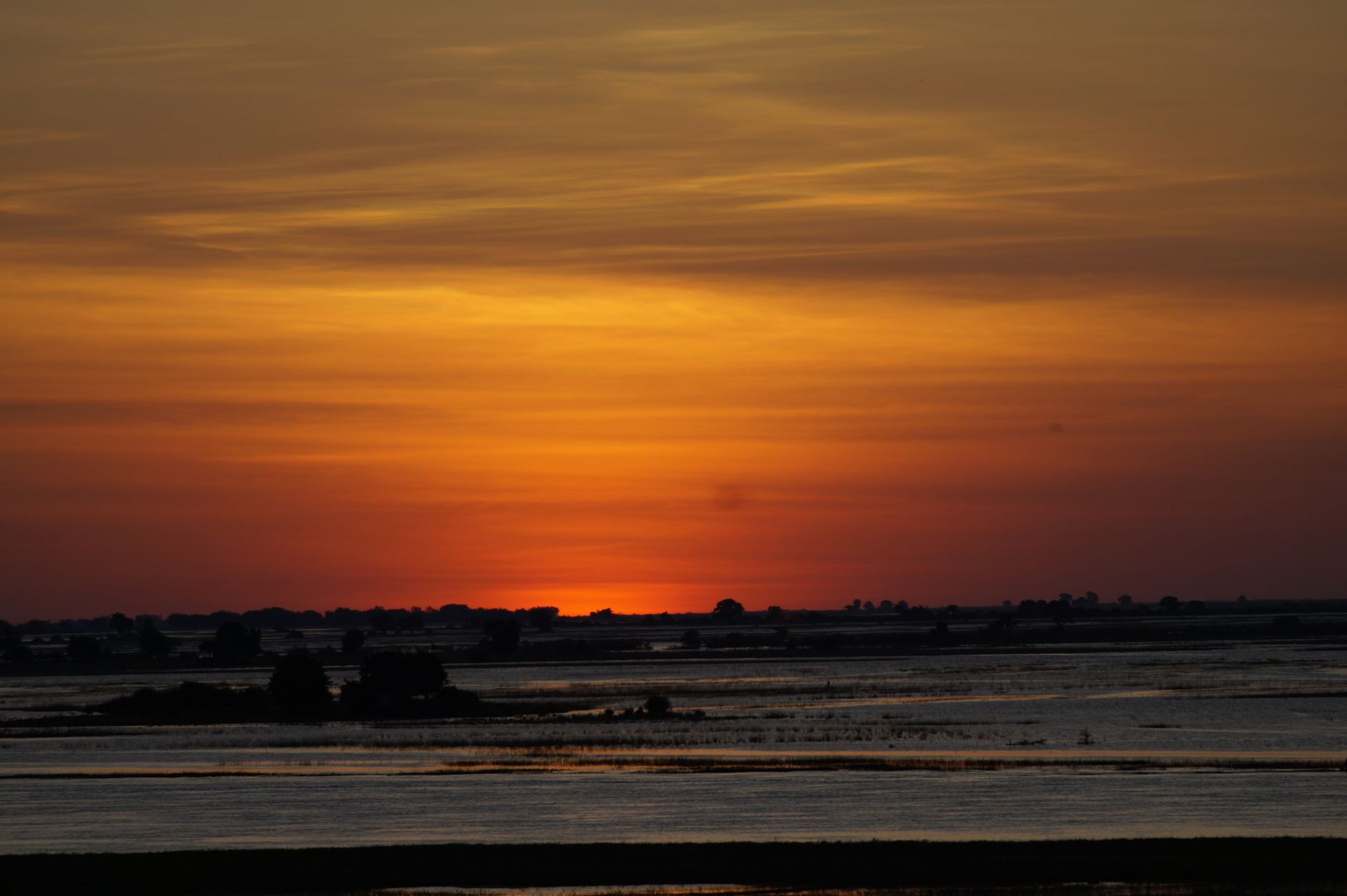
Captivating sunset over a tranquil waterside in Nunga, Botswana, with silhouetted trees.
Stunning sunset over the wetlands in Maun, Botswana, highlighting a dramatic orange sky.
Captivating sunset over acacia silhouettes in Botswana wilderness.
Silhouette of an elephant by a riverbank during a vibrant orange sunset in the African wilderness.
A yawning hippopotamus in a serene water scene at sunset in Botswana.

Upcoming departures

DatesPrice / personAvailability
22 Jun 202631 Jul 2026CAD 7,760On requestBook my trip
Operated by Intrepid Travel

A TripFinder-trusted operator. We compare the trip and handle your booking with a real advisor — you travel under the operator's terms.

Book my trip →

More Africa adventures

Rwanda Gorilla Adult Jungle
Intrepid Travel
Deal

Gorillas to Vic Falls

Kenya, Malawi, Tanzania, Uganda, Zambia, Zimbabwe · 42 days · Moderate5.0(2)

fromCAD 8,904
Next: 20 Jun
Nairobi to Cape Town Overland Safari & Participation Camping image
G Adventures
Save 15%

Nairobi to Cape Town Overland Safari & Participation Camping

Tanzania, Namibia, South Africa, Malawi, Botswana, Zimbabwe, Kenya, Zambia · 40 days · Moderate

fromCAD 6,719
Next: 29 Jun
Cape Town to Nairobi Overland Safari & Participation Camping image
G Adventures
Save 25%

Cape Town to Nairobi Overland Safari & Participation Camping

Tanzania, Namibia, South Africa, Malawi, Botswana, Zimbabwe, Kenya, Zambia · 40 days · Moderate

fromCAD 6,734
Next: 21 Jun