Embark on an immersive 13-day adventure cruise through the Galapagos Islands and experience the natural world, both on land and sea. Encounter diverse wildlife, from lumbering giant tortoises and sunbathing sea lions to scuttling crabs and blue-footed boobies. Wander through lava flow on Las Tintoreras, snorkel in the waters of protected cove Punta Carrion and stick your toes in the olivine-crystal sands of Punta Cormorant. This trip allows plenty of time to absorb the spoils of these unique, wildlife-rich islands, so you can cruise into another world while your naturalist guide sorts out the rest.
◆Isla Santa Cruz - Punta Carrion - Snorkelling (1 hour)
◆Isla San Cristobal - Punta Pitt - Walk (2 hours) - Wet Landing
◆Isla San Cristobal - Isla Lobos - Walk (1 hour) - Dry Landing
◆Isla San Cristobal - Highlands Walk (1.5 hours) - Dry Landing
◆Isla San Cristobal - Interpretation Center Visit (1 hour) - Dry Landing
◆Isla Santiago - Sullivan Bay - Walk (1.5 hours) - Dry Landing
◆Isla Bartolome - Walk (1.5 hours) - Dry Landing
◆Isla Bartolome - Snorkelling (1.5 hours)
◆Isla Bartolome - Panga ride (30 mins)
◆Isla Santiago - Puerto Egas - Walk (1.45 hours) - Wet Landing
◆Isla Santiago - Puerto Egas - Snorkelling (1 hour)
◆Isla Sanitago - Buccaneer's Cove - Panga Ride (45 mins)
◆Isla Sanitago - Espumilla Beach - Panga ride or Snorkelling (45 mins)
At a glance
Duration
13 days
Route
Quito → Quito
Countries
Ecuador
Activity level
moderate
Style
Beach & Islands, Wildlife & Safari
Group size
Max 16
Ages
12+
Flights
Not included
Solo travellers
Welcome
Where you'll go
Day by day
Your journey through
Ecuador
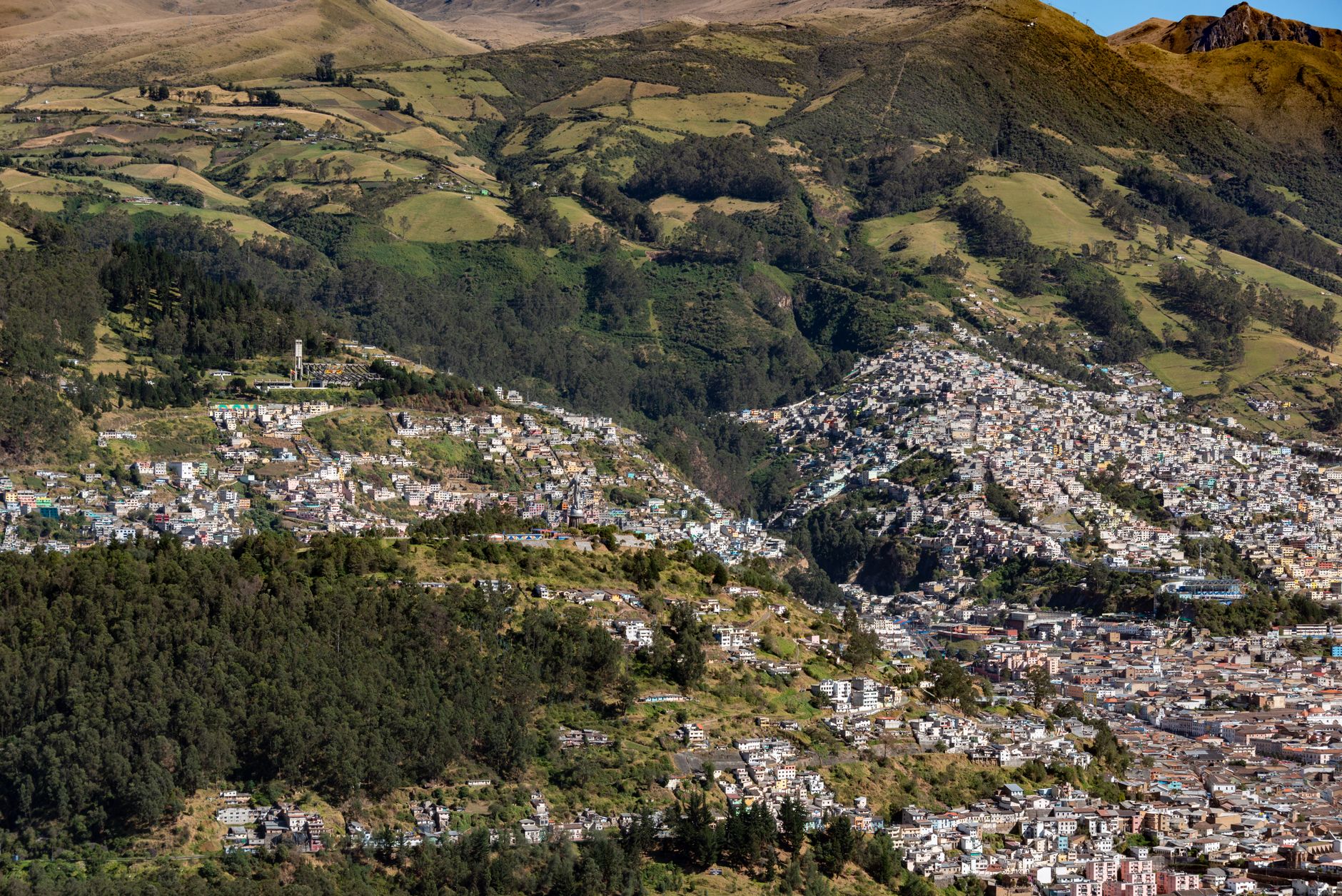
Day 1QuitoBienvenidos! Welcome to Ecuador. Your adventure begins in Quito – Ecuador’s sprawling capital city. You’ll have a welcome meeting at 5 or 6 pm tonight to meet your local leader and small group of fellow travellers. If you arrive early, maybe check out the city at your own pace – head to the Old Town and pick one (or more) of the 30 churches to explore. After your meeting, you’ll head to a small, local restaurant for dinner with your group. Take in the aromas and fresh flavours of the traditional Ecuadorian cuisine – think locroc (traditional potato soup) or quinoa, pork and vegetable dishes cooked with herbs, lemongrass and rich sauces, all sourced from local farms.
Quito
Bienvenidos! Welcome to Ecuador. Your adventure begins in Quito – Ecuador’s sprawling capital city. You’ll have a welcome meeting at 5 or 6 pm tonight to meet your local leader and small group of fellow travellers. If you arrive early, maybe check out the city at your own pace – head to the Old Town and pick one (or more) of the 30 churches to explore. After your meeting, you’ll head to a small, local restaurant for dinner with your group. Take in the aromas and fresh flavours of the traditional Ecuadorian cuisine – think locroc (traditional potato soup) or quinoa, pork and vegetable dishes cooked with herbs, lemongrass and rich sauces, all sourced from local farms.
Your journey through
Bolivia
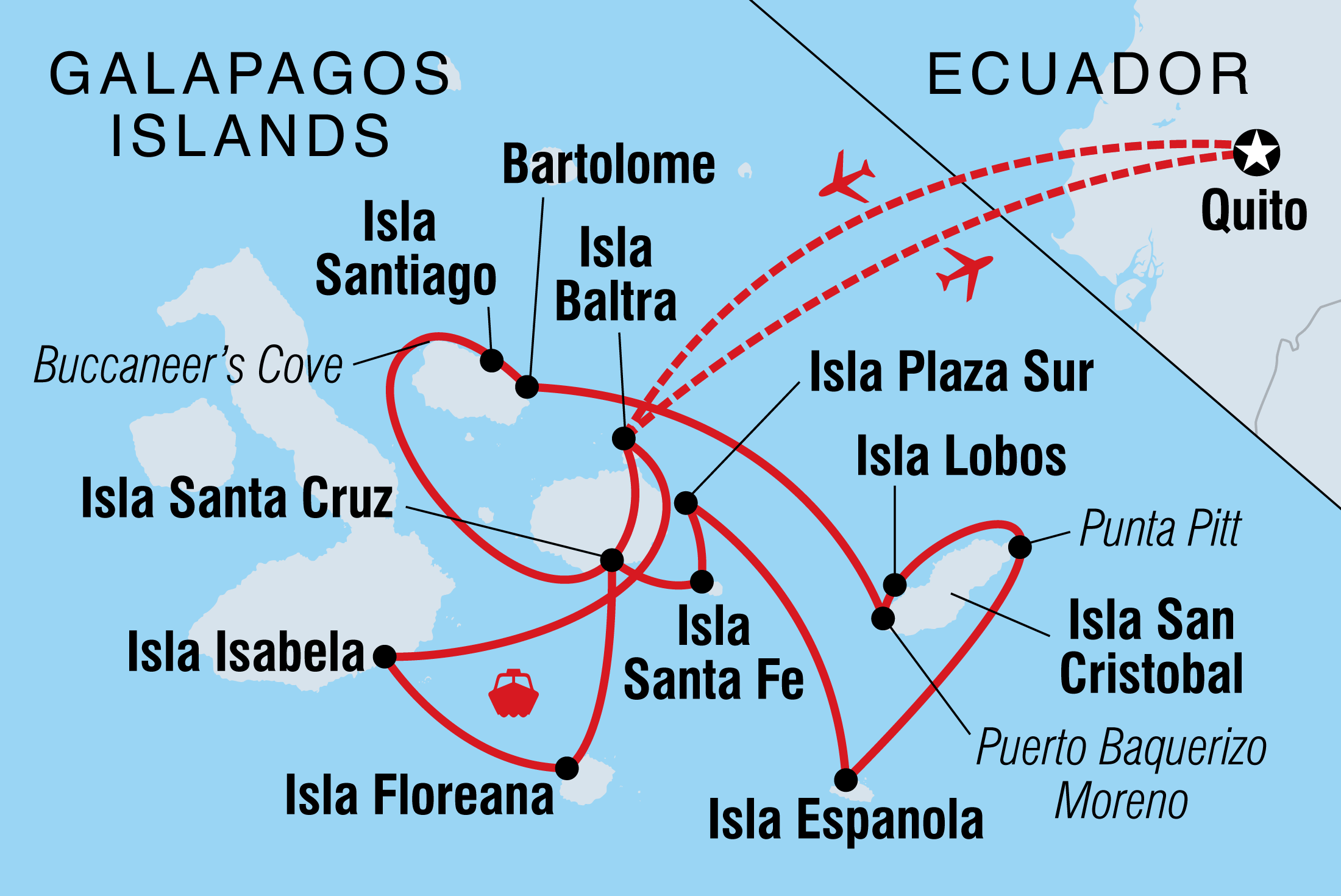
Day 2Isla Baltra - Punta CarrionYou have a very early start this morning (maybe as early as 4 am, depending on flight times) as you head into the Galapagos. Transfer to Mariscal Sucre International Airport (Quito Airport), with a boxed breakfast on the way. When you arrive, you’ll meet your naturalist guide in the arrival hall. Transfer a short distance away to Isla Baltra, where you’ll board your home for the adventure – M/Y Queen Beatriz. Once on board, settle in and then have lunch with your group. After, you’ll sail to Punta Carrion – on the eastern side of the Itabaca Channel that separates the islands of Baltra and Santa Cruz. This is a shallow and protected cove, ideal for your first snorkel and swim in the Galapagos! From the vantage point of your boat, wildlife is plentiful, so keep your eyes peeled for occasional sights of blue-footed boobies, Galapagos herons and great blue herons, while under the surface swim rays and white-tipped reef sharks. Tonight, you’ll have a welcome cocktail during the crew’s onboard presentation.
Isla Baltra
You have a very early start this morning (maybe as early as 4 am, depending on flight times) as you head into the Galapagos. Transfer to Mariscal Sucre International Airport (Quito Airport), with a boxed breakfast on the way. When you arrive, you’ll meet your naturalist guide in the arrival hall. Transfer a short distance away to Isla Baltra, where you’ll board your home for the adventure – M/Y Queen Beatriz. Once on board, settle in and then have lunch with your group. After, you’ll sail to Punta Carrion – on the eastern side of the Itabaca Channel that separates the islands of Baltra and Santa Cruz. This is a shallow and protected cove, ideal for your first snorkel and swim in the Galapagos! From the vantage point of your boat, wildlife is plentiful, so keep your eyes peeled for occasional sights of blue-footed boobies, Galapagos herons and great blue herons, while under the surface swim rays and white-tipped reef sharks. Tonight, you’ll have a welcome cocktail during the crew’s onboard presentation.
Your journey through
Ecuador
Showing Days 3-9
11-day itinerary
Day 3Isla Isabela - Las Tintoreras - Giant Tortoise Breeding CentreGalapagosWake up on the south Coast of Isla Isabela – the largest island of the Galapagos archipelago. Isabela was formed by five giant volcanic craters, all still considered active. The island is located in one of the youngest geological areas in the world, having been formed less than 1 million years ago and the southern coast has the largest area of beaches in the Galapagos. You’ll visit Las Tintoreras, heading to a viewing walkway where you can see a colony of white-tipped reef sharks swimming and sleeping. Take a long walk through lava flows and see the resident blue-footed boobies, penguins, marine iguanas and crabs. In the afternoon, take another walk through a coastal lagoon, where you might see some flamingos. This mangrove-lined path leads to Isabela’s Giant Tortoise Breeding Center (Arnoldo Tupiza) where you'll observe giant tortoises in all stages of development. You’ll then have the choice to go swimming at the beach or head out for some shopping in Puerto Villamil.
Galapagos
Wake up on the south Coast of Isla Isabela – the largest island of the Galapagos archipelago. Isabela was formed by five giant volcanic craters, all still considered active. The island is located in one of the youngest geological areas in the world, having been formed less than 1 million years ago and the southern coast has the largest area of beaches in the Galapagos. You’ll visit Las Tintoreras, heading to a viewing walkway where you can see a colony of white-tipped reef sharks swimming and sleeping. Take a long walk through lava flows and see the resident blue-footed boobies, penguins, marine iguanas and crabs. In the afternoon, take another walk through a coastal lagoon, where you might see some flamingos. This mangrove-lined path leads to Isabela’s Giant Tortoise Breeding Center (Arnoldo Tupiza) where you'll observe giant tortoises in all stages of development. You’ll then have the choice to go swimming at the beach or head out for some shopping in Puerto Villamil.
Day 4Isla Floreana - Post Office Bay - Devil's Crown - Punta CormorantGalapagosIsla Floreana is a highlight of any Galapagos cruise, rich in natural wonders and wildlife. Today you’ll take a panga ride around the bay to see marine iguanas, sea lions and crabs before taking a leisurely walk to Post Office Bay, where 18th century whalers used a barrel as an unofficial mail drop. This custom continues today with visitors to the Galapagos – post one of your own or see if there are any you could deliver back home! You’ll also have the chance to go snorkelling with sea turtles. Today you might also be lucky enough to see pink flamingos and other water birds wading in the lagoons, including pintails and stilts. Just offshore, the Devil’s Crown is an old eroded volcanic cone and a popular roosting site for seabirds like boobies, pelicans and frigates. Go snorkelling in the cone, full of sea lions and colourful fish, for maybe the best underwater experience of the adventure! Later, you’ll head to Punta Cormorant, where the sand is made up of olivine crystals (a glassy volcanic mineral), giving the beach an olive-green colour.
Galapagos
Isla Floreana is a highlight of any Galapagos cruise, rich in natural wonders and wildlife. Today you’ll take a panga ride around the bay to see marine iguanas, sea lions and crabs before taking a leisurely walk to Post Office Bay, where 18th century whalers used a barrel as an unofficial mail drop. This custom continues today with visitors to the Galapagos – post one of your own or see if there are any you could deliver back home! You’ll also have the chance to go snorkelling with sea turtles. Today you might also be lucky enough to see pink flamingos and other water birds wading in the lagoons, including pintails and stilts. Just offshore, the Devil’s Crown is an old eroded volcanic cone and a popular roosting site for seabirds like boobies, pelicans and frigates. Go snorkelling in the cone, full of sea lions and colourful fish, for maybe the best underwater experience of the adventure! Later, you’ll head to Punta Cormorant, where the sand is made up of olivine crystals (a glassy volcanic mineral), giving the beach an olive-green colour.
Day 5Isla Santa Cruz - Charles Darwin Station - Santa Cruz HighlandsGalapagosWake up in Isla Santa Cruz – the second-largest island in the Galapagos. The small town of Puerto Ayora is the economic centre of the archipelago, and home to the Charles Darwin Research Station – as well as undertaking vital conservation work, the station also makes for interesting exploration and offers an opportunity to see giant tortoises. You may also be able to observe the baby tortoises and land iguanas! After your visit, head up into the highlands for a change of scenery. Beginning at the coast, you'll travel across Santa Cruz through the agricultural region and into the misty forests. This is a lush, humid zone containing miconia bushes, scalesia and inactive volcanic cones. Santa Cruz has more endemic plants than any of the other islands and you’re likely to see Galapagos giant tortoises in their natural habitat, and maybe even the bright red feathers of a vermillion flycatcher!
Galapagos
Wake up in Isla Santa Cruz – the second-largest island in the Galapagos. The small town of Puerto Ayora is the economic centre of the archipelago, and home to the Charles Darwin Research Station – as well as undertaking vital conservation work, the station also makes for interesting exploration and offers an opportunity to see giant tortoises. You may also be able to observe the baby tortoises and land iguanas! After your visit, head up into the highlands for a change of scenery. Beginning at the coast, you'll travel across Santa Cruz through the agricultural region and into the misty forests. This is a lush, humid zone containing miconia bushes, scalesia and inactive volcanic cones. Santa Cruz has more endemic plants than any of the other islands and you’re likely to see Galapagos giant tortoises in their natural habitat, and maybe even the bright red feathers of a vermillion flycatcher!
Day 6Isla Santa Fe - Isla Plaza SurIsla Santa Fe is home to many sea lions and is a fantastic place to go snorkelling. This morning, expect to see Galapagos hawks, land iguanas, a variety of finches, Galapagos mockingbirds, marine turtles, frigatebirds, Galapagos doves and lava lizards, too. After your snorkel, head out for a hike on a trail along the coast, heading into the opuntia forest. Walk under the largest trees in the Galapagos to a forest of prickly pears and look out for the unique sub-species of land iguana that live here. Later, sail to Plaza Sur, where you’ll get close to sea lions and follow a trail past one of the Galapagos’ largest land iguana populations. Walk through cacti and volcanic landscapes, coloured bright red and green by sesuvium. The island’s rugged southern cliffs are an excellent place to spot tropicbirds and swallow-tailed gulls, as well as the 'Gentlemen’s Club’ – a gathering of male sea lions.
Isla Santa Fe
Isla Santa Fe is home to many sea lions and is a fantastic place to go snorkelling. This morning, expect to see Galapagos hawks, land iguanas, a variety of finches, Galapagos mockingbirds, marine turtles, frigatebirds, Galapagos doves and lava lizards, too. After your snorkel, head out for a hike on a trail along the coast, heading into the opuntia forest. Walk under the largest trees in the Galapagos to a forest of prickly pears and look out for the unique sub-species of land iguana that live here. Later, sail to Plaza Sur, where you’ll get close to sea lions and follow a trail past one of the Galapagos’ largest land iguana populations. Walk through cacti and volcanic landscapes, coloured bright red and green by sesuvium. The island’s rugged southern cliffs are an excellent place to spot tropicbirds and swallow-tailed gulls, as well as the 'Gentlemen’s Club’ – a gathering of male sea lions.
Day 7Isla Espanola - Bahia Gardner - Punta SuarezWake up on the island of Espanola – the southernmost island of the Galapagos. Because of its remote location, this island has a large population of endemic fauna and is the breeding site for nearly all the 12,000 pairs of waved albatrosses on Earth. Take a trail to where sea lions bathe and marine iguanas make their way towards the water, walking right through booby colonies. Then, visit Punta Suarez. Walk along a trail that takes you to a clifftop viewpoint, where you'll see the boobies line the rocky shoreline beneath, while frigate birds soar overhead. Nearby, male sea lions can be seen lounging. Watch the albatross use the cliffs as their ‘runway’, helped into the air by the southeast winds that blow across this part of the island. If you’re lucky, you’ll also see the elaborate courtship rituals before the female chooses her lifelong mate! End the day on a white sandy beach at Bahia Gardner. The rocks off the coast provide excellent snorkelling opportunities, with reef sharks, turtles, sea lions and many species of tropical fish – including surgeon and angelfish – often seen. White-tipped reef sharks are also commonly spotted resting under the rocks.
Isla Espanola
Wake up on the island of Espanola – the southernmost island of the Galapagos. Because of its remote location, this island has a large population of endemic fauna and is the breeding site for nearly all the 12,000 pairs of waved albatrosses on Earth. Take a trail to where sea lions bathe and marine iguanas make their way towards the water, walking right through booby colonies. Then, visit Punta Suarez. Walk along a trail that takes you to a clifftop viewpoint, where you'll see the boobies line the rocky shoreline beneath, while frigate birds soar overhead. Nearby, male sea lions can be seen lounging. Watch the albatross use the cliffs as their ‘runway’, helped into the air by the southeast winds that blow across this part of the island. If you’re lucky, you’ll also see the elaborate courtship rituals before the female chooses her lifelong mate! End the day on a white sandy beach at Bahia Gardner. The rocks off the coast provide excellent snorkelling opportunities, with reef sharks, turtles, sea lions and many species of tropical fish – including surgeon and angelfish – often seen. White-tipped reef sharks are also commonly spotted resting under the rocks.
Day 8Isla San Cristobal - Punta Cormorant - Leon Dormido - Isla LobosVisit Punta Pitt on the eastern end of Isla San Cristobal this morning. Walk to the top of the volcanic hill for expansive views of the sparsely vegetated area. A variety of seabirds nest here, including blue-footed boobies and frigates. Then, sail to Leon Dormido (Kicker Rock) – the basalt remains of a crater in the middle of the sea, resembling a sleeping lion. The rock rises 150 m above the surface and is divided into two parts by a narrow channel. Although there are no landing areas, you’ll circumnavigation the Rock to see tropicbirds, marine iguanas and sea lions. Later, visit Isla Lobos – a tiny island off the coast of San Cristobal. This is the perfect time to watch as the sea lions play in the shallow waters. Blue-footed boobies, frigate birds and marine iguanas can also be seen.
Visit Punta Pitt on the eastern end of Isla San Cristobal this morning. Walk to the top of the volcanic hill for expansive views of the sparsely vegetated area. A variety of seabirds nest here, including blue-footed boobies and frigates. Then, sail to Leon Dormido (Kicker Rock) – the basalt remains of a crater in the middle of the sea, resembling a sleeping lion. The rock rises 150 m above the surface and is divided into two parts by a narrow channel. Although there are no landing areas, you’ll circumnavigation the Rock to see tropicbirds, marine iguanas and sea lions. Later, visit Isla Lobos – a tiny island off the coast of San Cristobal. This is the perfect time to watch as the sea lions play in the shallow waters. Blue-footed boobies, frigate birds and marine iguanas can also be seen.
Day 9Isla San CristobalVisit San Cristobal Interpretation Center – this information hub brings the history and geography of the archipelago to life, from its volcanic origins to the present day. The human history exhibit offers an insight into the discovery and colonisation of the Galapagos, and the reality of the problems the islands face today. Then, you’ll have some free time for shopping before lunch with the new travellers joining you today. This afternoon, travel to the highlands site of Galapaguera of Cerro Colorado (Red Hill) by bus. This is where the national park has established a breeding program and information centre for tortoises. Here, you can see giant tortoises and learn all about their origin, evolution and their threatened future.
Isla San Cristobal
Visit San Cristobal Interpretation Center – this information hub brings the history and geography of the archipelago to life, from its volcanic origins to the present day. The human history exhibit offers an insight into the discovery and colonisation of the Galapagos, and the reality of the problems the islands face today. Then, you’ll have some free time for shopping before lunch with the new travellers joining you today. This afternoon, travel to the highlands site of Galapaguera of Cerro Colorado (Red Hill) by bus. This is where the national park has established a breeding program and information centre for tortoises. Here, you can see giant tortoises and learn all about their origin, evolution and their threatened future.
1 / 2
What's included
Included
✓Encounter nature at its finest as you follow in the footsteps of Charles Darwin, spotting some of the strangest and most beautiful creatures on Earth in their natural habitats.
✓Watch Galapagos tortoises at all stages of life and development in breeding centres, then search for these ancient creatures in the wild highlands of Isla Santa Cruz.
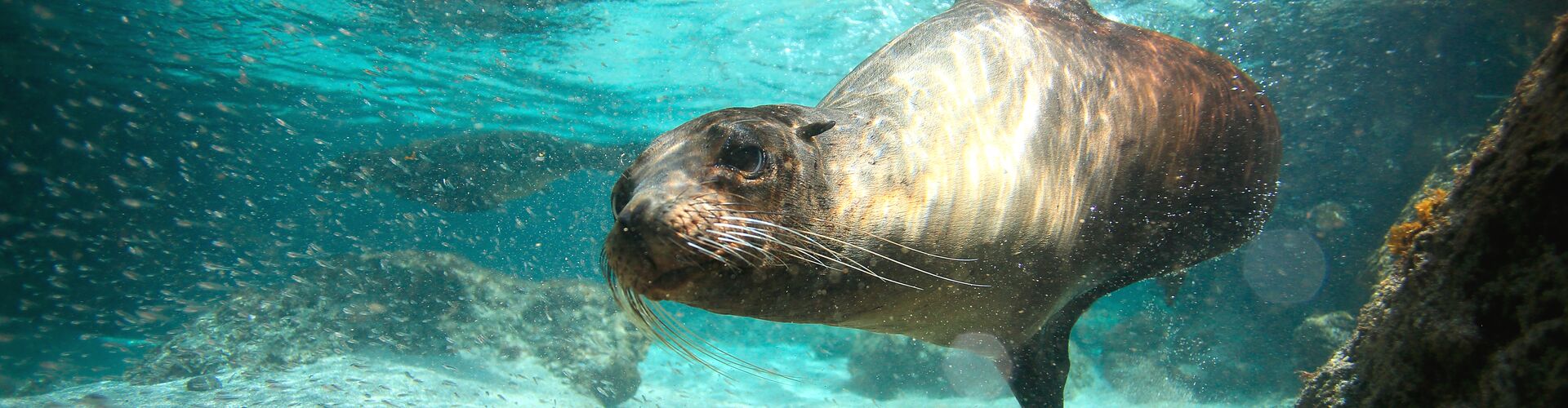
✓Swim with the sea lions of the Galapagos – the puppies of the sea, these creatures are naturally friendly and inquisitive.
✓Hike, snorkel, sail and enjoy plenty of free time to unwind on the deck of your motor yacht, with a beer or wine in hand as you birdwatch.
✓Island-hop in the most comfortable way aboard the Grand Queen Beatriz – this is unlike other cruises, as this trip is built for small-group adventure!
TripFinder compares the available catalog facts and Brandi Leanna can handle the booking — and you pay the same as booking Intrepid Travel direct, never more, because the operator pays our commission. You travel under the operator's terms; final price and availability are confirmed before purchase.

 Quito
Quito
 Isla Baltra
 Galapagos
 Galapagos
 Galapagos
 Isla Santa Fe
 Isla Espanola