Eastern Europe Explorer
Save Deal visible
Operated by Intrepid Travel

Eastern Europe Explorer

From
CAD 5,406
Duration
19 days
Countries
Bulgaria, Hungary, Romania, Turkey
Activity
easy
Group size
Max 12
Rating
4.8 · 38 reviewsvia Intrepid Travel

The adventure

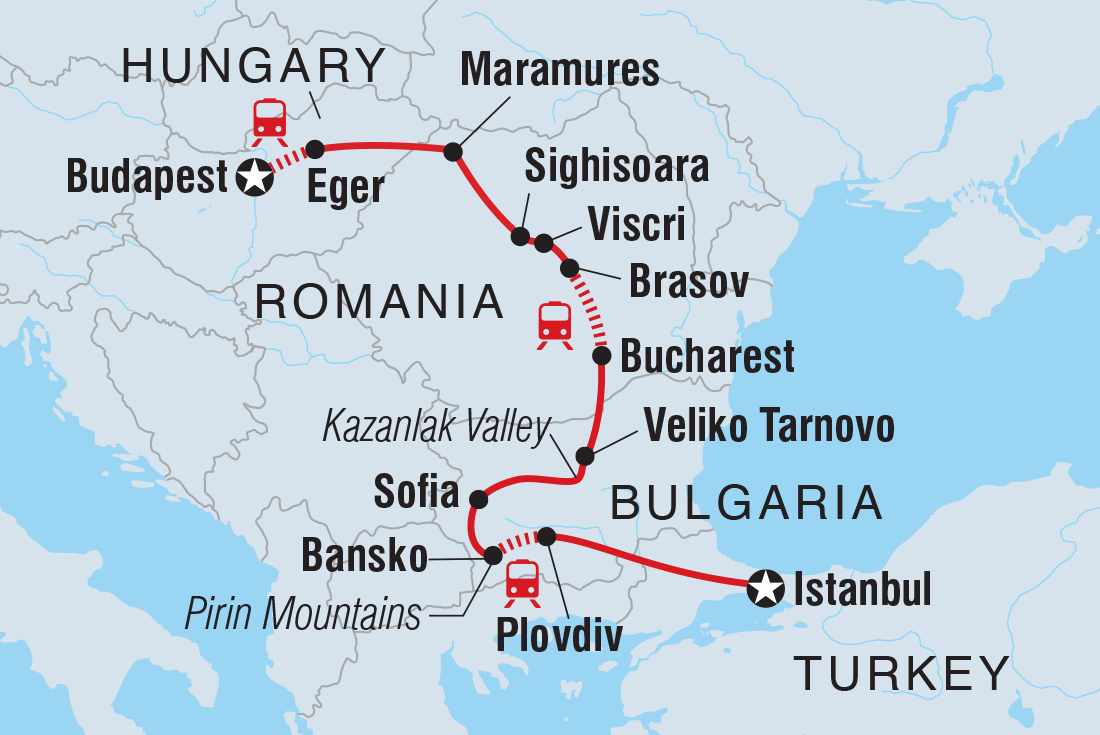
Explore the Baroque churches of Budapest and haunted castles of Transylvania on this 18-day journey across Eastern Europe. Learn about the failed Turkish invasion of Eger and take a guided wine cellar tour in the Valley of the Beautiful Women. Discover the medieval churches of Brasov, dine with a local family on an overnight homestay in Viscri and visit Bucharest's 12-storey Palace of Parliament. Compare age-old places of worship in Sofia, breathe in crisp alpine air on a hike in the Pirin Mountains and meander back in time in the Old Town of Plovdiv.
At a glance

Duration
19 days
Route
Budapest → Istanbul
Countries
Bulgaria, Hungary, Romania, Turkey
Activity level
easy
Style
Food & Drink, Local Living & Homestays, Multi-Country / Grand Tour, Trekking & Hiking
Group size
Max 12
Ages
15+
Flights
Not included
Solo travellers
Welcome

Day by day

Vibrant yellow meadow flowers in Rila Mountains, Bulgaria, under cloudy skies.
Your journey through

Bulgaria, Hungary & 2 more countries

Day 1BudapestSzia! Welcome to Hungary. Since the collapse of communism, Budapest has experienced something of a renaissance. The grand architecture and boulevards evoke a time gone by, while glamorous stores and restaurants make this one of the truly great cities of Europe. You’ll have a welcome meeting at 6 pm tonight. After, you might like to head out to explore the city by night – the twinkling lights of the evening are an essential part of the Budapest experience. Maybe visit the Jewish Quarter for dinner and explore the many options for a celebratory nightcap.
A picturesque view of Prague with the Vltava River, historical buildings, and a bridge.Budapest
Szia! Welcome to Hungary. Since the collapse of communism, Budapest has experienced something of a renaissance. The grand architecture and boulevards evoke a time gone by, while glamorous stores and restaurants make this one of the truly great cities of Europe. You’ll have a welcome meeting at 6 pm tonight. After, you might like to head out to explore the city by night – the twinkling lights of the evening are an essential part of the Budapest experience. Maybe visit the Jewish Quarter for dinner and explore the many options for a celebratory nightcap.
Map showing Budapest
Day 2EgerThis morning, take a train east to Eger. This beautifully preserved Baroque town is surrounded by hills and is home to some of the most renowned vineyards in Eastern Europe. Visit the wine cellars of the Valley of the Beautiful Women to sample some of the town's famous Bull's Blood red wine, which supposedly gave the Hungarian army supernatural strength during their battle against the Ottoman Empire. In your free time, maybe explore Eger's 13th-century castle – the site of the historic siege that thwarted the Ottoman Empire's advance into Western Europe. Here, you can visit the Gothic Palace, view a gallery of fine Hungarian art and tour underground passageways filled with archaeological finds. You may also like to check out the town's 19th-century cathedral, climb the northernmost medieval minaret in Europe for views of the city or visit the Minorite Church in Dobo Square.
Beautiful Lednice Castle in the Czech Republic surrounded by lush gardens and a clear blue sky.Eger
This morning, take a train east to Eger. This beautifully preserved Baroque town is surrounded by hills and is home to some of the most renowned vineyards in Eastern Europe. Visit the wine cellars of the Valley of the Beautiful Women to sample some of the town's famous Bull's Blood red wine, which supposedly gave the Hungarian army supernatural strength during their battle against the Ottoman Empire. In your free time, maybe explore Eger's 13th-century castle – the site of the historic siege that thwarted the Ottoman Empire's advance into Western Europe. Here, you can visit the Gothic Palace, view a gallery of fine Hungarian art and tour underground passageways filled with archaeological finds. You may also like to check out the town's 19th-century cathedral, climb the northernmost medieval minaret in Europe for views of the city or visit the Minorite Church in Dobo Square.
Map showing Eger
Day 3MaramuresAfter breakfast, travel to Debrecen. While here, you'll have time to explore Deri Square’s fountains, colourful buildings, museums and the golden Great Church. Continue by private vehicle across the central plains into Romania’s Maramures (mah-ra-moo-resh) region. This area may be modernising, but among the traditional wooden houses, churches, music and forests, you can still find parts of life unchanged since medieval times. When you arrive, settle into your room – your accommodation for the night is run by a local family. Sit down for a home-cooked dinner with your group and get to know the locals, their stories and their way of life.
Drone captures a picturesque village surrounded by farmland and rolling hills in Petrovice II, Česko.Maramures
After breakfast, travel to Debrecen. While here, you'll have time to explore Deri Square’s fountains, colourful buildings, museums and the golden Great Church. Continue by private vehicle across the central plains into Romania’s Maramures (mah-ra-moo-resh) region. This area may be modernising, but among the traditional wooden houses, churches, music and forests, you can still find parts of life unchanged since medieval times. When you arrive, settle into your room – your accommodation for the night is run by a local family. Sit down for a home-cooked dinner with your group and get to know the locals, their stories and their way of life.
Map showing Maramures
Day 4MaramuresToday, you’ll discover more about the region of Maramures. Rich in tradition and folklore, the music, costumes, festivals and ancient superstitions of one of the last peasant cultures in Europe continue to thrive here. Maramures is particularly famed for its wooden churches, many of which are World Heritage-listed. Set out on a guided group tour to explore the region, visiting the unique Merry Cemetery in Sapanta, where the life stories of the deceased are displayed on colourful wooden crosses. You’ll also see other traditional villages, including the village museum in Sighetu – an assembly of beautiful local wooden architecture.
Charming historic medieval castle among lush greenery on a sunny summer day.Maramures
Today, you’ll discover more about the region of Maramures. Rich in tradition and folklore, the music, costumes, festivals and ancient superstitions of one of the last peasant cultures in Europe continue to thrive here. Maramures is particularly famed for its wooden churches, many of which are World Heritage-listed. Set out on a guided group tour to explore the region, visiting the unique Merry Cemetery in Sapanta, where the life stories of the deceased are displayed on colourful wooden crosses. You’ll also see other traditional villages, including the village museum in Sighetu – an assembly of beautiful local wooden architecture.
Map showing Maramures
Day 5SighisoaraBegin the day with a scenic drive to Sighisoara – while the name may conjure up images of haunted castles, gothic churches and vampires, this is only a small part of what makes Transylvania such an enchanting and exciting destination. Another UNESCO World Heritage site, the town was first settled by the Romans but flourished under the Saxons from the 12th century. Take a walk around the Old Town, which coils up a narrow hill surrounded on all sides by fortified walls, and explore the 64 m tall clock tower that dominates the citadel. The town is famed as the birthplace of Vlad Dracul III, better known as Vlad the Impaler, whose name inspired Bram Stoker’s iconic Count Dracula. Vlad III is revered as a folk hero by Romanians for driving off the invading Ottoman Turks, whose victims are said to have numbered as many as 100,000. Tonight, maybe sit down for a traditional Romanian dinner at one of local restaurants.
Charming historic medieval castle among lush greenery on a sunny summer day.Sighisoara
Begin the day with a scenic drive to Sighisoara – while the name may conjure up images of haunted castles, gothic churches and vampires, this is only a small part of what makes Transylvania such an enchanting and exciting destination. Another UNESCO World Heritage site, the town was first settled by the Romans but flourished under the Saxons from the 12th century. Take a walk around the Old Town, which coils up a narrow hill surrounded on all sides by fortified walls, and explore the 64 m tall clock tower that dominates the citadel. The town is famed as the birthplace of Vlad Dracul III, better known as Vlad the Impaler, whose name inspired Bram Stoker’s iconic Count Dracula. Vlad III is revered as a folk hero by Romanians for driving off the invading Ottoman Turks, whose victims are said to have numbered as many as 100,000. Tonight, maybe sit down for a traditional Romanian dinner at one of local restaurants.
Map showing Sighisoara
Day 6ViscriThis morning, you have some free time in Sighisoara. After lunch, take a short drive to the village of Viscri – a small Transylvanian village originally inhabited by Saxons from the Luxembourg area. This village of red-tiled roofs is a UNESCO World Heritage site, virtually unchanged for 900 years. When you arrive, you’ll visit the town's fortified church, thought to be the oldest in Transylvania. After, sit down to a home-cooked dinner prepared by a local family, sampling fresh produce, homemade wines and schnapps. Tonight, stay in rustic houses that the locals rent out to visitors.
Charming historic medieval castle among lush greenery on a sunny summer day.Viscri
This morning, you have some free time in Sighisoara. After lunch, take a short drive to the village of Viscri – a small Transylvanian village originally inhabited by Saxons from the Luxembourg area. This village of red-tiled roofs is a UNESCO World Heritage site, virtually unchanged for 900 years. When you arrive, you’ll visit the town's fortified church, thought to be the oldest in Transylvania. After, sit down to a home-cooked dinner prepared by a local family, sampling fresh produce, homemade wines and schnapps. Tonight, stay in rustic houses that the locals rent out to visitors.
Map showing Viscri
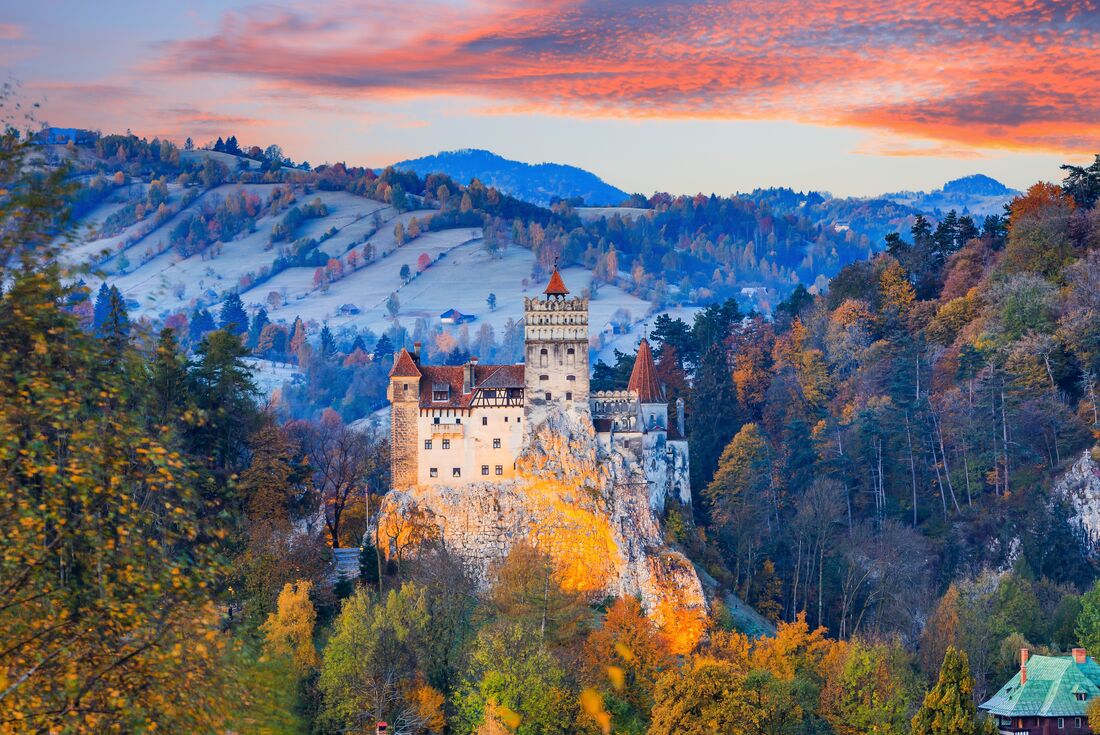
Day 7BrasovThis morning, visit the famed Bran Castle, said to be the inspiration for the home of Bram Stoker's Dracula. Perched on a high cliff and surrounded by pine trees, you’ll explore the castle with your local leader and group. After, travel to Brasov and enjoy some free time to explore at your own pace – maybe visit the ornate churches, townhouses and squares surrounded by gingerbread-roofed merchants' houses. If you're looking for a bit of nightlife tonight, Brasov has plenty of funky bars and restaurants to enjoy once darkness falls.
Charming historic medieval castle among lush greenery on a sunny summer day.Brasov
This morning, visit the famed Bran Castle, said to be the inspiration for the home of Bram Stoker's Dracula. Perched on a high cliff and surrounded by pine trees, you’ll explore the castle with your local leader and group. After, travel to Brasov and enjoy some free time to explore at your own pace – maybe visit the ornate churches, townhouses and squares surrounded by gingerbread-roofed merchants' houses. If you're looking for a bit of nightlife tonight, Brasov has plenty of funky bars and restaurants to enjoy once darkness falls.
Map showing Brasov
Day 8BrasovToday is a free day to explore Brasov at your own pace. Also known by its German name, Kronstadt, the town is flanked by mountains and was once a major medieval trading centre. When you arrive, maybe explore the town's main attraction – the Gothic Black Church (Biserica Neagra), which took its name from its blackened appearance after a fire in 1689. Later, you might stroll along Strada Republicii, take a cable car up to Mt Tampa or or hike one of the forested trails that start right from the edge of town.
A scenic view of Mariánské Lázně showing historic architecture and lush greenery under a bright sky.Brasov
Today is a free day to explore Brasov at your own pace. Also known by its German name, Kronstadt, the town is flanked by mountains and was once a major medieval trading centre. When you arrive, maybe explore the town's main attraction – the Gothic Black Church (Biserica Neagra), which took its name from its blackened appearance after a fire in 1689. Later, you might stroll along Strada Republicii, take a cable car up to Mt Tampa or or hike one of the forested trails that start right from the edge of town.
Map showing Brasov
Day 9BucharestTake a train to Bucharest today – the city is increasingly known for its cosmopolitan vibe and energy. Romania's capital also likes big things and is home to one of Europe's largest squares. The Palace of Parliament is also the second largest building in the world! When you arrive, set off on a guided walking tour around town to help you get your bearings. The rest of the afternoon is then free for you to choose your own adventure. Maybe explore some of the sights further or enjoy traditional home-cooked Romanian food with your fellow travellers – a great way to celebrate a trip well-travelled!
Aerial view of Bucharest cityscape with green parks and skyline under clear blue sky.Bucharest
Take a train to Bucharest today – the city is increasingly known for its cosmopolitan vibe and energy. Romania's capital also likes big things and is home to one of Europe's largest squares. The Palace of Parliament is also the second largest building in the world! When you arrive, set off on a guided walking tour around town to help you get your bearings. The rest of the afternoon is then free for you to choose your own adventure. Maybe explore some of the sights further or enjoy traditional home-cooked Romanian food with your fellow travellers – a great way to celebrate a trip well-travelled!
Map showing Bucharest
Day 10BucharestToday is a free day to explore at your own pace. Maybe join an Urban Adventures Bohemian Bucharest Markets and Mahallas Tour, visit the Former Ceausescu Residence or learn about the region’s history on a Palace of Parliament Tour. Tonight, maybe head out for a drink or dinner and get to know any new travellers joining you.
Capture of the iconic Palace of the Parliament in Bucharest, Romania under clear skies.Bucharest
Today is a free day to explore at your own pace. Maybe join an Urban Adventures Bohemian Bucharest Markets and Mahallas Tour, visit the Former Ceausescu Residence or learn about the region’s history on a Palace of Parliament Tour. Tonight, maybe head out for a drink or dinner and get to know any new travellers joining you.
Map showing Bucharest
Day 11Veliko TarnovoTravel across the Friendship Bridge into Bulgaria and on to the town of Veliko Tarnovo – founded in 4500 BC by the Neolithic people, the Romans later built the first fortress walls. In the 6th century, a Byzantine capital was established on Tsarevets Hill by Emperor Justinian. After the foundation of the second Bulgarian empire, it became the second most important city in the region (after Constantinople) and trade and culture flourished for the next 200 years. In 1393, the town fell to the Turks who held the city until the Russians liberated it in 1877. When you arrive, head out with your leader for an orientation walk, finishing in the Old Town at a family-owned establishment. Here, a local chef will invite you to an authentic and interactive experience that will showcase the rich history of Bulgarian cheese and wine making. The menu includes tasty items such as truffle cheese, cold cuts and locally produced wine – what could be a better introduction?
A picturesque aerial view of Veliko Tarnovo, Bulgaria, showcasing its unique architecture and lush greenery.Veliko Tarnovo
Travel across the Friendship Bridge into Bulgaria and on to the town of Veliko Tarnovo – founded in 4500 BC by the Neolithic people, the Romans later built the first fortress walls. In the 6th century, a Byzantine capital was established on Tsarevets Hill by Emperor Justinian. After the foundation of the second Bulgarian empire, it became the second most important city in the region (after Constantinople) and trade and culture flourished for the next 200 years. In 1393, the town fell to the Turks who held the city until the Russians liberated it in 1877. When you arrive, head out with your leader for an orientation walk, finishing in the Old Town at a family-owned establishment. Here, a local chef will invite you to an authentic and interactive experience that will showcase the rich history of Bulgarian cheese and wine making. The menu includes tasty items such as truffle cheese, cold cuts and locally produced wine – what could be a better introduction?
Map showing Veliko Tarnovo
Day 12Veliko TarnovoThis morning, visit Veliko Tarnovo's imposing Tsarevets Fortress, which overlooks the city. This once-magnificent fortress was built in the 7th century, and the ruined citadel is the perfect spot to wander. The rest of the day is free for you to explore the City of Tsars. Maybe wander through the Old Quarter, with its preserved Renaissance houses and handicraft workshops or relax in one of the town's cafes or vinarnas (wine bars).
Tsarevets Fortress in Bulgaria amidst green hills, a scenic view of historical architecture.Veliko Tarnovo
This morning, visit Veliko Tarnovo's imposing Tsarevets Fortress, which overlooks the city. This once-magnificent fortress was built in the 7th century, and the ruined citadel is the perfect spot to wander. The rest of the day is free for you to explore the City of Tsars. Maybe wander through the Old Quarter, with its preserved Renaissance houses and handicraft workshops or relax in one of the town's cafes or vinarnas (wine bars).
Map showing Veliko Tarnovo
Day 13SofiaIn the morning, hop on a transfer to Sofia – Bulgaria's capital is a cosmopolitan city with wide tree-lined boulevards and parks. Along the way, stop at Kazanlak Valley, also known as the Valley of Roses. This valley is famous for the growing of the Damascena rose, which is used to produce rose oil – a key ingredient in the perfume industry. After, wander through Etno Village – an open-air museum showcasing Bulgarian culture and crafts from the 18th and 19th centuries. From here, visit the Family Rose Distillery and learn about the distillation process and history of rose oil production. Your last stop is at Thracian Tombs – a UNESCO World Heritage site, known for its well-preserved murals from the Hellenistic period, depicting burial rituals and Thracian culture. Later, continue to Sofia, where you’ll spend the next two nights.
The iconic domes of Alexander Nevsky Cathedral against a clear blue sky in Sofia, Bulgaria.Sofia
In the morning, hop on a transfer to Sofia – Bulgaria's capital is a cosmopolitan city with wide tree-lined boulevards and parks. Along the way, stop at Kazanlak Valley, also known as the Valley of Roses. This valley is famous for the growing of the Damascena rose, which is used to produce rose oil – a key ingredient in the perfume industry. After, wander through Etno Village – an open-air museum showcasing Bulgarian culture and crafts from the 18th and 19th centuries. From here, visit the Family Rose Distillery and learn about the distillation process and history of rose oil production. Your last stop is at Thracian Tombs – a UNESCO World Heritage site, known for its well-preserved murals from the Hellenistic period, depicting burial rituals and Thracian culture. Later, continue to Sofia, where you’ll spend the next two nights.
Map showing Sofia
Day 14SofiaToday is a free day for you to explore at your own pace. Maybe browse around the cured meats and cheese at the Central Market Hall, then walk through the city and see the gold-domed Alexander Nevski Church. This afternoon, maybe sate your cultural curiosity at the National History Museum, discover artefacts at the National Archaeological Museum or spend a couple of hours staring at the local artworks in the National Art Gallery.
The National Assembly Building in Sofia, Bulgaria under a clear blue sky.Sofia
Today is a free day for you to explore at your own pace. Maybe browse around the cured meats and cheese at the Central Market Hall, then walk through the city and see the gold-domed Alexander Nevski Church. This afternoon, maybe sate your cultural curiosity at the National History Museum, discover artefacts at the National Archaeological Museum or spend a couple of hours staring at the local artworks in the National Art Gallery.
Map showing Sofia
Day 15BanskoToday, journey into the Rila Mountains, where you'll visit the Rila Monastery. Tucked away in a valley, this UNESCO World Heritage site is the largest and holiest of Bulgaria's orthodox monasteries. Founded in 927, the entire complex is a work of art in itself. Check out murals, the 14th-century Hrelyo Tower, the five-domed Birth of the Blessed Virgin Church and the original 19th-century monastery kitchen. Then, carry on to Bansko. Set at the base of the Pirin Mountains, Bansko is home to more than 150 cultural monuments and many of its stone houses have been transformed into mehanes (taverns). Wander through Vazrazhdane and check out the frescoes of the Church of Sveta Troitsa or the paintings in the Rilski Convent. Tonight, indulge in some local cuisine and try filet elena (spicy cured meat) or kapama (simmered meat, rice and sauerkraut), washing it down with some delicious melnik (dark red wine).
Snow-covered buildings in Bansko with majestic mountain backdrop, perfect for winter travel inspiration.Bansko
Today, journey into the Rila Mountains, where you'll visit the Rila Monastery. Tucked away in a valley, this UNESCO World Heritage site is the largest and holiest of Bulgaria's orthodox monasteries. Founded in 927, the entire complex is a work of art in itself. Check out murals, the 14th-century Hrelyo Tower, the five-domed Birth of the Blessed Virgin Church and the original 19th-century monastery kitchen. Then, carry on to Bansko. Set at the base of the Pirin Mountains, Bansko is home to more than 150 cultural monuments and many of its stone houses have been transformed into mehanes (taverns). Wander through Vazrazhdane and check out the frescoes of the Church of Sveta Troitsa or the paintings in the Rilski Convent. Tonight, indulge in some local cuisine and try filet elena (spicy cured meat) or kapama (simmered meat, rice and sauerkraut), washing it down with some delicious melnik (dark red wine).
Map showing Bansko
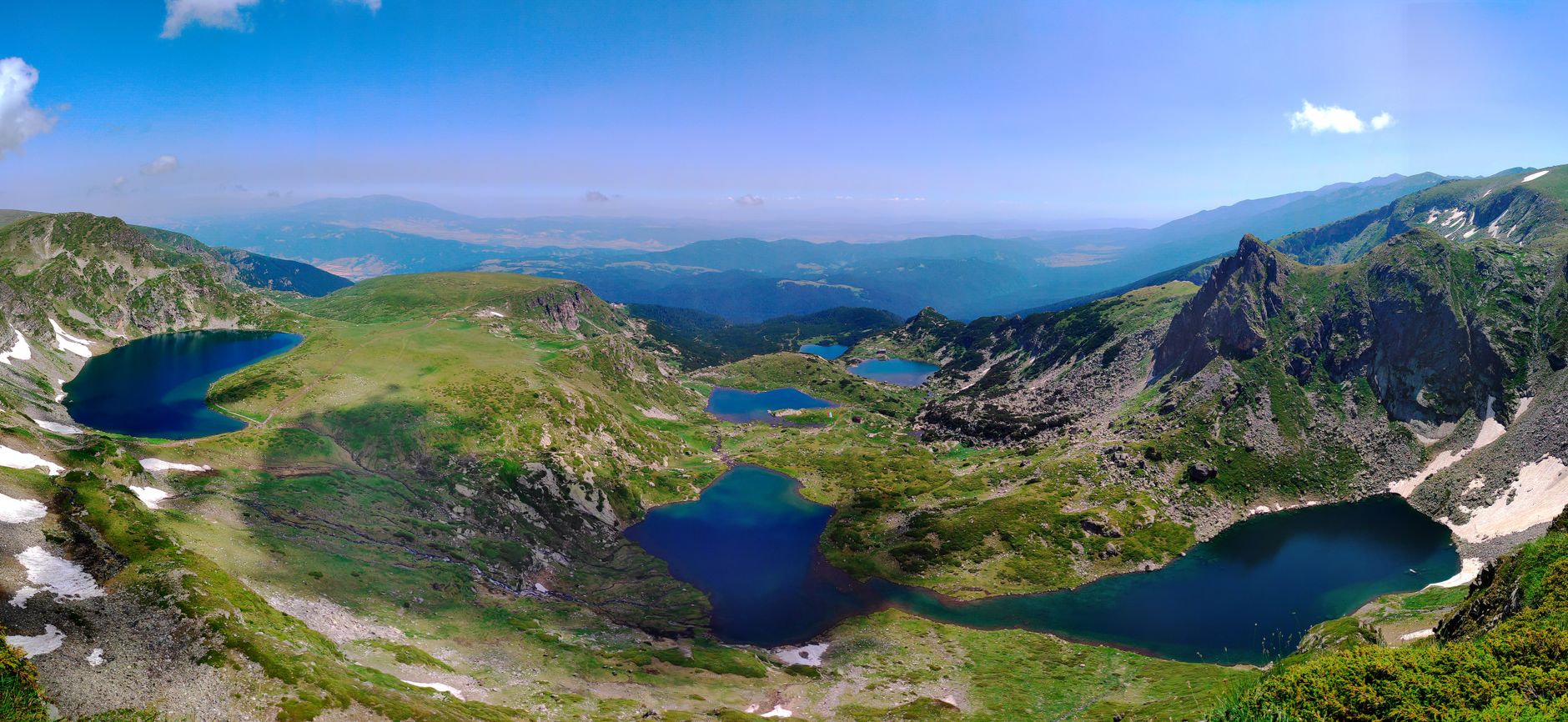
Day 16PlovdivDrive to Vihren Chalet – the starting point of today’s hike in the Pirin Mountains. You’ll head to the small but picturesque Okoto Lake for panoramic views over the valley – you might even be able to see the range’s highest peak, Mt Vihren. From here, maybe continue to Banderitsko Lake or opt to stay in Bansko and visit the thermal baths. This afternoon, board the only operational gauge line in Bulgaria – Rhodope Railway. After the scenic ride, you’ll continue to Plovdiv – on the Maritsa River, this city was once the meeting point of two ancient transportation routes. In the evening, maybe wander the bustling city streets and try some of the local grilled meats and vegetables on skewers.
Beautiful sunset view of Plovdiv, Bulgaria, showcasing ancient ruins and distant mountains.Plovdiv
Drive to Vihren Chalet – the starting point of today’s hike in the Pirin Mountains. You’ll head to the small but picturesque Okoto Lake for panoramic views over the valley – you might even be able to see the range’s highest peak, Mt Vihren. From here, maybe continue to Banderitsko Lake or opt to stay in Bansko and visit the thermal baths. This afternoon, board the only operational gauge line in Bulgaria – Rhodope Railway. After the scenic ride, you’ll continue to Plovdiv – on the Maritsa River, this city was once the meeting point of two ancient transportation routes. In the evening, maybe wander the bustling city streets and try some of the local grilled meats and vegetables on skewers.
Map showing Plovdiv
Day 17PlovdivThis morning, join a local guide for a tour of the main sights of Plovdiv. The most remarkable being the ancient Roman theatre, accidentally discovered after a landslide exposed the site in the early 1970s. Built in the 2nd century BC during the reign of Trajanus, the theatre seats about 6000 people and is now back in use! From here, wander up to the site of the former hilltop fortress of Nebet Tepe, where you can enjoy excellent views of the city. Head back down to visit the 15th-century Dzhumaya Mosque, which is still in use today. Then, enjoy a free afternoon to explore the city at your own pace – maybe explore the street art and cafes of the Kapana Creative District or learn about Bulgarian culture and traditions at the Ethnographic Museum.
Stunning aerial view of the historic Roman Theatre in Plovdiv, Bulgaria, amidst urban landscape.Plovdiv
This morning, join a local guide for a tour of the main sights of Plovdiv. The most remarkable being the ancient Roman theatre, accidentally discovered after a landslide exposed the site in the early 1970s. Built in the 2nd century BC during the reign of Trajanus, the theatre seats about 6000 people and is now back in use! From here, wander up to the site of the former hilltop fortress of Nebet Tepe, where you can enjoy excellent views of the city. Head back down to visit the 15th-century Dzhumaya Mosque, which is still in use today. Then, enjoy a free afternoon to explore the city at your own pace – maybe explore the street art and cafes of the Kapana Creative District or learn about Bulgarian culture and traditions at the Ethnographic Museum.
Map showing Plovdiv
Day 18IstanbulGet ready for a long day of travel today that takes you from Europe to Asia. Grab a window seat if you can and watch the scenery pass you by or get stuck into a good book. You'll be travelling how the locals do – on a bus along the Tsarigrad Road, also named the Road to Istanbul. When you arrive in the continent-straddling metropolis that the Greeks, Romans, Byzantines and Ottomans have called home, you'll have some free time to settle in. Tonight, maybe head out for dinner with your group and indulge in a real Turkish kebab (yum!).
Explore Istanbul's stunning cityscape with historic architecture and waterways viewed from above.Istanbul
Get ready for a long day of travel today that takes you from Europe to Asia. Grab a window seat if you can and watch the scenery pass you by or get stuck into a good book. You'll be travelling how the locals do – on a bus along the Tsarigrad Road, also named the Road to Istanbul. When you arrive in the continent-straddling metropolis that the Greeks, Romans, Byzantines and Ottomans have called home, you'll have some free time to settle in. Tonight, maybe head out for dinner with your group and indulge in a real Turkish kebab (yum!).
Map showing Istanbul
Day 19IstanbulWith no further activities planned, your adventure officially comes to an end. If you would like to extend your stay in Istanbul, and it’s recommended that you do, just get in touch with your booking agent ahead of time.
A serene view of a ferry on the Bosphorus with Istanbul skyline in the background, framed by trees.Istanbul
With no further activities planned, your adventure officially comes to an end. If you would like to extend your stay in Istanbul, and it’s recommended that you do, just get in touch with your booking agent ahead of time.
Map showing Istanbul

Traveller reviews

4.8

Based on 38 reviews · via Intrepid Travel

Discover Bulgaria

A glimpse of the destination you'll explore.

A picturesque mountain landscape with a serene lake in Kyustendil, Bulgaria, under a cloudy sky.
Stunning aerial view of an alpine lake surrounded by rocky mountains and fog in Bulgaria's Rila Mountains.
Scenic winter view of Dobarsko's mountainous landscape with coniferous trees.
A stunning aerial capture of Pchelina Lake and a historic chapel atop a cliff in Bulgaria.
A breathtaking aerial view of the Seven Rila Lakes nestled among lush green mountains in Bulgaria.

Upcoming departures

DatesPrice / personAvailability
4 Jul 202622 Jul 2026CAD 5,406On requestBook my trip
25 Jul 202612 Aug 2026CAD 6,590Only a few spotsBook my trip
Operated by Intrepid Travel

A TripFinder-trusted operator. We compare the trip and handle your booking with a real advisor — you travel under the operator's terms.

Book my trip →

More Multi-region adventures

Spain, Morocco and Portugal
Trafalgar

Spain, Morocco and Portugal

Spain, Portugal, Morocco · 16 days · Easy

fromCAD 5,547
Next: 18 Jul
Best of Spain
Trafalgar

Best of Spain

Spain, United States · 15 days · Easy

fromCAD 4,527
Next: 26 Jun
Spain, Morocco & Portugal Whirl
Trafalgar

Spain, Morocco & Portugal Whirl

Spain, Portugal, Morocco · 12 days · Easy5.0(1)

fromCAD 4,766
Next: 07 Sept