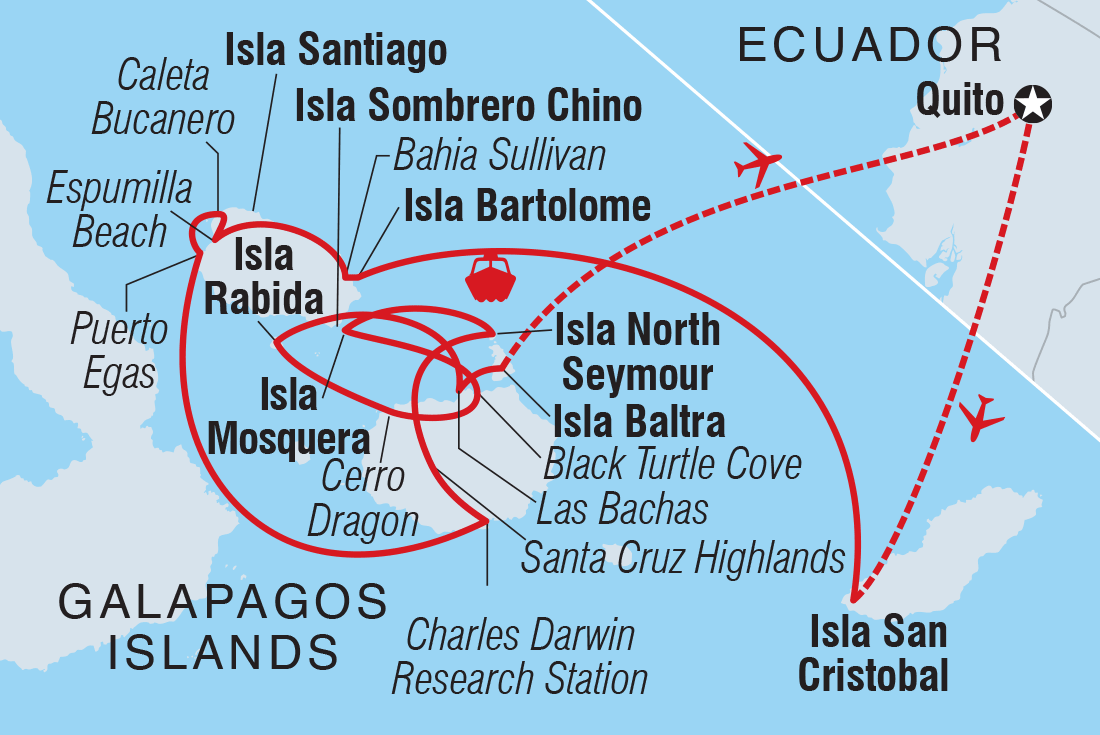
Experience the serenity of the Galapagos Islands as you drift across the Pacific Ocean on this 10-day adventure cruise through the central eastern islands. Retrace the voyage of Charles Darwin by sea, admiring the sandy beaches of Espumilla contrasted with the jagged rock formations and volcanic craters of Isla Santiago. Look out at the ocean, land and sky, spotting blue-footed boobies, sea turtles and sea lions in their natural habitat. Go hiking and snorkelling each day and learn about the geology of these lands from your handy naturalist guide, all the while spotting some pretty incredible and varied wildlife.
◆Isla San Cristobal - Highlands Walk (1.5 hours) - Dry Landing
◆Isla Santiago - Sullivan Bay - Walk (1.5 hours) - Dry Landing
◆Isla Bartolome - Walk (1.5 hours) - Dry Landing
◆Isla Bartolome - Snorkelling (1.5 hours)
◆Isla Bartolome - Panga ride (30 mins)
◆Isla Santiago - Puerto Egas - Walk (1.45 hours) - Wet Landing
◆Isla Santiago - Puerto Egas - Snorkelling (1 hour)
◆Isla Sanitago - Espumilla Beach - Panga ride or Snorkelling (45 mins)
◆Isla Sanitago - Buccaneer's Cove - Panga Ride (45 mins)
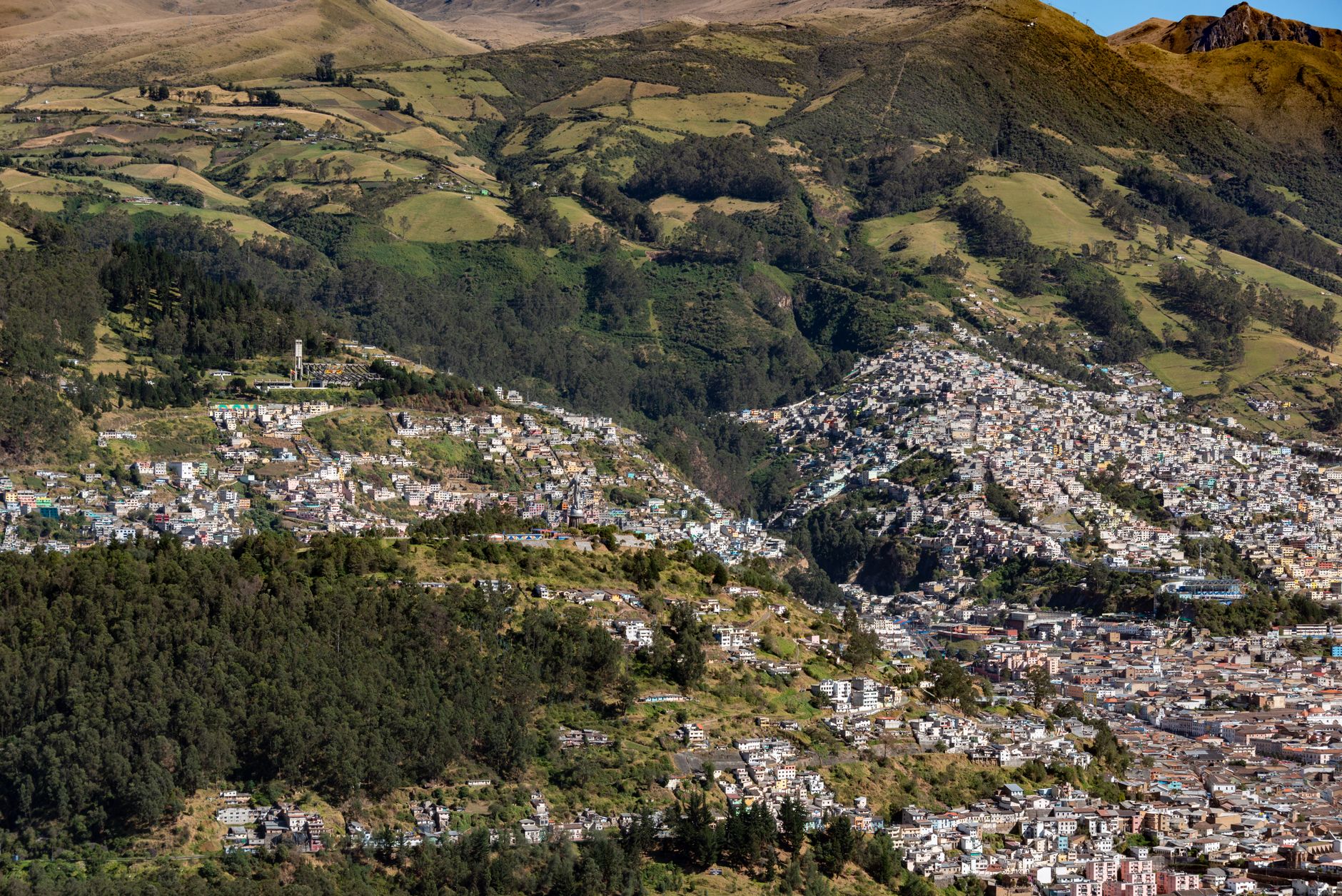
Day 1QuitoBienvenidos! Welcome to Ecuador. Your adventure begins in Quito – Ecuador’s sprawling capital city. You’ll have a welcome meeting at 5 or 6 pm tonight to meet your local leader and small group of fellow travellers. If you arrive early, maybe check out the city at your own pace – head to the Old Town and pick one (or more) of the 30 churches to explore. After your meeting, you’ll head to a small, local restaurant for dinner with your group. Take in the aromas and fresh flavours of the traditional Ecuadorian cuisine – think locroc (traditional potato soup) or quinoa, pork and vegetable dishes cooked with herbs, lemongrass and rich sauces, all sourced from local farms.
Quito
Bienvenidos! Welcome to Ecuador. Your adventure begins in Quito – Ecuador’s sprawling capital city. You’ll have a welcome meeting at 5 or 6 pm tonight to meet your local leader and small group of fellow travellers. If you arrive early, maybe check out the city at your own pace – head to the Old Town and pick one (or more) of the 30 churches to explore. After your meeting, you’ll head to a small, local restaurant for dinner with your group. Take in the aromas and fresh flavours of the traditional Ecuadorian cuisine – think locroc (traditional potato soup) or quinoa, pork and vegetable dishes cooked with herbs, lemongrass and rich sauces, all sourced from local farms.
Day 2Quito - Isla San CristobalYou have a very early start this morning (maybe as early as 4 am, depending on flight times) as you head into the Galapagos. Transfer to Mariscal Sucre International Airport (Quito Airport), with a boxed breakfast on the way. When you arrive, you’ll meet your naturalist guide in the arrival hall. Transfer to your home for the next week – the M/Y Queen Beatriz. Once on board, settle in and then have lunch with your group. After, travel to the highlands of Isla San Cristobal to the site of Galapaguera of Cerro Colorado (Red Hill). This is where the national park has established a breeding program and information centre for tortoises. Here, you can see giant tortoises and learn all about their origin, evolution and their threatened future.
Quito
You have a very early start this morning (maybe as early as 4 am, depending on flight times) as you head into the Galapagos. Transfer to Mariscal Sucre International Airport (Quito Airport), with a boxed breakfast on the way. When you arrive, you’ll meet your naturalist guide in the arrival hall. Transfer to your home for the next week – the M/Y Queen Beatriz. Once on board, settle in and then have lunch with your group. After, travel to the highlands of Isla San Cristobal to the site of Galapaguera of Cerro Colorado (Red Hill). This is where the national park has established a breeding program and information centre for tortoises. Here, you can see giant tortoises and learn all about their origin, evolution and their threatened future.
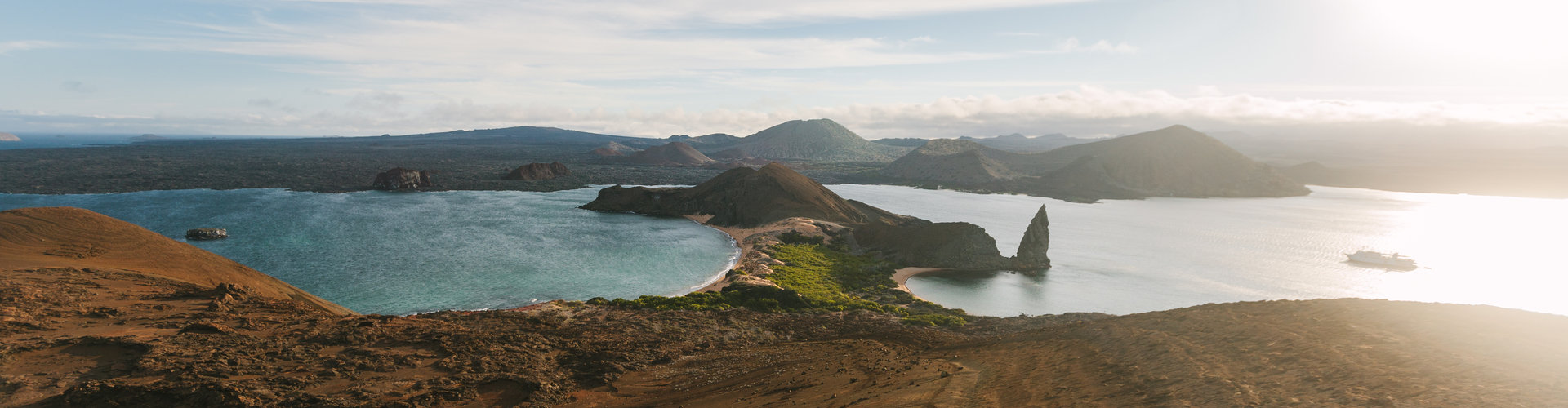
Day 3Bartolome - Bahia SullivanBartolome is one of the most spectacular volcanic landscapes in the Galapagos, full of parasitic spatter cones, lava flows, Galapagos penguins and lava lizards. It’s a relatively new island in the archipelago and traces of its volcanic past can be seen everywhere across the lunar-like landscape. Visit Pinnacle Rock – one of the most photographed sites in the Galapagos, this abrupt jag of rock protrudes from the earth like a tooth, close to two golden bays that back onto each other. You can hike to the top of a once-active volcano here (360 wooden steps) for views across to Sullivan Bay, on nearby Santiago Island. If you’re in luck, you might catch a glance of the Galapagos hawk. You also have the option to go snorkelling with plenty of tropical fish, starfish, white-tipped reef sharks, rays and, hopefully, penguins. This afternoon, sail to Bahia Sullivan (also known as James Island). Walk on Pahoe-Hoe lava from an eruption that occurred in 1897 and listen as your guide explains the geological history of the islands. Look out for marine iguanas, Sally Lightfoot crabs, sea lions, finches, turtles, sharks and penguins.
Bartolome
Bartolome is one of the most spectacular volcanic landscapes in the Galapagos, full of parasitic spatter cones, lava flows, Galapagos penguins and lava lizards. It’s a relatively new island in the archipelago and traces of its volcanic past can be seen everywhere across the lunar-like landscape. Visit Pinnacle Rock – one of the most photographed sites in the Galapagos, this abrupt jag of rock protrudes from the earth like a tooth, close to two golden bays that back onto each other. You can hike to the top of a once-active volcano here (360 wooden steps) for views across to Sullivan Bay, on nearby Santiago Island. If you’re in luck, you might catch a glance of the Galapagos hawk. You also have the option to go snorkelling with plenty of tropical fish, starfish, white-tipped reef sharks, rays and, hopefully, penguins. This afternoon, sail to Bahia Sullivan (also known as James Island). Walk on Pahoe-Hoe lava from an eruption that occurred in 1897 and listen as your guide explains the geological history of the islands. Look out for marine iguanas, Sally Lightfoot crabs, sea lions, finches, turtles, sharks and penguins.
Day 4Isla Santiago - Espumilla Beach - Buccaneer Cove - Puerto EgasGalapagosEspumilla Beach, on the northern coast of Isla Santiago, is an important nesting site for marine turtles. With large waves, it’s also often a favourite among beach lovers. Here, you might see Galapagos hawks up close as well as ghost crabs, blue-footed boobies (often plunging for fish) and brown pelicans. The area is also well known for its Palo Santo forest and lava formations. Visit Caleta Bucanero (Buccaneer Cove) – a natural monument of rocks caused by sea erosion. This cove was used by pirates to careen their ships and is a place of local legends and stories! It’s also where Darwin camped for nine days while making his study of the islands and their wildlife. If conditions are favourable, you can go snorkelling here. Later, sail to Puerto Egas – the black-sand beach on the west side of the bay near Sugarloaf Volcano. This site is named after Hector Egas who last attempted to mine salt here. The walk along the beach offers hundreds of marine iguanas and Galapagos sea lions. You’ll also see amazing tidal pools formed from ancient lava flow, home to sponges, snails, hermit crabs, barnacles and fish.
Galapagos
Espumilla Beach, on the northern coast of Isla Santiago, is an important nesting site for marine turtles. With large waves, it’s also often a favourite among beach lovers. Here, you might see Galapagos hawks up close as well as ghost crabs, blue-footed boobies (often plunging for fish) and brown pelicans. The area is also well known for its Palo Santo forest and lava formations. Visit Caleta Bucanero (Buccaneer Cove) – a natural monument of rocks caused by sea erosion. This cove was used by pirates to careen their ships and is a place of local legends and stories! It’s also where Darwin camped for nine days while making his study of the islands and their wildlife. If conditions are favourable, you can go snorkelling here. Later, sail to Puerto Egas – the black-sand beach on the west side of the bay near Sugarloaf Volcano. This site is named after Hector Egas who last attempted to mine salt here. The walk along the beach offers hundreds of marine iguanas and Galapagos sea lions. You’ll also see amazing tidal pools formed from ancient lava flow, home to sponges, snails, hermit crabs, barnacles and fish.
Day 5Isla Santa Cruz - Charles Darwin Station - Santa Cruz HighlandsGalapagosWake up in Isla Santa Cruz – the second-largest island in the Galapagos. The small town of Puerto Ayora is the economic centre of the archipelago, and home to the Charles Darwin Research Station – as well as undertaking vital conservation work, the station also makes for interesting exploration and offers an opportunity to see giant tortoises. You may also be able to observe the baby tortoises and land iguanas! After your visit, head up into the highlands for a change of scenery. Beginning at the coast, you'll travel across Santa Cruz through the agricultural region and into the misty forests. This is a lush, humid zone containing miconia bushes, scalesia and inactive volcanic cones. Santa Cruz has more endemic plants than any of the other islands and you’re likely to see Galapagos giant tortoises in their natural habitat, and maybe even the bright red feathers of a vermillion flycatcher!
Galapagos
Wake up in Isla Santa Cruz – the second-largest island in the Galapagos. The small town of Puerto Ayora is the economic centre of the archipelago, and home to the Charles Darwin Research Station – as well as undertaking vital conservation work, the station also makes for interesting exploration and offers an opportunity to see giant tortoises. You may also be able to observe the baby tortoises and land iguanas! After your visit, head up into the highlands for a change of scenery. Beginning at the coast, you'll travel across Santa Cruz through the agricultural region and into the misty forests. This is a lush, humid zone containing miconia bushes, scalesia and inactive volcanic cones. Santa Cruz has more endemic plants than any of the other islands and you’re likely to see Galapagos giant tortoises in their natural habitat, and maybe even the bright red feathers of a vermillion flycatcher!
Day 6North Seymour - Isla MosqueraVisit North Seymour – one of the most visited islands in the Galapagos. Hike past colonies of blue-footed boobies and frigate birds – sharing the same nesting area on North Seymour, blue-footed boobies nest on the ground making their nests from the twigs of Palo Santos trees, while the frigate birds nest just above them in the saltbushes. After your walk, go snorkelling and see how many colourful fish you can spot, maybe with a few white-tipped reef sharks, rays and sea lions, too. Have lunch, then sail to the small Isla Mosquera. Along the rocks and in the tide pools, Sally Lightfoot crabs (red lava crabs) scamper back and forth, skipping across small pools of water in search of food. The island also has a very large colony of sea lions, as well as a sizeable resident brown pelican population. Depending on the tides and visibility, you may have a chance to go snorkelling in the surrounding turquoise waters.
North Seymour
Visit North Seymour – one of the most visited islands in the Galapagos. Hike past colonies of blue-footed boobies and frigate birds – sharing the same nesting area on North Seymour, blue-footed boobies nest on the ground making their nests from the twigs of Palo Santos trees, while the frigate birds nest just above them in the saltbushes. After your walk, go snorkelling and see how many colourful fish you can spot, maybe with a few white-tipped reef sharks, rays and sea lions, too. Have lunch, then sail to the small Isla Mosquera. Along the rocks and in the tide pools, Sally Lightfoot crabs (red lava crabs) scamper back and forth, skipping across small pools of water in search of food. The island also has a very large colony of sea lions, as well as a sizeable resident brown pelican population. Depending on the tides and visibility, you may have a chance to go snorkelling in the surrounding turquoise waters.
Day 7Black Turtle Cove - Cerro DragonTake a panga (Zodiac boat) to Caleta Tortuga Negra (Black Turtle Cove) – a red mangrove wetland on the north shore of Isla Santa Cruz. Jump in the cove’s peaceful waters to see green turtles – this cove is also a nursery for golden cow-nose rays, eagle rays and Galapagos sharks! There’s also abundant birdlife here, like the yellow warbler and lava heron. This is also a breeding area for turtles, so it’s not uncommon to see them mating. In the afternoon, cruise over for a walk on Cerro Dragon (Dragon Hill) – one of the best places to see land iguanas. Walk to a brackish lagoon, spotting lagoon birds like stilts, pintail ducks, sandpipers, sanderlings and flamingos along the way. Further inland, the trail offers a view of the bay and the western area of the archipelago, which is a nesting site for land iguanas, constantly monitored by the Charles Darwin Research Station. The arid-zone vegetation makes for an ideal place to see Darwin's finches, Galapagos mockingbirds, the endemic Galapagos flycatcher and yellow warblers.
Black Turtle Cove
Take a panga (Zodiac boat) to Caleta Tortuga Negra (Black Turtle Cove) – a red mangrove wetland on the north shore of Isla Santa Cruz. Jump in the cove’s peaceful waters to see green turtles – this cove is also a nursery for golden cow-nose rays, eagle rays and Galapagos sharks! There’s also abundant birdlife here, like the yellow warbler and lava heron. This is also a breeding area for turtles, so it’s not uncommon to see them mating. In the afternoon, cruise over for a walk on Cerro Dragon (Dragon Hill) – one of the best places to see land iguanas. Walk to a brackish lagoon, spotting lagoon birds like stilts, pintail ducks, sandpipers, sanderlings and flamingos along the way. Further inland, the trail offers a view of the bay and the western area of the archipelago, which is a nesting site for land iguanas, constantly monitored by the Charles Darwin Research Station. The arid-zone vegetation makes for an ideal place to see Darwin's finches, Galapagos mockingbirds, the endemic Galapagos flycatcher and yellow warblers.
1 / 2
What's included
Included
✓Get a true taste of the Galapagos, sailing through the central and eastern islands and discovering the largely untouched wilderness, home to unique wildlife.
✓Wake up to a new view each day in the comfort of the mighty M/Y Grand Queen Beatriz – this comfortable and spacious motor yacht is your home for the adventure!
✓Encounter giant Galapagos tortoises, blue-footed and masked boobies, pelicans and frigate birds, as well as land and marine iguanas, sea lions, fur seals and maybe even dolphins, whales and sea turtles!
✓Live on island time, with the opportunity to explore coves, craters and inlets off the beaten track – one of the many benefits of a small group sail.
✓Experience the contrasting landscapes of unique islands – from the sandy Espumilla Beach to the volcanic formation of Pinnacle Rock, you’ll see the diversity of the Galapagos that Charles Darwin once saw.
TripFinder compares the available catalog facts and Brandi Leanna can handle the booking — and you pay the same as booking Intrepid Travel direct, never more, because the operator pays our commission. You travel under the operator's terms; final price and availability are confirmed before purchase.

 Quito
Quito Quito
Quito Bartolome
 Galapagos
 Galapagos
 North Seymour
 Black Turtle Cove