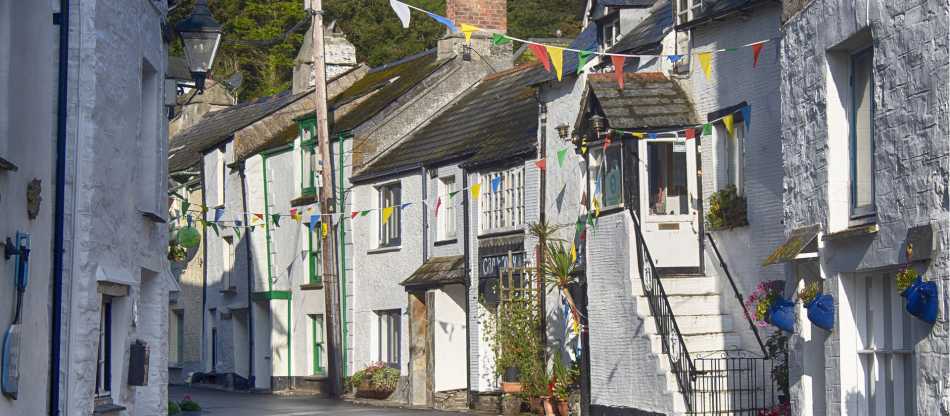
Walk the first section of the UK's longest National Trail: the South West Coast Path in Cornwall. Character accommodation, luggage transfers, GPS files & more included.
At a glance
Duration
9 days
Route
→
Countries
United Kingdom
Activity level
moderate
Style
Beach & Islands, Trekking & Hiking
Group size
Ask
Flights
Not included
Solo travellers
Ask an agent
Day by day
Your journey through
United Kingdom
Day 1Day 1: Arrive MineheadArrive in Minehead, an Edwardian resort in the county of Somerset. This traditional seaside town marks the start of the South West Coast Path, and is where Exmoor National Park meets the sea. Conveniently accessible, Minehead is well-connected through regular bus services from Taunton, the closest mainline rail station. Accommodation: Stay in one of the bright rooms of an apprentice-run, small hotel between Minehead Beach, the esplanade and start of the town centre.
Arrive in Minehead, an Edwardian resort in the county of Somerset. This traditional seaside town marks the start of the South West Coast Path, and is where Exmoor National Park meets the sea. Conveniently accessible, Minehead is well-connected through regular bus services from Taunton, the closest mainline rail station. Accommodation: Stay in one of the bright rooms of an apprentice-run, small hotel between Minehead Beach, the esplanade and start of the town centre.
Day 2Day 2: Minehead to Porlock Weir 9 miles / 14.5km - 4 to 5hrsYour journey begins at the official South West Coast Path Monument, where you can choose between a relaxed stroll through open farmland, encountering the local livestock, or the more challenging coastal route along the rugged cliffs. This section of the trail is the highest coastline in England, offering stunning views from Selworthy Beacon (308m). From the Beacon, the path descends towards the village of Porlock. Here, you'll find a 6000-year-old shingle ridge that was breached in 1996, creating a saltmarsh habitat rich in birdlife. At low tide, the remnants of a submerged forest are visible along the beach. In Porlock, you can visit the Church of St. Dubricius, a 13th-century Grade I listed building, which houses a 15th-century tomb of John Harrington, a soldier who fought alongside Henry V in France in 1417. Porlock is also famously linked to the poet Samuel Taylor Coleridge, who visited the village in 1797. It was here that Coleridge was inspired to write Kubla Khan, one of his most well-known poems. For those opting for a more challenging hike, the trail continues through a series of steep climbs and descents, winding along gorse- and bracken-lined cliff tops before descending into sheltered 'Combes'—small wooded valleys with babbling streams that offer welcome shade on hot days and shelter from the wind on blustery ones. You'll walk across a mix of farm tracks and rough trails, each step revealing the raw beauty of the landscape. Accommodation: Stay at a historic inn in the heart of Porlock, dating back to at least the 15th century. Believed to have been a hostelry even earlier, the inn has ties to smuggling, visits from a Poet Laureate, and a rich history as a stop for horse-drawn coaches traveling between Lynmouth and the village. Today, it offers comfortable rooms and hearty pub food, making it the perfect place to unwind after a day of hiking.
Your journey begins at the official South West Coast Path Monument, where you can choose between a relaxed stroll through open farmland, encountering the local livestock, or the more challenging coastal route along the rugged cliffs. This section of the trail is the highest coastline in England, offering stunning views from Selworthy Beacon (308m). From the Beacon, the path descends towards the village of Porlock. Here, you'll find a 6000-year-old shingle ridge that was breached in 1996, creating a saltmarsh habitat rich in birdlife. At low tide, the remnants of a submerged forest are visible along the beach. In Porlock, you can visit the Church of St. Dubricius, a 13th-century Grade I listed building, which houses a 15th-century tomb of John Harrington, a soldier who fought alongside Henry V in France in 1417. Porlock is also famously linked to the poet Samuel Taylor Coleridge, who visited the village in 1797. It was here that Coleridge was inspired to write Kubla Khan, one of his most well-known poems. For those opting for a more challenging hike, the trail continues through a series of steep climbs and descents, winding along gorse- and bracken-lined cliff tops before descending into sheltered 'Combes'—small wooded valleys with babbling streams that offer welcome shade on hot days and shelter from the wind on blustery ones. You'll walk across a mix of farm tracks and rough trails, each step revealing the raw beauty of the landscape. Accommodation: Stay at a historic inn in the heart of Porlock, dating back to at least the 15th century. Believed to have been a hostelry even earlier, the inn has ties to smuggling, visits from a Poet Laureate, and a rich history as a stop for horse-drawn coaches traveling between Lynmouth and the village. Today, it offers comfortable rooms and hearty pub food, making it the perfect place to unwind after a day of hiking.
Day 3Day 3: Porlock Weir to Lynmouth 12 miles / 18km - 5 to 6hrsClimbing out of the charming harbour village of Porlock Weir, your day begins with a steep ascent to Yearnor Wood, followed by a more leisurely stroll to Culbone Church, famously the smallest parish church in England, dedicated to St. Beuno. From here, the path splits into two routes: the main (southern) trail takes you through peaceful farmland and quiet country lanes, offering occasional glimpses of the sea, while the northern trail winds through ancient woodlands rich in historical significance. Both trails take you between the counties of Somerset and Devon, with much of the walk passing through National Trust land. You’ll traverse fields, wooded combes, and streams, with seasonal waterfalls adding to the scenic beauty. This stretch of the South West Coast Path is thought to have inspired much of the wild coastal imagery in Samuel Taylor Coleridge’s opium-induced poems Kubla Khan and The Rime of the Ancient Mariner, both written while he stayed on Exmoor. After a rewarding walk, the picturesque village of Lynmouth comes into view, nestled in a narrow gorge at the confluence of the West Lyn and East Lyn rivers. The two villages of Lynton and Lynmouth are connected by the historic Lynton and Lynmouth Cliff Railway, a unique cable railway powered by gravity and water tanks. Accommodation: Stay in a welcoming B&B in Lynmouth, just a short 5-minute stroll from the village centre and harbour.
Climbing out of the charming harbour village of Porlock Weir, your day begins with a steep ascent to Yearnor Wood, followed by a more leisurely stroll to Culbone Church, famously the smallest parish church in England, dedicated to St. Beuno. From here, the path splits into two routes: the main (southern) trail takes you through peaceful farmland and quiet country lanes, offering occasional glimpses of the sea, while the northern trail winds through ancient woodlands rich in historical significance. Both trails take you between the counties of Somerset and Devon, with much of the walk passing through National Trust land. You’ll traverse fields, wooded combes, and streams, with seasonal waterfalls adding to the scenic beauty. This stretch of the South West Coast Path is thought to have inspired much of the wild coastal imagery in Samuel Taylor Coleridge’s opium-induced poems Kubla Khan and The Rime of the Ancient Mariner, both written while he stayed on Exmoor. After a rewarding walk, the picturesque village of Lynmouth comes into view, nestled in a narrow gorge at the confluence of the West Lyn and East Lyn rivers. The two villages of Lynton and Lynmouth are connected by the historic Lynton and Lynmouth Cliff Railway, a unique cable railway powered by gravity and water tanks. Accommodation: Stay in a welcoming B&B in Lynmouth, just a short 5-minute stroll from the village centre and harbour.
Day 4Day 4: Lynmouth to Combe Martin 13.5 miles / 22km - 7 to 8hrsToday, you’ll experience one of the most scenic stretches of the North Devon Coast. Your walk begins with a relaxed stroll from Lynmouth, leading you to the famous Valley of Rocks, where dramatic rock formations rise parallel to the sea. From here, the trail takes you on a series of challenging climbs, culminating in the ascent of Great Hangman, the highest point on the South West Coast Path, at 1,043 feet (318 m). The effort is rewarded with expansive vistas of rugged coastal beauty and tranquil moorland, offering a true escape from civilization. After a rewarding hike, you’ll descend into Combe Martin, a charming seaside village with a sheltered cove nestled on the northwestern edge of Exmoor National Park. Accommodation: Your B&B is located just steps from Combe Martin’s beach, directly on the South West Coast Path. At low tide, you can explore a labyrinth of rock pools, caves, and even an old silver mine, making this a unique and scenic spot to relax after your day of hiking.
Today, you’ll experience one of the most scenic stretches of the North Devon Coast. Your walk begins with a relaxed stroll from Lynmouth, leading you to the famous Valley of Rocks, where dramatic rock formations rise parallel to the sea. From here, the trail takes you on a series of challenging climbs, culminating in the ascent of Great Hangman, the highest point on the South West Coast Path, at 1,043 feet (318 m). The effort is rewarded with expansive vistas of rugged coastal beauty and tranquil moorland, offering a true escape from civilization. After a rewarding hike, you’ll descend into Combe Martin, a charming seaside village with a sheltered cove nestled on the northwestern edge of Exmoor National Park. Accommodation: Your B&B is located just steps from Combe Martin’s beach, directly on the South West Coast Path. At low tide, you can explore a labyrinth of rock pools, caves, and even an old silver mine, making this a unique and scenic spot to relax after your day of hiking.
Day 5Day 5: Combe Martin to Woolacombe 13.9 miles / 23km - 7 to 8hrsToday’s walk takes you through one of the most striking and diverse sections of the South West Coast Path. Starting with easy cliffside paths, you’ll cross windswept farmland and head towards Lee Bay. The coastal town of Ilfracombe, a charming Devonian resort, offers the historic St. Nicholas’s Chapel, dating back to the 1300s. This still-active lighthouse has guided ships into the harbour for centuries and is considered the oldest working lighthouse in the UK. Beyond Lee Bay, the trail meanders through the rugged rocky formations at Morte Point, a Site of Special Scientific Interest, known for its vibrant maritime heathland and grasses. In the spring and summer, the landscape comes alive with the colours of blooming heather, pink thrift, and yellow gorse. The walk culminates in a descent into Woolacombe, with sweeping views of its expansive estuaries and dunes. This popular Devon seaside resort boasts a 3-mile beach, often hailed as one of the best in the UK. Accommodation: Stay at a cosy B&B located just minutes from Woolacombe's beach. Nestled in the heart of the village, you'll be surrounded by local shops, restaurants, and everything you need to make your stay memorable.
Today’s walk takes you through one of the most striking and diverse sections of the South West Coast Path. Starting with easy cliffside paths, you’ll cross windswept farmland and head towards Lee Bay. The coastal town of Ilfracombe, a charming Devonian resort, offers the historic St. Nicholas’s Chapel, dating back to the 1300s. This still-active lighthouse has guided ships into the harbour for centuries and is considered the oldest working lighthouse in the UK. Beyond Lee Bay, the trail meanders through the rugged rocky formations at Morte Point, a Site of Special Scientific Interest, known for its vibrant maritime heathland and grasses. In the spring and summer, the landscape comes alive with the colours of blooming heather, pink thrift, and yellow gorse. The walk culminates in a descent into Woolacombe, with sweeping views of its expansive estuaries and dunes. This popular Devon seaside resort boasts a 3-mile beach, often hailed as one of the best in the UK. Accommodation: Stay at a cosy B&B located just minutes from Woolacombe's beach. Nestled in the heart of the village, you'll be surrounded by local shops, restaurants, and everything you need to make your stay memorable.
Day 6Day 6: Woolacombe to Braunton 15 miles / 24km - 6 to 7hrsToday offers a welcome reprieve with a long but relatively easy stretch, perfect for recovering after several strenuous days of ups and downs. This section also forms part of the Tarka Trail, one of the UK’s longest continuous traffic-free routes for walking and cycling, inspired by Henry Williamson’s beloved novel Tarka the Otter. The trail is known for its rich wildlife and geological features, with much of it managed by the National Trust. Enjoy easy walking along cliff tops with expansive views, stretching out to Lundy Island and the Welsh coast. As you near the end of your walk, you’ll have the chance to explore Braunton Burrows National Nature Reserve, the largest sand dune system in England. This protected site is a haven for flowering plants, small mammals, and butterflies, and offers an exceptional opportunity to witness diverse dune plant communities in their natural habitat. Accommodation: Your cosy B&B is located in near central Braunton. You'll be surrounded by a variety of restaurants, pubs, and bistros, making it an ideal spot for a relaxing evening after a day on the trail.
Today offers a welcome reprieve with a long but relatively easy stretch, perfect for recovering after several strenuous days of ups and downs. This section also forms part of the Tarka Trail, one of the UK’s longest continuous traffic-free routes for walking and cycling, inspired by Henry Williamson’s beloved novel Tarka the Otter. The trail is known for its rich wildlife and geological features, with much of it managed by the National Trust. Enjoy easy walking along cliff tops with expansive views, stretching out to Lundy Island and the Welsh coast. As you near the end of your walk, you’ll have the chance to explore Braunton Burrows National Nature Reserve, the largest sand dune system in England. This protected site is a haven for flowering plants, small mammals, and butterflies, and offers an exceptional opportunity to witness diverse dune plant communities in their natural habitat. Accommodation: Your cosy B&B is located in near central Braunton. You'll be surrounded by a variety of restaurants, pubs, and bistros, making it an ideal spot for a relaxing evening after a day on the trail.
Day 7Day 7: Braunton to Instow 13 miles / 21km - 6hrsContinuing on the Tarka Trail out of Braunton, you’ve already completed the longest day of this walking holiday. Much of today is along traffic-free, disused railway tracks and along the estuary of the River Taw towards Barnstaple. Cross The Long Bridge of Barnstaple—an impressive medieval structure, then continue along the other side of the estuary past marshland and Nature Reserves rich with wildlife. Your walk today ends in the small town of Instow, a peaceful and charming place to stay. Accommodation: We use a range of places including B&B’s, guesthouses and village inns.
Continuing on the Tarka Trail out of Braunton, you’ve already completed the longest day of this walking holiday. Much of today is along traffic-free, disused railway tracks and along the estuary of the River Taw towards Barnstaple. Cross The Long Bridge of Barnstaple—an impressive medieval structure, then continue along the other side of the estuary past marshland and Nature Reserves rich with wildlife. Your walk today ends in the small town of Instow, a peaceful and charming place to stay. Accommodation: We use a range of places including B&B’s, guesthouses and village inns.
Day 8Day 8: Instow to Westward Ho! 11 miles / 19 km - 4 to 5hrsAs the Tarka Trail veers inland, you follow the South West Coast Path along the Taw Estuary. The route offers easy walking, perfect for taking in the diverse flora and birdlife inhabiting the grasslands and dunes. Continuing along the old railway tracks, you'll reach the preserved station at East-the-Water before crossing the Torridge River. On the opposite bank, follow the path through Appledore and Northam Burrows, a Site of Special Scientific Interest. From here, it’s a gentle walk across Northam Burrows to the seaside village of Westward Ho! The only town in the UK with an exclamation mark in its name, Westward Ho! was made famous by Charles Kingsley’s novel of the same name, which sparked a tourism boom and led to the village’s development. Today, its seafront is a popular spot for surfing and swimming. Accommodation: We have selected a range of welcoming accommodation including B&B’s, guesthouses and inns.
As the Tarka Trail veers inland, you follow the South West Coast Path along the Taw Estuary. The route offers easy walking, perfect for taking in the diverse flora and birdlife inhabiting the grasslands and dunes. Continuing along the old railway tracks, you'll reach the preserved station at East-the-Water before crossing the Torridge River. On the opposite bank, follow the path through Appledore and Northam Burrows, a Site of Special Scientific Interest. From here, it’s a gentle walk across Northam Burrows to the seaside village of Westward Ho! The only town in the UK with an exclamation mark in its name, Westward Ho! was made famous by Charles Kingsley’s novel of the same name, which sparked a tourism boom and led to the village’s development. Today, its seafront is a popular spot for surfing and swimming. Accommodation: We have selected a range of welcoming accommodation including B&B’s, guesthouses and inns.
Day 9Day 9: Arrangements end after breakfast - 4 to 5hrsDepart Westward Ho! for your onward journey.