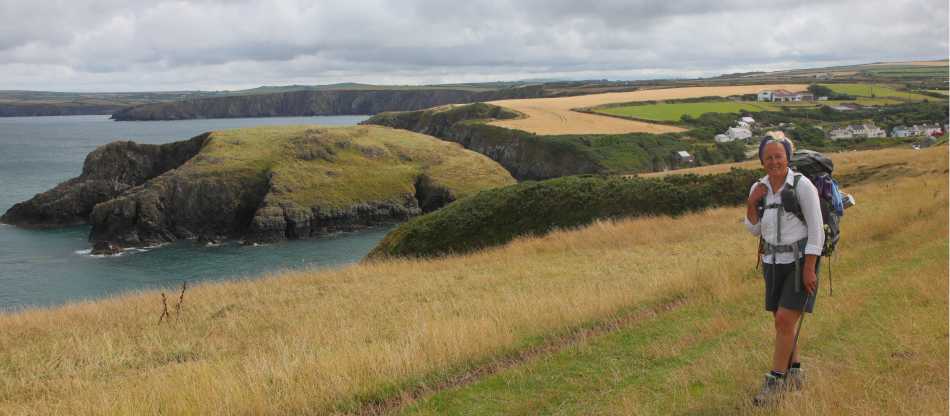
Walking tour in Wales | Hike the classic Pembrokeshire Coastal Path on this self guided walking holiday with bag transfers included
At a glance
Duration
17 days
Route
→
Countries
United Kingdom
Activity level
moderate
Style
Beach & Islands, Trekking & Hiking
Group size
Ask
Flights
Not included
Solo travellers
Ask an agent
Day by day
Your journey through
United Kingdom
Day 1Day 1: Arrive in TenbyTenby is not the official start of the Pembrokeshire Coast Path, but with excellent rail connections it makes an ideal base for your first two nights. This colourful harbour town is one of Wales’ most iconic seaside destinations, known for its pastel houses, sweeping beaches and imposing 13th-century town walls. Perched on a headland above the harbour are the ruins of Tenby Castle, while the narrow cobbled streets are lined with independent shops, cafés and traditional pubs. The Tenby Museum and Art Gallery houses fascinating local artefacts, including a 16th-century cannon, and the nearby Tudor Merchant’s House offers a glimpse into life in the 1500s. In the warmer months, many of the streets are pedestrianised during the day, creating a relaxed atmosphere with outdoor dining and a lively coastal feel. Accommodation: Spend 2 nights in a Victorian B&B with ensuite room and locally sourced breakfasts, around 10 minutes walk from the railway station and 5 minutes from the beach.
Tenby
Tenby is not the official start of the Pembrokeshire Coast Path, but with excellent rail connections it makes an ideal base for your first two nights. This colourful harbour town is one of Wales’ most iconic seaside destinations, known for its pastel houses, sweeping beaches and imposing 13th-century town walls. Perched on a headland above the harbour are the ruins of Tenby Castle, while the narrow cobbled streets are lined with independent shops, cafés and traditional pubs. The Tenby Museum and Art Gallery houses fascinating local artefacts, including a 16th-century cannon, and the nearby Tudor Merchant’s House offers a glimpse into life in the 1500s. In the warmer months, many of the streets are pedestrianised during the day, creating a relaxed atmosphere with outdoor dining and a lively coastal feel. Accommodation: Spend 2 nights in a Victorian B&B with ensuite room and locally sourced breakfasts, around 10 minutes walk from the railway station and 5 minutes from the beach.
Day 2Day 2: Amroth to Tenby 7 miles / 11 km, 4hrsThis is an ideal introduction to the Pembrokeshire Coast Path and a satisfying first day on the trail. After breakfast, take the morning bus to Amroth, a small seaside village that marks the official start of the route. With its long sandy beach and relaxed coastal feel, it’s a gentle place to begin your journey. From Amroth, follow the coast path back towards Tenby. The trail undulates across cliffs and headlands, weaving through woodland and passing sandy coves along the way. There are opportunities to pause at Wiseman’s Bridge for a drink, or perhaps take a swim at Saundersfoot, a lively harbour village with a strong industrial past rooted in coal mining, iron working and brick making. As you approach Tenby, the path descends with fine views over the harbour. The colourful houses clinging to the limestone cliffs above the old fishing port create one of the most memorable scenes on the entire Pembrokeshire coast. Tenby’s history stretches back to an 8th-century Viking herring fishery, later developing into a busy port and, with the arrival of the railway, a much-loved seaside resort. If you choose to extend your stay, an additional day could be spent taking the short ferry crossing to Caldey Island, known for its early Christian heritage and birdlife. Accommodation: As Day 1
This is an ideal introduction to the Pembrokeshire Coast Path and a satisfying first day on the trail. After breakfast, take the morning bus to Amroth, a small seaside village that marks the official start of the route. With its long sandy beach and relaxed coastal feel, it’s a gentle place to begin your journey. From Amroth, follow the coast path back towards Tenby. The trail undulates across cliffs and headlands, weaving through woodland and passing sandy coves along the way. There are opportunities to pause at Wiseman’s Bridge for a drink, or perhaps take a swim at Saundersfoot, a lively harbour village with a strong industrial past rooted in coal mining, iron working and brick making. As you approach Tenby, the path descends with fine views over the harbour. The colourful houses clinging to the limestone cliffs above the old fishing port create one of the most memorable scenes on the entire Pembrokeshire coast. Tenby’s history stretches back to an 8th-century Viking herring fishery, later developing into a busy port and, with the arrival of the railway, a much-loved seaside resort. If you choose to extend your stay, an additional day could be spent taking the short ferry crossing to Caldey Island, known for its early Christian heritage and birdlife. Accommodation: As Day 1
Day 3Day 3: Tenby to Manorbier 10.5 miles / 17km, 4.5hrsLeaving Tenby, if the tide is the right level and there is no activity on the local firing range (in which case a deviation exists) there is a long walk along the sandy beach to the flat topped headland of Giltar Point and over heath covered cliffs to then descend to Lydstep Haven. There is then a climb and an option to visit the headland at Lydstep point, with views across Carmarthon Bay into the Bristol Channel and closer by, soaring sea cliffs with caves and a blow hole. The coastal path continues around Skomer Bay and Shrinkle Haven, a beautiful area used in WWI for army training and for the tethering of airships used for anti submarine patrols. The path goes inland a bit before passing the Priest's Nose and the Neolithic burial chamber known as King's Quoit. It then descends to Manorbier Bay where you will soon spot Manorbier Castle before approaching the village and your overnight stop. Accommodation: Nestling at the head of a small wooded valley, your inn is set in 1/2 acre of mature grounds & lawns with extensive views across Manorbier Bay, the Norman Church and historic Manorbier Castle. The inn offers a gloriously quiet, relaxing atmosphere in the heart of the village yet just a "stone's throw" from the Pembrokeshire Coast National Park
Leaving Tenby, if the tide is the right level and there is no activity on the local firing range (in which case a deviation exists) there is a long walk along the sandy beach to the flat topped headland of Giltar Point and over heath covered cliffs to then descend to Lydstep Haven. There is then a climb and an option to visit the headland at Lydstep point, with views across Carmarthon Bay into the Bristol Channel and closer by, soaring sea cliffs with caves and a blow hole. The coastal path continues around Skomer Bay and Shrinkle Haven, a beautiful area used in WWI for army training and for the tethering of airships used for anti submarine patrols. The path goes inland a bit before passing the Priest's Nose and the Neolithic burial chamber known as King's Quoit. It then descends to Manorbier Bay where you will soon spot Manorbier Castle before approaching the village and your overnight stop. Accommodation: Nestling at the head of a small wooded valley, your inn is set in 1/2 acre of mature grounds & lawns with extensive views across Manorbier Bay, the Norman Church and historic Manorbier Castle. The inn offers a gloriously quiet, relaxing atmosphere in the heart of the village yet just a "stone's throw" from the Pembrokeshire Coast National Park
Day 4Day 4: Manorbier to Bosherton 10.5 miles / 17km, 5hrsContinue along the path passing quiet Swanlake Bay and if you are not tempted down to the beach, wander over the heath and down past sweeping Freshwater East Bay. The eastern part has a 1930s beachside holiday complex and the path threads behind the dunes followed by some strenuous ascending to the iron age fort at Greenala Point with its ridge and ditch defences. You then drop to Stackpole Bay and the secluded but popular Stackpole Quay, once a great estate, but now belonging to the National Trust. It has a lovely tea room. Continue over the green hills to a curious castellated portal which marks the start of the descent into famous Barafundle Bay, a justly popular sheltered sandy beach for a swim. More steep climbing follows the bay with some of the best limestone scenery of the whole walk around Stackpole Head with caves, bays and blowholes. Finally around Saddle Point you descend to the dunes and Lily Ponds of Broad Haven, from where it is a mile or so into Bosherton and your overnight. Accommodation: A quaint country pub with good accommodation. A good range of bar food and a reasonable range of beers on tap.
Continue along the path passing quiet Swanlake Bay and if you are not tempted down to the beach, wander over the heath and down past sweeping Freshwater East Bay. The eastern part has a 1930s beachside holiday complex and the path threads behind the dunes followed by some strenuous ascending to the iron age fort at Greenala Point with its ridge and ditch defences. You then drop to Stackpole Bay and the secluded but popular Stackpole Quay, once a great estate, but now belonging to the National Trust. It has a lovely tea room. Continue over the green hills to a curious castellated portal which marks the start of the descent into famous Barafundle Bay, a justly popular sheltered sandy beach for a swim. More steep climbing follows the bay with some of the best limestone scenery of the whole walk around Stackpole Head with caves, bays and blowholes. Finally around Saddle Point you descend to the dunes and Lily Ponds of Broad Haven, from where it is a mile or so into Bosherton and your overnight. Accommodation: A quaint country pub with good accommodation. A good range of bar food and a reasonable range of beers on tap.
Day 5Day 5: Bosherton to Angle 19 miles / 30.5km, 8-9 hrsThe first really long day takes you round Freshwater Bay West, along limestone cliffs with some beautiful flowery pastures in spring and summer, before more rugged walking coincides with a change to red sandstone geology. Potentially half the day could be away from the coast as there are military ranges to pass or bypass depending on their use, but there is an alternative route. Starting off back to the coast at Broadhaven from Bosherton, you could descend to visit 13th century St. Gowan's Chapel,wedged atmospherically down steps in a cleft in the cliffs. From just beyond here you enter the first military range passing beautiful Bullslaughter and Flimston Bays (slight diversion) with caves and blowholes. Arriving at the end of the range, there are the Stack Rocks and a bit further there is the famous Green Bridge arch. From around here you must turn inland towards the distinct spire of Warren Church avoiding ranges that are closed to walkers. Walking to Castle Martin you then follow the military range boundary to the popular surfing beach of Freshwater West. You may note the seaweed drying hut where purple seaweed was stored for making Lava Bread. After the beach the walking becomes more strenuous as the geology changes to Old Red Sandstone. Changing direction at Blockhouse Point, descend to Angle, a small busy beach with popular cafe and a small castle in the bay. here you could continue around the coast around North Hill to West Angle or just continue inland less than a mile to West Angle village and your overnight stay. Accommodation: B&B accommodation located on East Angle Bay The garden backs onto the bay with tidal views, including boats, swans, egrets, curlews, oystercatchers and other species of wading birds. highest standards of ensuite downfloor rooms.
The first really long day takes you round Freshwater Bay West, along limestone cliffs with some beautiful flowery pastures in spring and summer, before more rugged walking coincides with a change to red sandstone geology. Potentially half the day could be away from the coast as there are military ranges to pass or bypass depending on their use, but there is an alternative route. Starting off back to the coast at Broadhaven from Bosherton, you could descend to visit 13th century St. Gowan's Chapel,wedged atmospherically down steps in a cleft in the cliffs. From just beyond here you enter the first military range passing beautiful Bullslaughter and Flimston Bays (slight diversion) with caves and blowholes. Arriving at the end of the range, there are the Stack Rocks and a bit further there is the famous Green Bridge arch. From around here you must turn inland towards the distinct spire of Warren Church avoiding ranges that are closed to walkers. Walking to Castle Martin you then follow the military range boundary to the popular surfing beach of Freshwater West. You may note the seaweed drying hut where purple seaweed was stored for making Lava Bread. After the beach the walking becomes more strenuous as the geology changes to Old Red Sandstone. Changing direction at Blockhouse Point, descend to Angle, a small busy beach with popular cafe and a small castle in the bay. here you could continue around the coast around North Hill to West Angle or just continue inland less than a mile to West Angle village and your overnight stay. Accommodation: B&B accommodation located on East Angle Bay The garden backs onto the bay with tidal views, including boats, swans, egrets, curlews, oystercatchers and other species of wading birds. highest standards of ensuite downfloor rooms.
Day 6Day 6: West Angle to Pembroke 11.5 miles / 18.5km, 5hrsToday’s walk traces the tidal waters of Angle Haven before skirting the sheltered Milford Haven estuary. While this stretch includes views of the working port and refinery across the water, the path itself remains surprisingly peaceful, passing through attractive woodland and open farmland as it turns inland from the open sea. Along the way, you will pass a number of historic churches tucked into quiet corners of the landscape before approaching the handsome town of Pembroke. Dominating the skyline is its impressive Norman castle, dramatically positioned above the Pembroke River. Remarkably, it was never taken during a Welsh siege and is also known as the birthplace of Henry VII. Around the river are tranquil lily ponds, often dotted with swans, adding a gentle contrast to the fortress walls above. Pembroke’s historic streets offer a good choice of pubs, cafés and small shops, making it an enjoyable place to relax at the end of the day or stock up on provisions. Accommodation: A meticulously-run B&B along the main street, superb attention to detail in light airy rooms, with a fantastic choice of breakfast ingredients.
Today’s walk traces the tidal waters of Angle Haven before skirting the sheltered Milford Haven estuary. While this stretch includes views of the working port and refinery across the water, the path itself remains surprisingly peaceful, passing through attractive woodland and open farmland as it turns inland from the open sea. Along the way, you will pass a number of historic churches tucked into quiet corners of the landscape before approaching the handsome town of Pembroke. Dominating the skyline is its impressive Norman castle, dramatically positioned above the Pembroke River. Remarkably, it was never taken during a Welsh siege and is also known as the birthplace of Henry VII. Around the river are tranquil lily ponds, often dotted with swans, adding a gentle contrast to the fortress walls above. Pembroke’s historic streets offer a good choice of pubs, cafés and small shops, making it an enjoyable place to relax at the end of the day or stock up on provisions. Accommodation: A meticulously-run B&B along the main street, superb attention to detail in light airy rooms, with a fantastic choice of breakfast ingredients.
Day 7Day 7: Pembroke to Milford Haven 11.5 miles / 18.5km, 5hrsStart the day following a pleasant creek-side path from near Pembroke Castle, before descending through the historic docklands of Pembroke Dock to meet the wide waters of Milford Haven. The route then climbs gently towards the elevated Cleddau Road Bridge, offering expansive views across the estuary before descending to the waterside village of Neyland. Continuing along the shoreline, there is the option to pause for lunch at the welcoming Ferry Inn at Hazelbeach, well known for its fresh fish dishes and harbour views. The walk then follows the estuary past working quays and maritime infrastructure, offering an insight into the area’s industrial heritage while still enjoying open water views. Cross Black Bridge and continue along the waterfront into Milford Haven, passing through the suburb of Hakin before reaching the town centre. Milford Haven has a lively marina, shops and cafés, providing a convenient and well-served base at the end of today’s walk Accommodation: Two nights in a welcoming B&B or small hotel in Milford Haven.
Start the day following a pleasant creek-side path from near Pembroke Castle, before descending through the historic docklands of Pembroke Dock to meet the wide waters of Milford Haven. The route then climbs gently towards the elevated Cleddau Road Bridge, offering expansive views across the estuary before descending to the waterside village of Neyland. Continuing along the shoreline, there is the option to pause for lunch at the welcoming Ferry Inn at Hazelbeach, well known for its fresh fish dishes and harbour views. The walk then follows the estuary past working quays and maritime infrastructure, offering an insight into the area’s industrial heritage while still enjoying open water views. Cross Black Bridge and continue along the waterfront into Milford Haven, passing through the suburb of Hakin before reaching the town centre. Milford Haven has a lively marina, shops and cafés, providing a convenient and well-served base at the end of today’s walk Accommodation: Two nights in a welcoming B&B or small hotel in Milford Haven.
Day 8Day 8: Milford Haven to Dale 10 miles…Today’s walk leaves Milford Haven and heads west along the shoreline of the Haven Waterway. The path becomes more rural as you leave the marina behind, with wide estuary views and sections of meadow and clifftop walking. As you approach Sandy Haven, tidal timings become important. A small wooden ford allows you to cross the inlet for around two hours either side of low tide. If the tide is in, a detour of approximately 4 miles or 6.5 kilometres is required, adding extra distance but remaining straightforward underfoot. Beyond the crossing, the route follows flower-rich clifftop paths past the peaceful inlet of Monk Haven before reaching the Gann Estuary. Here, a small footbridge is accessible for roughly three hours either side of low tide. If missed, a 2.5 mile or 4 kilometre inland diversion is needed. Whichever option you take, the path eventually leads to the charming village of Dale, known for its watersports, café culture and welcoming pub. Accommodation here is limited so a pre-arranged transfer returns you to Milford Haven for a second night.
Today’s walk leaves Milford Haven and heads west along the shoreline of the Haven Waterway. The path becomes more rural as you leave the marina behind, with wide estuary views and sections of meadow and clifftop walking. As you approach Sandy Haven, tidal timings become important. A small wooden ford allows you to cross the inlet for around two hours either side of low tide. If the tide is in, a detour of approximately 4 miles or 6.5 kilometres is required, adding extra distance but remaining straightforward underfoot. Beyond the crossing, the route follows flower-rich clifftop paths past the peaceful inlet of Monk Haven before reaching the Gann Estuary. Here, a small footbridge is accessible for roughly three hours either side of low tide. If missed, a 2.5 mile or 4 kilometre inland diversion is needed. Whichever option you take, the path eventually leads to the charming village of Dale, known for its watersports, café culture and welcoming pub. Accommodation here is limited so a pre-arranged transfer returns you to Milford Haven for a second night.
Day 9Day 9: Dale to Marloes 14 miles / 22.5 km, 6hrsTransfer back to Dale to begin one of the highlights of the Pembrokeshire Coast Path. If you prefer a slightly shorter stage, there is the option to cut across the narrow neck of Dale Head. Most walkers choose to follow the full circuit around the headland for its expansive coastal scenery. Leaving the sheltered harbour of Dale behind, the path climbs steadily onto Dale Head. As you gain height, sweeping views open across St Bride’s Bay and the Atlantic Ocean. From the headland, follow dramatic clifftop trails, passing the sandy curve of Castle Beach and quieter Watwick Bay below. Rounding St Anne’s Head near its lighthouse, the landscape becomes increasingly wild and exposed. Seabirds ride the updrafts above the cliffs and, on clear days, you may glimpse offshore islands scattered across the horizon. Soon you reach Marloes Sands, widely regarded as one of the most spectacular beaches along the entire Pembrokeshire Coast Path. The trail continues along rugged terrain above Deadman’s Bay before arriving at Martin’s Haven. This small harbour is the departure point for boats to Skomer Island, renowned for its thriving seabird colonies including puffins during the spring and early summer months. A short inland trail leads you to the village of Marloes, where you stay overnight. *If you wish to visit Skomer Island to see the puffins, which are present from April to July, we can arrange an additional night in Marloes (extra charge). Please request this with our team.* Accommodation: Overnight in a friendly B&B in Marloes.
Transfer back to Dale to begin one of the highlights of the Pembrokeshire Coast Path. If you prefer a slightly shorter stage, there is the option to cut across the narrow neck of Dale Head. Most walkers choose to follow the full circuit around the headland for its expansive coastal scenery. Leaving the sheltered harbour of Dale behind, the path climbs steadily onto Dale Head. As you gain height, sweeping views open across St Bride’s Bay and the Atlantic Ocean. From the headland, follow dramatic clifftop trails, passing the sandy curve of Castle Beach and quieter Watwick Bay below. Rounding St Anne’s Head near its lighthouse, the landscape becomes increasingly wild and exposed. Seabirds ride the updrafts above the cliffs and, on clear days, you may glimpse offshore islands scattered across the horizon. Soon you reach Marloes Sands, widely regarded as one of the most spectacular beaches along the entire Pembrokeshire Coast Path. The trail continues along rugged terrain above Deadman’s Bay before arriving at Martin’s Haven. This small harbour is the departure point for boats to Skomer Island, renowned for its thriving seabird colonies including puffins during the spring and early summer months. A short inland trail leads you to the village of Marloes, where you stay overnight. *If you wish to visit Skomer Island to see the puffins, which are present from April to July, we can arrange an additional night in Marloes (extra charge). Please request this with our team.* Accommodation: Overnight in a friendly B&B in Marloes.
Day 10Day 10: Marloes to Broad Haven 9.5 miles / 15km, 5hrsThe coastal drama continues as you round Nab Head, where far-reaching views stretch across St Bride’s Bay. The walking remains consistently scenic, with the path tracing rugged clifftops high above the sea. Descend to the sheltered inlet of St Bride’s Haven, a peaceful cove watched over by its distinctive hillside church. Beyond the bay, the trail keeps close to the cliff edge, undulating steadily with only occasional pockets of woodland offering brief shelter from the coastal winds. The sense of space and sea is constant, with rocky headlands and hidden coves. You eventually arrive at the charming fishing village of Little Haven, clustered around its small sandy beach. From here, it’s approximately 0.8km (0.5 miles) along the coast to Broad Haven. The landscape opens out to a wide sandy bay popular with surfers, and the village offers shops and a livelier atmosphere to mark the end of today’s walk. Accommodation: Overnight in a B&B with sea views.
The coastal drama continues as you round Nab Head, where far-reaching views stretch across St Bride’s Bay. The walking remains consistently scenic, with the path tracing rugged clifftops high above the sea. Descend to the sheltered inlet of St Bride’s Haven, a peaceful cove watched over by its distinctive hillside church. Beyond the bay, the trail keeps close to the cliff edge, undulating steadily with only occasional pockets of woodland offering brief shelter from the coastal winds. The sense of space and sea is constant, with rocky headlands and hidden coves. You eventually arrive at the charming fishing village of Little Haven, clustered around its small sandy beach. From here, it’s approximately 0.8km (0.5 miles) along the coast to Broad Haven. The landscape opens out to a wide sandy bay popular with surfers, and the village offers shops and a livelier atmosphere to mark the end of today’s walk. Accommodation: Overnight in a B&B with sea views.
Day 11Day 11: Broad Haven to Solva 12 miles/ 18km, 5hrsClimb out of Broad Haven, along dramatic cliffs with hints of coves and beaches, passing inland of Druidstone, before the first coffee break opportunity at Nolton Haven. Eventually you drop down onto two miles of sandy Newgale Beach often scythed by kite surfers, perhaps enjoy a plate of chips and a pint watching the surf action from the tables in front of the Duke of Edinburgh pub and then climb and undulate around the cliffs to finally descend steeply to cross a small bridge by a very pebbly beach. A steep ascent and descent brings you into Solva, maybe the most unusual and attractive village on the whole path. Its little harbour is hidden from the sea by a long protective sweep and elbow of cliffs. The village has both upper and lower parts, most of the B&Bs are in the upper. Accommodation: In Solva we use a quiet Georgian B&B with full Welsh breakfast and vegetarian options.
Climb out of Broad Haven, along dramatic cliffs with hints of coves and beaches, passing inland of Druidstone, before the first coffee break opportunity at Nolton Haven. Eventually you drop down onto two miles of sandy Newgale Beach often scythed by kite surfers, perhaps enjoy a plate of chips and a pint watching the surf action from the tables in front of the Duke of Edinburgh pub and then climb and undulate around the cliffs to finally descend steeply to cross a small bridge by a very pebbly beach. A steep ascent and descent brings you into Solva, maybe the most unusual and attractive village on the whole path. Its little harbour is hidden from the sea by a long protective sweep and elbow of cliffs. The village has both upper and lower parts, most of the B&Bs are in the upper. Accommodation: In Solva we use a quiet Georgian B&B with full Welsh breakfast and vegetarian options.
Day 12Day 12: Solva to St David's 15 miles / 24km, 7hrsQuite a tough but dramatic coastal walk. After a couple of miles you come to Caerfai Bay, where if you wanted to spend more time in St.Davids, you could miss a section of the Pembrokeshire Coast Path and walk inland from here. But that would be a shame as the coast walking is wonderful. You pass the remains of St. Non's Chapel, birth place of St. David's mother and its healing well. The kiln-lined narrow inlet of Porthclais provides a coffee or ice cream break, before passing along remote heathland and turning north with views of Ramsey Island. The sound between the island and the mainland produces dramatic tidal currents. Watch out for seals and pups from late summer/early autumn just off the shore or lying in the rocky bays. Next you reach the high lifeboat station at St.Justinians Bay before walking around Point St.John into Whitesands Bay, another superb surf beach. From here it is a 45 minute walk into St. Davids and your accommodation, but you could take the occasional bus from the beach shop car park. Accommodation: In St. Davids, an attractive guesthouse with luxury bedrooms set around a courtyard.
Quite a tough but dramatic coastal walk. After a couple of miles you come to Caerfai Bay, where if you wanted to spend more time in St.Davids, you could miss a section of the Pembrokeshire Coast Path and walk inland from here. But that would be a shame as the coast walking is wonderful. You pass the remains of St. Non's Chapel, birth place of St. David's mother and its healing well. The kiln-lined narrow inlet of Porthclais provides a coffee or ice cream break, before passing along remote heathland and turning north with views of Ramsey Island. The sound between the island and the mainland produces dramatic tidal currents. Watch out for seals and pups from late summer/early autumn just off the shore or lying in the rocky bays. Next you reach the high lifeboat station at St.Justinians Bay before walking around Point St.John into Whitesands Bay, another superb surf beach. From here it is a 45 minute walk into St. Davids and your accommodation, but you could take the occasional bus from the beach shop car park. Accommodation: In St. Davids, an attractive guesthouse with luxury bedrooms set around a courtyard.
Day 13Day 13: St David's to Trefin 11 miles / 18km, 5hrsThis remote section takes you through some beautiful expanses of heather moor, on rugged trails passing ancient stones, dry stone walls and igneous peaks popping up along the coast. Walk around St. David's Head, then steep paths around the prominent hill called Carn Penberry. Soon you are crossing pastures towards the first sign of habitation at Abereiddy, a slate mining village. Passing out of the bay, you might want to divert to see the flooded quarry called the Blue Lagoon. Another hour of walking around pastures and potato fields brings you to the former stone port of Porthgain, whose entrance is marked by two white towers. A stop at the Sloop Inn here is highly recommended, one of the best pubs on the whole route. The village also has a popular fish restaurant and an art gallery. The final hour brings you into Trefin, a pretty village on a long hill. Accommodation: In Trefin there is only one village inn. As an alternative, we can arrange a stay in a converted former schoolhouse that now operates as a small hostel. You will have a private room with its own shower, though toilet facilities are shared. If a room is not available there, you may stay a second night in St David's.
This remote section takes you through some beautiful expanses of heather moor, on rugged trails passing ancient stones, dry stone walls and igneous peaks popping up along the coast. Walk around St. David's Head, then steep paths around the prominent hill called Carn Penberry. Soon you are crossing pastures towards the first sign of habitation at Abereiddy, a slate mining village. Passing out of the bay, you might want to divert to see the flooded quarry called the Blue Lagoon. Another hour of walking around pastures and potato fields brings you to the former stone port of Porthgain, whose entrance is marked by two white towers. A stop at the Sloop Inn here is highly recommended, one of the best pubs on the whole route. The village also has a popular fish restaurant and an art gallery. The final hour brings you into Trefin, a pretty village on a long hill. Accommodation: In Trefin there is only one village inn. As an alternative, we can arrange a stay in a converted former schoolhouse that now operates as a small hostel. You will have a private room with its own shower, though toilet facilities are shared. If a room is not available there, you may stay a second night in St David's.
Day 14Day 14: Trefin to Fishguard 20 miles / 32km, 9hrsFrom Trefin you have a long, tough, remote and rugged walking day following the sea cliffs. A diversion before the village of Abercastle takes you to the impressive ancient chambered burial site of Cromlech Carreg Sampson. A swim could be had from Abermawr Beach and then there is some strenuous walking around the cliffs of Pwllcrochan. The views improve dramatically around the next headland following the heather and bracken slopes past Pwll Deri and then around Strumble Head with its remote lighthouse. The coastal path continues its cove-hugging route along through farm and woodland patches, passing Carreg Wasted Point. This was the place of the last invasion of Britain in 1797. The last trod is into Fishguard Bay where you may be staying in Goodwick or a bit further along in the charming little harbour of Lower Fishguard. In the town hall there is a Bayeux tapestry style embroidery depicting the 1797 French invasion. Accommodation: A quaint B&B down in lower Fishguard, just off the harbour, offering a welcoming quiet stay.
From Trefin you have a long, tough, remote and rugged walking day following the sea cliffs. A diversion before the village of Abercastle takes you to the impressive ancient chambered burial site of Cromlech Carreg Sampson. A swim could be had from Abermawr Beach and then there is some strenuous walking around the cliffs of Pwllcrochan. The views improve dramatically around the next headland following the heather and bracken slopes past Pwll Deri and then around Strumble Head with its remote lighthouse. The coastal path continues its cove-hugging route along through farm and woodland patches, passing Carreg Wasted Point. This was the place of the last invasion of Britain in 1797. The last trod is into Fishguard Bay where you may be staying in Goodwick or a bit further along in the charming little harbour of Lower Fishguard. In the town hall there is a Bayeux tapestry style embroidery depicting the 1797 French invasion. Accommodation: A quaint B&B down in lower Fishguard, just off the harbour, offering a welcoming quiet stay.
Day 15Day 15: Fishguard to Newport 12 miles / 19.5km, 6hrsAn easier day with the option to reduce the distance by 2 miles bypassing Dinas Head if so required. There is a steep climb out of Fishguard passing the old castle and along the coast to the peaceful shingle beach at Aberbach, in front of the old mill stream. A steep ascent and descent through the gorse and bracken brings you to the beach at Pwllgwaelod, with a welcoming cafe. If the weather is reasonable, carry on round the remote Dinas Head which has great views and in the spring you can see Needle Rock smothered with birds. The cliffside views can also be good for seal and dolphin watching if you have binoculars. After the head you reach the romantic ruins of a church destroyed by a storm. After a beach rest and perhaps an ice cream, it's back on the cliffs for the last leg of the walk. It goes through the area called 'Fforest' with sections of woodland obscuring the sea views; until you finally bend round into the Nevern Estuary and the popular small seaside resort of Newport - complete with a Norman Castle and two or three nice pubs. The beachfront is the place to be for summer sunsets. Accommodation: In an old Victorian Mariner's Cottage with great attention to detail made to the bedrooms and the guest's living room. If unavailable, you are likely to be staying in one of the inns nearby.
An easier day with the option to reduce the distance by 2 miles bypassing Dinas Head if so required. There is a steep climb out of Fishguard passing the old castle and along the coast to the peaceful shingle beach at Aberbach, in front of the old mill stream. A steep ascent and descent through the gorse and bracken brings you to the beach at Pwllgwaelod, with a welcoming cafe. If the weather is reasonable, carry on round the remote Dinas Head which has great views and in the spring you can see Needle Rock smothered with birds. The cliffside views can also be good for seal and dolphin watching if you have binoculars. After the head you reach the romantic ruins of a church destroyed by a storm. After a beach rest and perhaps an ice cream, it's back on the cliffs for the last leg of the walk. It goes through the area called 'Fforest' with sections of woodland obscuring the sea views; until you finally bend round into the Nevern Estuary and the popular small seaside resort of Newport - complete with a Norman Castle and two or three nice pubs. The beachfront is the place to be for summer sunsets. Accommodation: In an old Victorian Mariner's Cottage with great attention to detail made to the bedrooms and the guest's living room. If unavailable, you are likely to be staying in one of the inns nearby.
Day 16Day 16: Newport to Dogmaels 16 miles / 26km, 8 hrsPossibly the hardest day and arguably the most dramatic of the walk. It is also remote and you need to carry enough water and supplies for the whole day. Leaving the long beach at Newport there are some steep roller-coasters around cliffs and landslips until you reach the beautiful feature known as The Witch's Cauldron where you walk over a natural bridge over a sea water inlet lake then walk on into Ceibwr Bay. Steep ascents now follow up to 175m before turning Cemaes Head and then down past Poppit Sands Youth Hostel to reach a very welcome cafe at the National Park car park. The last part is along the road into the large village of Dogmaels, close to the River Teifi and to the end plinth by the river and beside a welcome pub. You have finally come to the end of the Pembrokeshire Coast Path, because the river represents the end of Pembrokeshire county. Accommodation: In St. Dogmaels at an inn with 7 ensuite rooms. If we are unable to get you in there, you may be a mile up the road and across the river in Cardigan.
Possibly the hardest day and arguably the most dramatic of the walk. It is also remote and you need to carry enough water and supplies for the whole day. Leaving the long beach at Newport there are some steep roller-coasters around cliffs and landslips until you reach the beautiful feature known as The Witch's Cauldron where you walk over a natural bridge over a sea water inlet lake then walk on into Ceibwr Bay. Steep ascents now follow up to 175m before turning Cemaes Head and then down past Poppit Sands Youth Hostel to reach a very welcome cafe at the National Park car park. The last part is along the road into the large village of Dogmaels, close to the River Teifi and to the end plinth by the river and beside a welcome pub. You have finally come to the end of the Pembrokeshire Coast Path, because the river represents the end of Pembrokeshire county. Accommodation: In St. Dogmaels at an inn with 7 ensuite rooms. If we are unable to get you in there, you may be a mile up the road and across the river in Cardigan.
Day 17Day 17: Arrangements end after breakfastArrangements end after breakfast. Depart St. Dogmaels for your onward journey. Take a local bus to Fishguard, Aberystwyth or Haverford West to join the rail network for connections to the rest of the UK.
Arrangements end after breakfast. Depart St. Dogmaels for your onward journey. Take a local bus to Fishguard, Aberystwyth or Haverford West to join the rail network for connections to the rest of the UK.
Discover United Kingdom
A glimpse of the destination you'll explore.
Upcoming departures
DatesPrice / personAvailability
6 Jun 2026 – 22 Jun 2026CAD 4,950Sold outBook my trip
7 Jun 2026 – 23 Jun 2026CAD 4,950Sold outBook my trip
8 Jun 2026 – 24 Jun 2026CAD 4,950Sold outBook my trip
9 Jun 2026 – 25 Jun 2026CAD 4,950Sold outBook my trip
10 Jun 2026 – 26 Jun 2026CAD 4,950Sold outBook my trip
11 Jun 2026 – 27 Jun 2026CAD 4,950Sold outBook my trip
12 Jun 2026 – 28 Jun 2026CAD 4,950Sold outBook my trip
13 Jun 2026 – 29 Jun 2026CAD 4,950Sold outBook my trip
14 Jun 2026 – 30 Jun 2026CAD 4,950Sold outBook my trip
15 Jun 2026 – 1 Jul 2026CAD 4,950Sold outBook my trip
16 Jun 2026 – 2 Jul 2026CAD 4,950Sold outBook my trip
17 Jun 2026 – 3 Jul 2026CAD 4,950Sold outBook my trip
18 Jun 2026 – 4 Jul 2026CAD 4,950Sold outBook my trip
19 Jun 2026 – 5 Jul 2026CAD 4,950Sold outBook my trip
20 Jun 2026 – 6 Jul 2026CAD 4,950Sold outBook my trip
21 Jun 2026 – 7 Jul 2026CAD 4,950Sold outBook my trip
22 Jun 2026 – 8 Jul 2026CAD 4,950Sold outBook my trip
23 Jun 2026 – 9 Jul 2026CAD 4,950Sold outBook my trip
24 Jun 2026 – 10 Jul 2026CAD 4,950Sold outBook my trip
25 Jun 2026 – 11 Jul 2026CAD 4,950Sold outBook my trip
26 Jun 2026 – 12 Jul 2026CAD 4,950Sold outBook my trip
27 Jun 2026 – 13 Jul 2026CAD 4,950Sold outBook my trip
28 Jun 2026 – 14 Jul 2026CAD 4,950Sold outBook my trip
29 Jun 2026 – 15 Jul 2026CAD 4,950Sold outBook my trip
30 Jun 2026 – 16 Jul 2026CAD 4,950Sold outBook my trip
UT
Operated by UTracks
A TripFinder-trusted operator. We compare the trip and handle your booking with a real advisor — you travel under the operator's terms.