Walking in Austria: Experience the Austrian Lakes region at your own pace on our comfort self guided Austrian Lakes walking holiday.
At a glance
Duration
8 days
Route
→
Countries
Austria
Activity level
moderate
Style
Trekking & Hiking
Group size
Ask
Flights
Not included
Solo travellers
Ask an agent
Day by day
Your journey through
Austria
Day 1Day 1: Arrive Bad IschlOn arrival in Bad Ischl make your way to the hotel, where you will receive your your detailed travel documents (hiking information and detailed maps). Ischl became a holiday home of European standing from the middle of the 19th century when Emperor Franz Joseph started spending time at his summer residence here. Bad Ischl, a health resort since 1906, is located in the heart of the Salzkammergut and is the starting point for this extraordinarily varied hike. You can visit the spacious thermal bath or visit the famous Café Zauner.
On arrival in Bad Ischl make your way to the hotel, where you will receive your your detailed travel documents (hiking information and detailed maps). Ischl became a holiday home of European standing from the middle of the 19th century when Emperor Franz Joseph started spending time at his summer residence here. Bad Ischl, a health resort since 1906, is located in the heart of the Salzkammergut and is the starting point for this extraordinarily varied hike. You can visit the spacious thermal bath or visit the famous Café Zauner.
Day 2Day 2: Walk to Strobl (7-8hrs)Start your walk from Bad Ischl along the Ischl River following the "Dammweg" trail all the way to Russbach. From here you ascend to the mountain lake, Schwarzensee which you walk around before descending to Schwarzenbach on Lake Wolfgangsee. Named after a family of merchants, Strobl was a centre for pilgrims and carters in the 17th century. Walking: 23.5km/14.6mi, ascent 730m/2395ft, descent 652m/2139ft Note: you can shorten the walk by taking a bus to Russbach, in which case the walking will be 12.5km/7.7mi, ascent 511m/1677ft, descent 507m/1663ft
Start your walk from Bad Ischl along the Ischl River following the "Dammweg" trail all the way to Russbach. From here you ascend to the mountain lake, Schwarzensee which you walk around before descending to Schwarzenbach on Lake Wolfgangsee. Named after a family of merchants, Strobl was a centre for pilgrims and carters in the 17th century. Walking: 23.5km/14.6mi, ascent 730m/2395ft, descent 652m/2139ft Note: you can shorten the walk by taking a bus to Russbach, in which case the walking will be 12.5km/7.7mi, ascent 511m/1677ft, descent 507m/1663ft
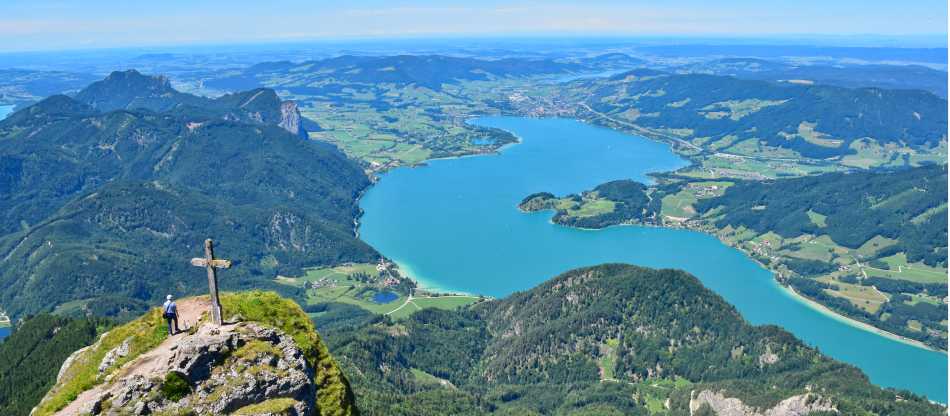
Day 3Day 3: Boat trip then walk to Strobl…A change of pace this morning as your day begins with a boat trip on Lake Wolfgangsee, the most famous lake of the Salzkammergut region, to St Wolfgang. Here you can visit the church or take the cogwheel train to the summit of Schafberg (1782m) for magnificent panoramic views of the region*. Back in St Wolfgang follow the lakeside path to Berau. It's a wonderful panoramic path, which runs directly along the water and leads you around the Bürglstein (Bürgl Panoramic Walk) to Strobl. Named after a family of merchants, Strobl was a centre for pilgrims and carters in the 17th century. Walking: 7.5km/4.6mi, ascent 164m/538ft, descent 141m/462ft *Option to hike to the summit of the Schafberg from St Wolfgang, return by cogwheel train. Walk or bus/ferry to Strobl.
A change of pace this morning as your day begins with a boat trip on Lake Wolfgangsee, the most famous lake of the Salzkammergut region, to St Wolfgang. Here you can visit the church or take the cogwheel train to the summit of Schafberg (1782m) for magnificent panoramic views of the region*. Back in St Wolfgang follow the lakeside path to Berau. It's a wonderful panoramic path, which runs directly along the water and leads you around the Bürglstein (Bürgl Panoramic Walk) to Strobl. Named after a family of merchants, Strobl was a centre for pilgrims and carters in the 17th century. Walking: 7.5km/4.6mi, ascent 164m/538ft, descent 141m/462ft *Option to hike to the summit of the Schafberg from St Wolfgang, return by cogwheel train. Walk or bus/ferry to Strobl.
Day 4Day 4: Walk the 'Bear Trail' to Bad Goisern (8hrs)The path from Weissenbach to Bad Goisern, the so-called Bear trail (Bärenpfad), leads into a rather primeval landscape formed by the water. Gorges, deep ponds and gurgling streams characterise the path. Walking past the ‘Kammersbach’ hut you will climb up to the Bärenpfadsattel. Halfway down, you may be interested in the ‘Chorinsky Klause’, an industrial monument (a lock) built at the beginning of the 19th century to move logged timber downstream for milling. Continue to Bad Goisern and your accommodation. Walking: 21km/13.4mi, ascent 895m/2936ft, descent 977m/3205ft Note: if you would like to avoid today's steep descent, you can take a bus to Bad Ischl and walk an alternate route to Bad Goisern (10km/6mi).
The path from Weissenbach to Bad Goisern, the so-called Bear trail (Bärenpfad), leads into a rather primeval landscape formed by the water. Gorges, deep ponds and gurgling streams characterise the path. Walking past the ‘Kammersbach’ hut you will climb up to the Bärenpfadsattel. Halfway down, you may be interested in the ‘Chorinsky Klause’, an industrial monument (a lock) built at the beginning of the 19th century to move logged timber downstream for milling. Continue to Bad Goisern and your accommodation. Walking: 21km/13.4mi, ascent 895m/2936ft, descent 977m/3205ft Note: if you would like to avoid today's steep descent, you can take a bus to Bad Ischl and walk an alternate route to Bad Goisern (10km/6mi).
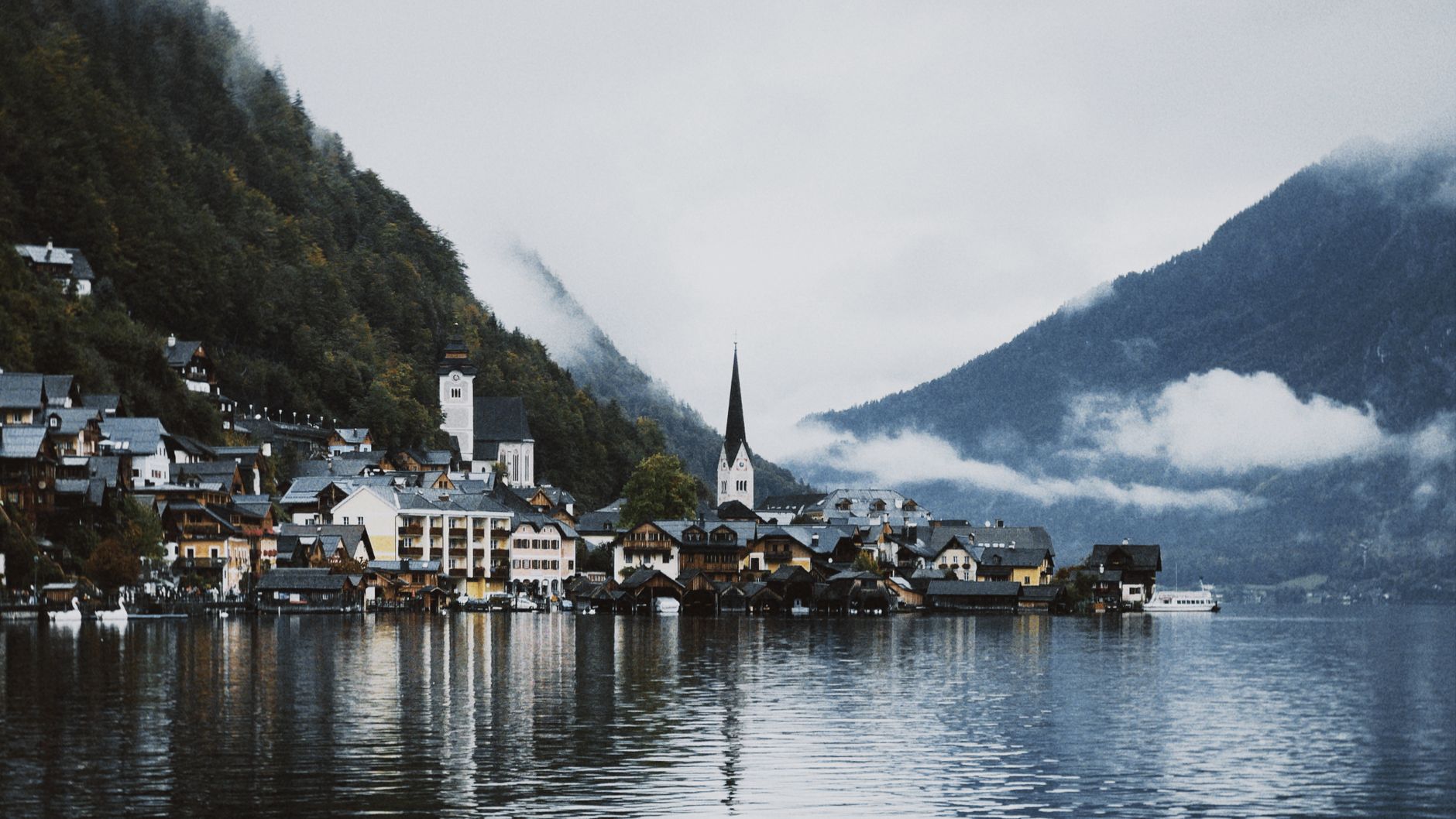
Day 5Day 5: Walk to Hallstatt (5hrs)Today's walk from Bad Goisern to Hallstatt is along the historical 'Brine Trail' to Steeg. The following section on the eastern shore of Lake Hallstatt is panoramic, with views of Hallstatt, the lake and the Dachstein Alps. Hanging bridges give the impression of walking above the water. Continue to Obertraun and spend the night in Hallstatt. The almost perfect ensemble of narrow streets, historical houses, lake panorama and the cultural heritage from the Hallstatt era make this place world-famous. Walking: 19km/12mi, ascent 127m/416ft, descent 102m/334ft You can shorten today's walk by approx 8km/5mi by taking the ferry from Hallstatt train station to Hallstatt town (payable locally).
Today's walk from Bad Goisern to Hallstatt is along the historical 'Brine Trail' to Steeg. The following section on the eastern shore of Lake Hallstatt is panoramic, with views of Hallstatt, the lake and the Dachstein Alps. Hanging bridges give the impression of walking above the water. Continue to Obertraun and spend the night in Hallstatt. The almost perfect ensemble of narrow streets, historical houses, lake panorama and the cultural heritage from the Hallstatt era make this place world-famous. Walking: 19km/12mi, ascent 127m/416ft, descent 102m/334ft You can shorten today's walk by approx 8km/5mi by taking the ferry from Hallstatt train station to Hallstatt town (payable locally).
Day 6Day 6: Free day in HallstattThere are a number of options today. You can visit the salt mines above Hallstatt, or the Dachstein Adventure World (cable car to 2000m with its viewing platform “5 Fingers” and the Ice and Mammoth Caves). Alternatively we recommend a walk through the Echerntal valley with its impressive waterfalls. Overnight Hallstatt. Optional walking approx. 2hrs, 6km/3.7mi, ascent/descent 258m/846ft
There are a number of options today. You can visit the salt mines above Hallstatt, or the Dachstein Adventure World (cable car to 2000m with its viewing platform “5 Fingers” and the Ice and Mammoth Caves). Alternatively we recommend a walk through the Echerntal valley with its impressive waterfalls. Overnight Hallstatt. Optional walking approx. 2hrs, 6km/3.7mi, ascent/descent 258m/846ft
Day 7Day 7: Walk to Bad Goisern, train, bus or walk to Bad Ischl (6-7hrs)Leave Hallstatt by boat and enjoy postcard views of the village then take the train to Bad Aussee (tickets for both are included). Two walking options today. Option 1: Walk to Bad Goisern, catch public transport to Bad Ischl: From Bad Aussee in Styria you hike on the old salt path. Here is the last place in Austria where salt is still mined as rock salt. Worth seeing is the Alpine Garden, where about 2000 species of alpine plants as well as plant rarities from all over the world thrive. In themed gardens, medicinal plants, aromatic herbs and much more are presented. The lookout tower of the Pflindsberg ruins from 1250 AD offers a fantastic view. The theme trail now merges into the so-called Römerweg; thus, the beginnings of the settlement Michelhallberg, which you cross, are documented from Roman times. On arrival in Bad Goisern you have returned to the province of Upper Austria. To return to the starting point of your trip you will take public transport to Bad Ischl (payable locally). Walking 19km/12 mi, ascent 500m/1640ft, descent 660m/2165ft Option 2: Walk to Bad Ischl: From Bad Ausse, you will walk along the promenade of the Altausser Traun to the health resort Altaussee. Located peacefully on the western shores of Lake Altaussee, it boasts charming wooden houses and beautiful gardens. The dark blue lake reflects the mountain scenery of the mountains "Loser" and "Trisselwand", and farther away, the Dachstein! A few km later, follow the Via Salis hiking trail which reminds you that this region is inextricably linked to salt mining. From the forest, enter the Blaa-Alm with many alpine huts. The Rettenbach valley opens up revealing one of the largest low-lying alpine pastures in Europe. From here you journey back to Bad Ischl. Walking 25km/15.5 mi, ascent 270m/885ft, descent 450m/1476ft
Leave Hallstatt by boat and enjoy postcard views of the village then take the train to Bad Aussee (tickets for both are included). Two walking options today. Option 1: Walk to Bad Goisern, catch public transport to Bad Ischl: From Bad Aussee in Styria you hike on the old salt path. Here is the last place in Austria where salt is still mined as rock salt. Worth seeing is the Alpine Garden, where about 2000 species of alpine plants as well as plant rarities from all over the world thrive. In themed gardens, medicinal plants, aromatic herbs and much more are presented. The lookout tower of the Pflindsberg ruins from 1250 AD offers a fantastic view. The theme trail now merges into the so-called Römerweg; thus, the beginnings of the settlement Michelhallberg, which you cross, are documented from Roman times. On arrival in Bad Goisern you have returned to the province of Upper Austria. To return to the starting point of your trip you will take public transport to Bad Ischl (payable locally). Walking 19km/12 mi, ascent 500m/1640ft, descent 660m/2165ft Option 2: Walk to Bad Ischl: From Bad Ausse, you will walk along the promenade of the Altausser Traun to the health resort Altaussee. Located peacefully on the western shores of Lake Altaussee, it boasts charming wooden houses and beautiful gardens. The dark blue lake reflects the mountain scenery of the mountains "Loser" and "Trisselwand", and farther away, the Dachstein! A few km later, follow the Via Salis hiking trail which reminds you that this region is inextricably linked to salt mining. From the forest, enter the Blaa-Alm with many alpine huts. The Rettenbach valley opens up revealing one of the largest low-lying alpine pastures in Europe. From here you journey back to Bad Ischl. Walking 25km/15.5 mi, ascent 270m/885ft, descent 450m/1476ft
Day 8Day 8: Trip concludesThe trip concludes after breakfast in Bad Ischl.