Day 1Day 1: Arrive Kranjska GoraYour trip begins in the alpine village of Kranjska Gora (810m/2,657ft), set beneath the peaks of Triglav National Park. Settle in and take a walk through the village — you'll find traditional Slovenian architecture, a pretty church, and good views of the surrounding peaks that you'll be heading into tomorrow.
Your trip begins in the alpine village of Kranjska Gora (810m/2,657ft), set beneath the peaks of Triglav National Park. Settle in and take a walk through the village — you'll find traditional Slovenian architecture, a pretty church, and good views of the surrounding peaks that you'll be heading into tomorrow.
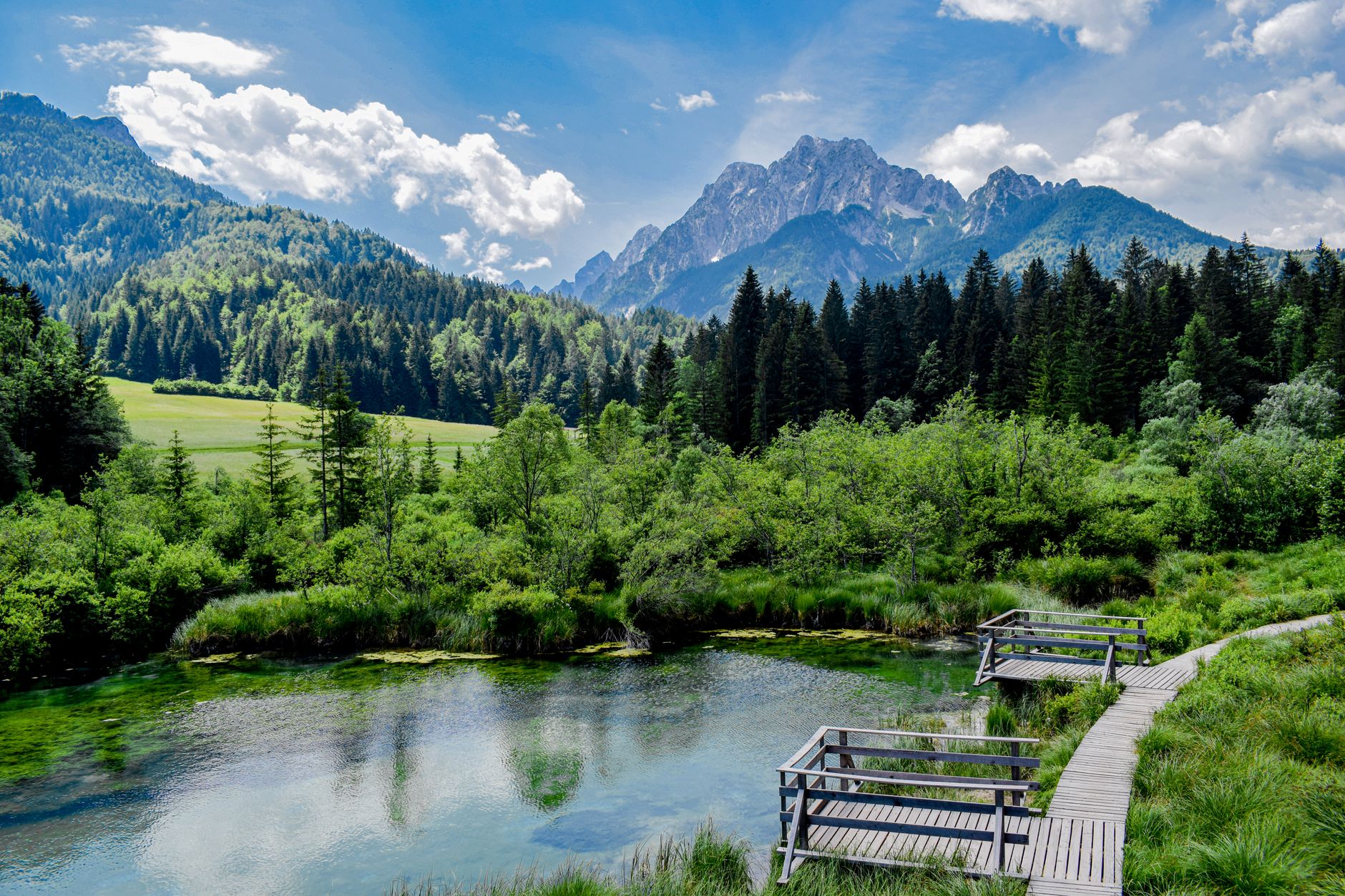
Day 2Day 2: Kranjska Gora to Trenta/Bovec (7hrs)The day starts with a walk through the valley to Lake Jasna, a small glacial lake with clear water and a bronze statue of Zlatorog — the legendary golden-horned chamois of Slovenian folklore — standing at its shore. This is a popular place to take a photo. From here the trail climbs steadily through forest and open switchbacks to the Vršic Pass at 1,611m (5,285ft), Slovenia's highest mountain pass. The views from the pass across the Julian Alps are extensive and on a clear day you can see deep into the surrounding peaks. The descent into the Trenta Valley is long but rewarding. About halfway down, a short side path leads to the source of the Soca River — a cave opening in the rock where the river emerges from underground, ice cold and already a remarkable shade of blue-green. By the time the river reaches the valley floor it has developed the vivid emerald color for which it is famous throughout Slovenia. The valley itself is narrow and dramatic, hemmed in by steep limestone walls. Distance: 22km/13.7mi, Ascent: 850m/2,789ft, Descent:1,050m /3,445ft * To Note: If we are unable to book accommodation in the small town of Trenta, two nights will be booked in Bovec with return transfers included.
The day starts with a walk through the valley to Lake Jasna, a small glacial lake with clear water and a bronze statue of Zlatorog — the legendary golden-horned chamois of Slovenian folklore — standing at its shore. This is a popular place to take a photo. From here the trail climbs steadily through forest and open switchbacks to the Vršic Pass at 1,611m (5,285ft), Slovenia's highest mountain pass. The views from the pass across the Julian Alps are extensive and on a clear day you can see deep into the surrounding peaks. The descent into the Trenta Valley is long but rewarding. About halfway down, a short side path leads to the source of the Soca River — a cave opening in the rock where the river emerges from underground, ice cold and already a remarkable shade of blue-green. By the time the river reaches the valley floor it has developed the vivid emerald color for which it is famous throughout Slovenia. The valley itself is narrow and dramatic, hemmed in by steep limestone walls. Distance: 22km/13.7mi, Ascent: 850m/2,789ft, Descent:1,050m /3,445ft * To Note: If we are unable to book accommodation in the small town of Trenta, two nights will be booked in Bovec with return transfers included.
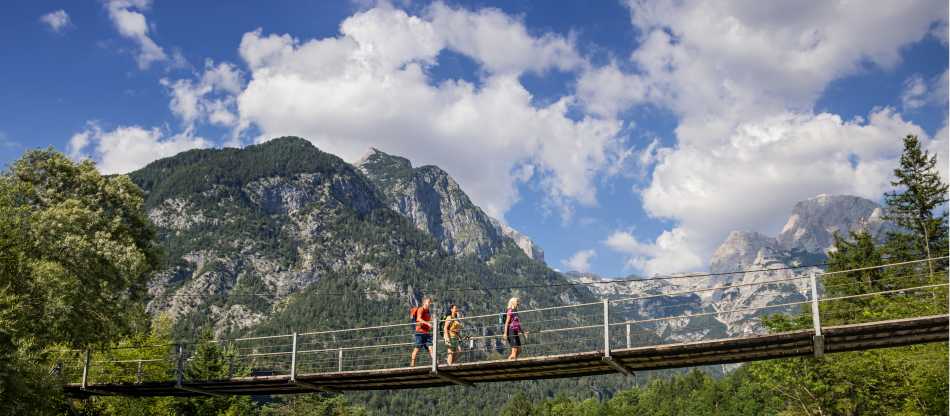
Day 3Day 3: Trenta/Bovec to Bovec (5-6hrs)The trail today follows the Soca River closely, crossing several suspension bridges strung above the gorge where the river runs fast and green far below. Along the way you'll pass the Soca Gorges — a series of narrow slots and sculpted rock basins where the river has cut through the limestone over thousands of years, creating deep pools of extraordinary color. Look out also for the remains of WWI fortifications along this section of trail; the Soca Valley was the front line for much of the Italian campaign and evidence of it is visible throughout. The river here is one of the best fly-fishing rivers in Europe, and you're likely to see anglers working the pools below the bridges. On a warm day the swimming spots are hard to resist — the water is cold but the color makes it worth it. The day ends in Bovec, an outdoor adventure hub with good food options and a lively atmosphere. Distance: 20km /12.4mi, Ascent: 200m/656ft, Descent: 350m /1,148ft
The trail today follows the Soca River closely, crossing several suspension bridges strung above the gorge where the river runs fast and green far below. Along the way you'll pass the Soca Gorges — a series of narrow slots and sculpted rock basins where the river has cut through the limestone over thousands of years, creating deep pools of extraordinary color. Look out also for the remains of WWI fortifications along this section of trail; the Soca Valley was the front line for much of the Italian campaign and evidence of it is visible throughout. The river here is one of the best fly-fishing rivers in Europe, and you're likely to see anglers working the pools below the bridges. On a warm day the swimming spots are hard to resist — the water is cold but the color makes it worth it. The day ends in Bovec, an outdoor adventure hub with good food options and a lively atmosphere. Distance: 20km /12.4mi, Ascent: 200m/656ft, Descent: 350m /1,148ft
Day 4Day 4: Bovec to Kobarid/Drežnica (6.5hrs)The trail leaves Bovec and heads into the forest, climbing gradually before dropping to the Virje Waterfall — a wide, layered fall tucked into a mossy alcove that catches most people by surprise. It's an easy detour and one of the more photogenic spots on the trip. Shortly after, the trail reaches the Boka Waterfall, a completely different experience — a single powerful jet of water dropping 106m (348ft) straight down a sheer rock face, with a second drop of 30m (98ft) below. After heavy rainfall it's one of the most impressive sights in Slovenia. From here the trail descends back to the Soca, passing through forest and meadow with the river never far away. There are several good swimming spots along this stretch if the weather is warm. The final section brings you into Kobarid, a small but historically significant town best known as the site of the Battle of Caporetto in 1917 — one of the most decisive battles of WWI. The Kobarid Museum here is considered one of the best WWI museums in Europe and is well worth a visit. Distance: 22km/13.7mi, Ascent: 350m/1,148ft, Descent: 500m/1,640ft
The trail leaves Bovec and heads into the forest, climbing gradually before dropping to the Virje Waterfall — a wide, layered fall tucked into a mossy alcove that catches most people by surprise. It's an easy detour and one of the more photogenic spots on the trip. Shortly after, the trail reaches the Boka Waterfall, a completely different experience — a single powerful jet of water dropping 106m (348ft) straight down a sheer rock face, with a second drop of 30m (98ft) below. After heavy rainfall it's one of the most impressive sights in Slovenia. From here the trail descends back to the Soca, passing through forest and meadow with the river never far away. There are several good swimming spots along this stretch if the weather is warm. The final section brings you into Kobarid, a small but historically significant town best known as the site of the Battle of Caporetto in 1917 — one of the most decisive battles of WWI. The Kobarid Museum here is considered one of the best WWI museums in Europe and is well worth a visit. Distance: 22km/13.7mi, Ascent: 350m/1,148ft, Descent: 500m/1,640ft
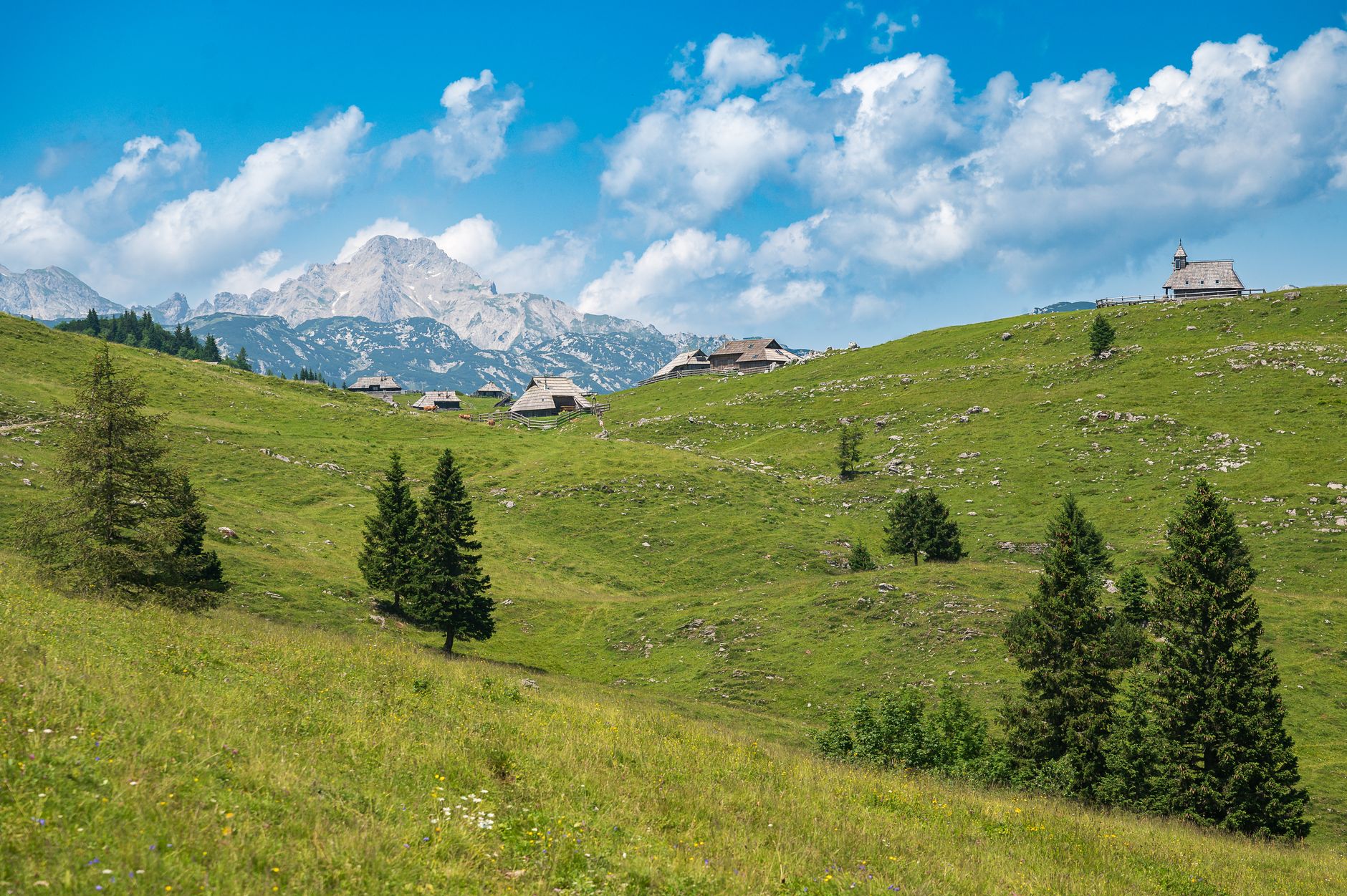
Day 5Day 5: Kobarid/Drežnica to Tolmin (7hrs)A short transfer takes you to the village of Drežnica, where today's climb begins. The trail heads uphill through forest before breaking out onto open ground near the Italian WWI chapel at 1,220m (4,003ft) — a small stone building erected in memory of the Italian soldiers who fought and died along this ridge. The views from here across the Soca Valley and back toward the peaks above Bovec are among the best of the entire trip. The route continues along the ridge through open alpine meadows where, depending on the season, you'll find wildflowers, grazing cattle and wide views in all directions. The descent from here takes you through beech and oak forest, passing small traditional villages where life moves at a noticeably different pace, before the trail joins the Soca River for the final stretch into Tolmin. The old town sits at the confluence of the Soca and Tolminka rivers, and the river canyon just outside town — the Tolmin Gorges — is one of the most visited natural sites in the region. Carved deep into the limestone, the gorges feature a series of narrow passages, natural rock bridges and pools, including the Bear's Head rock formation and the warm Medvedova thermal spring at the entrance. If your legs have anything left in them after today's hike, it's a short walk from the town center and well worth the effort. Distance: 22km/13.7mi, Ascent: 750m/2,461ft, Descent: 1,100m/3,609ft
A short transfer takes you to the village of Drežnica, where today's climb begins. The trail heads uphill through forest before breaking out onto open ground near the Italian WWI chapel at 1,220m (4,003ft) — a small stone building erected in memory of the Italian soldiers who fought and died along this ridge. The views from here across the Soca Valley and back toward the peaks above Bovec are among the best of the entire trip. The route continues along the ridge through open alpine meadows where, depending on the season, you'll find wildflowers, grazing cattle and wide views in all directions. The descent from here takes you through beech and oak forest, passing small traditional villages where life moves at a noticeably different pace, before the trail joins the Soca River for the final stretch into Tolmin. The old town sits at the confluence of the Soca and Tolminka rivers, and the river canyon just outside town — the Tolmin Gorges — is one of the most visited natural sites in the region. Carved deep into the limestone, the gorges feature a series of narrow passages, natural rock bridges and pools, including the Bear's Head rock formation and the warm Medvedova thermal spring at the entrance. If your legs have anything left in them after today's hike, it's a short walk from the town center and well worth the effort. Distance: 22km/13.7mi, Ascent: 750m/2,461ft, Descent: 1,100m/3,609ft
Day 6Day 6: Tolmin to Cividale del Friuli (via Kolovrat Ridge) (4-5hrs)The final day on trail starts with a steady climb through forest above Tolmin before the trees give way to the open Kolovrat Ridge at around 1,200m (3,937ft). This ridge was heavily contested during WWI and original trenches, dugouts and defensive positions are still clearly visible along the ridgeline — walking through them gives a striking sense of what conditions were like for the soldiers who fought here. Interpretive panels along the trail provide good historical context. The views from the ridge are the widest of the entire trip — the full line of the Julian Alps stretching away to the north and east, and the broad flat plains of the Friuli region of Italy opening up to the south and west. On a clear day you can see all the way to the Adriatic. A short descent brings you to the Rifugio Solarie on the Italian side of the border where a transfer takes you down to Cividale del Friuli. This compact medieval town, a UNESCO World Heritage Site, was the first capital of the Lombard kingdom in the 6th century. The old town, the Natisone River gorge, and the archaeological museum make it a rewarding place to spend your final evening. Distance: 11km /6.8mi, Ascent: 900m/2,953ft, Descent: 200m/656ft
The final day on trail starts with a steady climb through forest above Tolmin before the trees give way to the open Kolovrat Ridge at around 1,200m (3,937ft). This ridge was heavily contested during WWI and original trenches, dugouts and defensive positions are still clearly visible along the ridgeline — walking through them gives a striking sense of what conditions were like for the soldiers who fought here. Interpretive panels along the trail provide good historical context. The views from the ridge are the widest of the entire trip — the full line of the Julian Alps stretching away to the north and east, and the broad flat plains of the Friuli region of Italy opening up to the south and west. On a clear day you can see all the way to the Adriatic. A short descent brings you to the Rifugio Solarie on the Italian side of the border where a transfer takes you down to Cividale del Friuli. This compact medieval town, a UNESCO World Heritage Site, was the first capital of the Lombard kingdom in the 6th century. The old town, the Natisone River gorge, and the archaeological museum make it a rewarding place to spend your final evening. Distance: 11km /6.8mi, Ascent: 900m/2,953ft, Descent: 200m/656ft
Day 7Day 7: Trip concludesYour trip concludes after breakfast in Cividale, with time to explore or continue your travels.
Your trip concludes after breakfast in Cividale, with time to explore or continue your travels.
Discover Slovenia
A glimpse of the destination you'll explore.
Upcoming departures
DatesPrice / personAvailability
7 Jun 2026 – 13 Jun 2026CAD 1,790Sold outBook my trip
11 Jun 2026 – 17 Jun 2026CAD 1,920Sold outBook my trip
14 Jun 2026 – 20 Jun 2026CAD 1,920Sold outBook my trip
18 Jun 2026 – 24 Jun 2026CAD 1,920AvailableBook my trip
21 Jun 2026 – 27 Jun 2026CAD 1,920AvailableBook my trip
25 Jun 2026 – 1 Jul 2026CAD 1,920AvailableBook my trip
28 Jun 2026 – 4 Jul 2026CAD 1,920AvailableBook my trip
UT
Operated by UTracks
A TripFinder-trusted operator. We compare the trip and handle your booking with a real advisor — you travel under the operator's terms.